
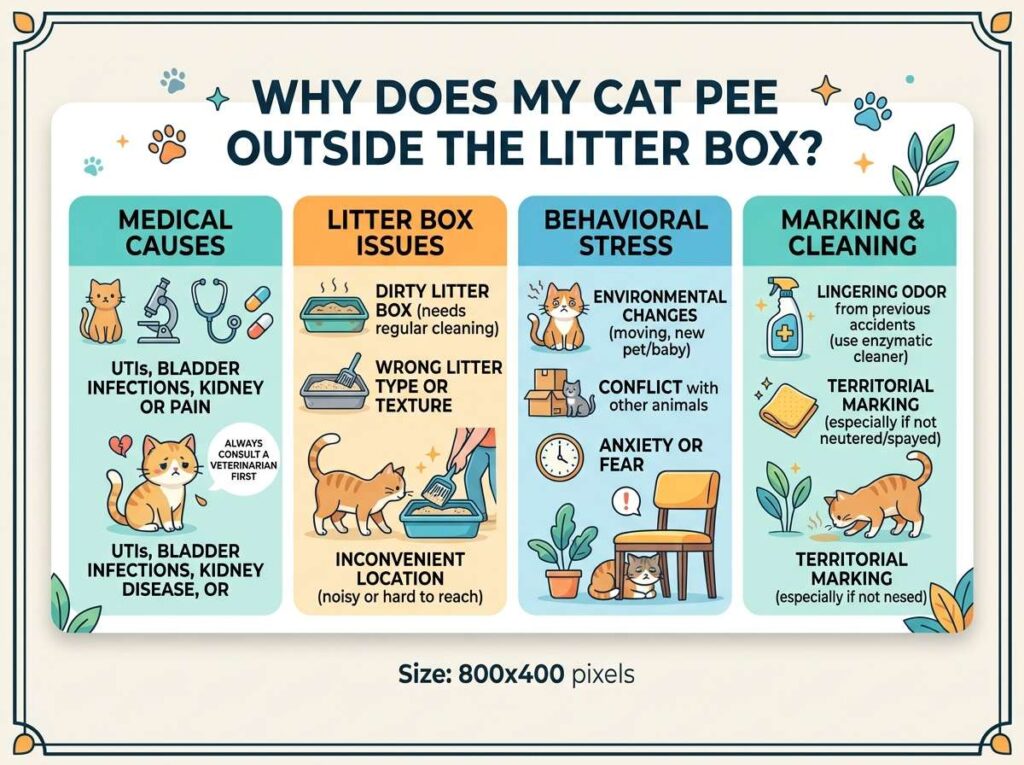
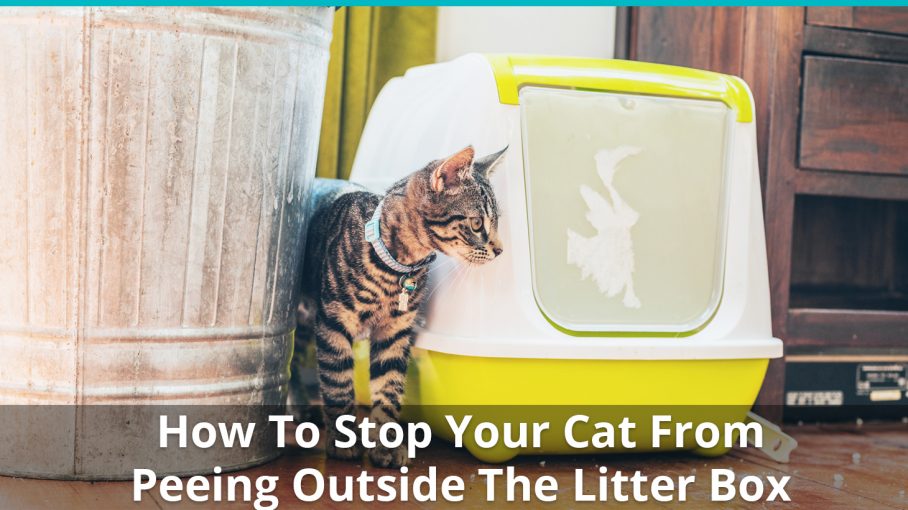
If your cat is peeing right outside the litter box, the behavior usually has a reason. The most common causes are pain, litter box aversion, stress, poor access, or a medical problem that makes urination urgent. In homes across the United States, a sudden change in bathroom habits should be treated as a health concern first—not as spite or bad behavior.
Arrange a veterinary exam, especially if this is new, happens often, or comes with straining, crying, blood, frequent trips to the box, vomiting, or low energy. A male cat that strains but produces little or no urine may have a life-threatening urinary blockage and needs emergency care.
First, check whether your cat is having a medical emergency
A cat that cannot pass urine may become critically ill within a short time. This risk is higher in male cats because their urethra is narrow, but any cat can develop a serious urinary problem.
Seek an emergency veterinarian now if your cat:
- Strains repeatedly but passes little or no urine
- Cries, growls, or seems distressed while trying to urinate
- Licks the genital area more than usual
- Has a firm, painful, or swollen belly
- Vomits, hides, becomes weak, or stops eating
- Has blood in the urine and seems unwell
- Makes repeated trips to the litter box without producing a normal amount
Do not wait to see whether the problem improves if your cat may be blocked. Do not press on your cat’s abdomen or give human pain medicine. Common human drugs, including acetaminophen and ibuprofen, can be dangerous or fatal to cats.
If your cat is passing urine but peeing beside the box, call your regular veterinarian promptly. The veterinarian may perform a physical exam and urinalysis. Depending on the findings, they may also recommend urine culture, blood tests, X-rays, or ultrasound.

Why cats pee right outside the litter box
Peeing beside the box often means the cat still wants to use that area but cannot or will not use the box itself. The reason may involve pain, the box setup, stress, or a learned preference for another surface.
Pain or urinary disease
Bladder inflammation, urinary stones, infection, kidney disease, and other conditions can make urination painful or urgent. A cat may begin to associate the litter box with discomfort. It may then choose the floor, mat, wall, or another nearby spot.
Cats with diabetes or kidney disease may produce more urine than usual. A box that becomes wet or dirty faster may then seem unacceptable. Arthritis can also make it hard to climb into a tall box, turn around, or squat comfortably.
A medical problem can exist even when your cat seems bright and active. Cats often hide pain. A urine test is more useful than guessing from behavior alone.
Litter box aversion
Your cat may dislike one part of the box setup. Common triggers include:
- A dirty box
- Strongly scented litter
- A sudden change in litter brand or texture
- A covered box that traps odor
- A small box that limits movement
- A high entry that is hard to reach
- A liner that catches claws
- A noisy or busy location
– A box near food, water, a washer, or a dryer - Too few boxes for the number of cats in the home
Some cats will stand in the box but let urine land over the edge. Others place their front feet inside and keep their back feet on the floor. This can look like defiance, but it often points to discomfort, poor box design, or a strong preference for a different surface.
Stress or conflict
Stress can change urination habits. New pets, visitors, children, moving, remodeling, schedule changes, outdoor cats, and conflict between indoor cats may all play a role.
A cat may avoid a box if another cat blocks the route or ambushes it nearby. This can happen even when the cats do not have obvious fights. Quiet staring, chasing, guarding hallways, or preventing access can be enough.
Spraying or urine marking
Spraying is different from normal urination. During marking, a cat usually stands with its tail raised and directs a small amount of urine onto a vertical surface. Normal urination usually creates a larger puddle on a horizontal surface while the cat squats.
Marking may occur after territorial stress. Both male and female cats can mark, although intact cats are more likely to do so. Spaying or neutering can reduce hormone-driven marking, but it may not remove marking caused by fear or conflict.

What to do today: a safe troubleshooting plan
Use this order: rule out danger, arrange a medical check, then improve the litter setup. This approach avoids treating a health problem as a training problem.
1. Watch the next bathroom attempt
If possible, note:
- How often your cat visits the box
- Whether urine comes out
- The size of each urine spot
- Whether your cat strains or cries
- Whether the urine contains blood
- Whether the cat squats or sprays
- Which surfaces the cat prefers
Do not force your cat into the box. Observe from a distance and take a photo of the urine spot if your veterinarian asks for more detail.
2. Book a veterinary visit
A new accident outside the box deserves a veterinary discussion. Your veterinarian can check for bladder inflammation, infection, stones, constipation, arthritis, diabetes, kidney disease, and other causes.
Do not assume that extra water or a new litter will solve the issue. Those changes may help comfort and access, but they do not diagnose the cause.
3. Add a clean, easy-to-use box
Place a second box near the accident spot. This is a practical test. If your cat uses the new box, the location, box type, or access may have been part of the problem.
Use a large, open box with a low entry. The box should allow your cat to turn around without touching the sides. A storage container with a low doorway may work if it is safe, stable, and easy to clean.
A commonly used guideline is one box for each cat, plus one extra. For example:
| Number of cats | Suggested minimum |
|---|---|
| 1 | 2 boxes |
| 2 | 3 boxes |
| 3 | 4 boxes |
This is a starting point, not a strict rule. A home with several floors may need a box on each level. Boxes should be spread out so one cat cannot control all of them.
4. Use unscented, fine-textured litter
Many cats prefer unscented litter with a soft, sand-like feel. If you plan to change litter, offer the new type in a separate box instead of replacing the old litter at once.
Keep the boxes clean. Remove urine clumps and stool at least once a day. Wash the box with mild soap and water, then dry it well. Avoid strong perfumes, bleach fumes, ammonia-based cleaners, and harsh chemicals around the box.
5. Make the route safe
Put boxes in quiet places with more than one way out when possible. Avoid locations beside loud appliances or in areas where dogs, children, or other cats can corner your cat.
For an older cat or a cat with arthritis, place boxes on the floor or use a low-sided design. Your veterinarian can discuss pain control and mobility support if movement seems difficult.
6. Clean the accident area correctly
Use an enzymatic cleaner made for pet urine. Follow the label directions and allow the area to dry before your cat returns. Ordinary soap may remove the visible stain but leave odor compounds that your cat can still detect.
Do not use ammonia-based products on urine stains. Ammonia smells similar to a component of urine and may encourage repeat marking or urination.
After cleaning, block access for a time or place a bed, toy, or food puzzle in the area if it is safe to do so. Cats are less likely to use a spot as a toilet when it becomes associated with resting or eating.

How to match the pattern to the likely cause
The location and shape of the urine can offer clues, but they cannot replace a veterinary exam.
| What you notice | Possible explanation | Best next step |
|---|---|---|
| Small puddles beside the box | Box aversion, pain, or poor aim | Add a larger open box and schedule a vet exam |
| Urine on a wall or furniture side | Spraying or marking | Check for stress, outdoor cats, and cat conflict |
| Frequent small trips | Bladder inflammation, stones, infection, or blockage | Contact a veterinarian promptly |
| Large puddles | Increased urine production or missed box | Seek a medical check, especially for thirst or weight loss |
| Accidents near stairs or on another floor | Access or mobility problem | Add a box nearby and assess arthritis |
| Accidents after a new pet or move | Stress or territorial conflict | Reduce conflict and provide separate resources |
| Urine on soft fabric | Surface preference | Offer a clean box with a soft, unscented litter |
A puddle directly outside the box may mean your cat tried to use it. Urine on a vertical surface may suggest marking. Still, some cats squat close to a wall or box edge, and some health problems cause unusual postures. Look at the full pattern.
Signs that the box itself is the problem
The litter box is more likely to be involved when your cat:
- Uses the box for stool but urinates beside it
- Uses one box but avoids another
- Uses the box only when it is freshly cleaned
- Chooses the same nearby spot each time
- Avoids a covered, narrow, or high-sided box
- Uses a new box after you place it in a different location
Offer choices rather than changing every variable at once. Keep one familiar box while testing one change, such as a different litter or a larger box. This helps you see what your cat prefers.
Signs that stress may be involved
Stress becomes more likely when accidents begin after:
- A move or home repair
- A new baby, pet, or roommate
- A change in work hours
- A visit from guests
- A conflict between cats
- Seeing outdoor cats through windows
- A loss or major change in the household
Give each cat separate food, water, resting places, scratching areas, and litter boxes. Add hiding places and high resting spots. If cats are fighting, separate them safely and ask your veterinarian about a behavior referral. Do not place cats face-to-face or punish them for reacting.

What not to do
Punishment does not teach a cat to use the litter box. Yelling, hitting, rubbing a cat’s nose in urine, or forcing the cat into the box can increase fear. Fear may lead to more hiding, marking, or avoidance.
Do not keep moving the only litter box from room to room. Do not switch litter, box type, location, and cleaning products all at once. Too many changes can add stress and make the cause harder to identify.
Do not rely on urine color, smell, or a home test alone to rule out disease. A cat can have bladder pain without obvious blood. A veterinarian may need a properly collected urine sample to check for infection, crystals, concentration, and other clues.
Be careful with supplements and “natural” remedies. Some products have limited evidence, and some ingredients can harm cats. Ask your veterinarian before giving cranberry products, essential oils, calming medicines, or any human medication.

How long will it take to stop?
The answer depends on the cause. A cat with a medical problem may improve after proper treatment, but the litter habit may need time to return. A cat with a box preference may improve within days after you provide a better box and remove urine odor.
Track progress with a simple log:
- Date and time
- Box used or accident location
- Urine amount
- Straining or vocalizing
- Food and water changes
- New stressors
- Cleaning or box changes
Call the veterinarian again if accidents continue after the medical plan, if your cat stops using the box, or if the pattern worsens. Persistent marking or fear may require a veterinary behaviorist or another qualified behavior professional.

Frequently asked questions
Why is my cat peeing beside the litter box but pooping in it?
This pattern can occur when urination is painful, the box is too small for a comfortable squat, or the cat dislikes the litter surface for urine. It can also reflect a learned preference for a nearby floor or mat. Arrange a veterinary exam and try a larger, open box with unscented litter.
Why does my cat pee right outside the box after I clean it?
Cleaning may not be the cause. Your cat may dislike the cleaner’s strong scent, the box may still retain urine odor, or the cleaning may reveal an underlying medical problem. Use mild soap for the box and an enzymatic cleaner for nearby surfaces. Avoid ammonia and heavy fragrance.
Should I put food where my cat keeps peeing?
Food may discourage repeat use of a small area, but it is not a complete fix. First clean the spot thoroughly and address medical, litter, and stress causes. Do not place food beside a dirty box or in a location where your cat feels unsafe.
Can a urinary tract infection cause my cat to pee outside the box?
Yes, but infection is only one possible cause. Bladder inflammation, stones, urinary blockage, kidney disease, and other problems can cause similar signs. A urinalysis and veterinary exam are needed to tell these causes apart.
Will getting my cat fixed stop the problem?
Spaying or neutering can reduce hormone-driven spraying, especially when performed before the behavior becomes established. It may not stop marking caused by stress, conflict, or an unsafe environment. A medical check and behavior plan may still be needed.
How many litter boxes should I have?
A useful starting point is one box per cat, plus one extra. Spread them through the home rather than placing all of them together. Add boxes on different floors and near areas where your cat spends time.
Conclusion: start with health, then fix the setup
A cat that pees right outside the litter box is communicating that something is wrong or no longer works. Treat sudden changes as a possible medical issue, and seek emergency care for straining with little or no urine.
Once urgent disease is ruled out, improve the box: use enough large, open boxes, choose unscented litter, keep them clean, provide easy access, reduce conflict, and remove urine odor with an enzymatic cleaner. Never punish your cat. The fastest path to improvement is usually a veterinary check paired with careful changes to the litter box environment.