
Cat litter tracking happens when small litter pieces cling to your cat’s paws or fur and fall onto the floor outside the litter box. In U.S. homes, the most effective fix is a combination of lower-tracking litter, a large litter mat, a better box setup, and regular cleaning.
Start with the steps that cost little: use a mat that extends beyond the box, place the box on a hard-to-clean surface, keep the litter depth moderate, and sweep or vacuum the area often. If tracking continues, test a larger-grain litter or paper or wood pellets, provided your cat accepts the change.
Why Cat Litter Tracks Through the House
Litter tracking has several causes. Small grains are more likely to cling to paw pads, while lightweight litter can scatter when a cat digs or jumps out of the box. Long-haired cats may also carry litter in the fur between their toes.
The litter box itself can add to the problem. A small box gives your cat little room to turn, dig, and step before exiting. A box with a low entrance may also let litter spill onto the floor.
Common causes include:
- Fine litter particles: Clay and clumping litters with very small grains may stick to damp or textured paws.
- Lightweight litter: Light particles can cling to fur and spread more easily.
- Deep litter: Extra litter gives cats more material to kick out.
- Small boxes: Cats may step directly from the litter onto the floor.
- High-energy digging: Some cats dig hard and scatter litter over the box edge.
- Long fur: Litter can collect between the toes or in leg hair.
- Poor mat placement: A small mat may catch litter only after the cat has already crossed the room.
- Damp paws: Moisture makes litter more likely to stick.
Tracking and litter dust are related but different problems. Tracking means litter is carried or scattered away from the box. Dust is the fine powder released when litter is poured, dug, or walked on. A litter may produce little dust but still track.

1. Choose a Lower-Tracking Cat Litter
The right litter can reduce tracking, but no litter prevents it completely. Test one change at a time so you can see what your cat accepts and what actually helps.
Litter types and tracking
| Litter type | Tracking tendency | Main trade-off |
|---|---|---|
| Fine-grain clay | Often high | Familiar texture, but may cling to paws |
| Larger-grain clay | Often lower | May feel different to some cats |
| Silica crystals | Often low to moderate | Some cats dislike the texture |
| Pine or paper pellets | Usually low | May require a different box or transition |
| Corn, wheat, or other plant-based litter | Varies by grain size | Tracking and odor control differ by formula |
These are general patterns, not guarantees. Two products in the same category can behave very differently.
Choose a litter with larger, heavier pieces if your cat will use it. Pellets often track less because they do not cling as easily to paw pads. However, pellet litter can roll farther across a hard floor, and some cats dislike the change in texture.
Do not switch suddenly if your cat is hesitant. Mix a small amount of the new litter with the old litter, then increase the new type over several days. If your cat avoids the box, returns to the old litter and change the setup more slowly. Sudden litter changes can contribute to box avoidance.
Avoid adding strong fragrances to cover litter odor. Cats may reject a box with a scent that seems mild to people. The American Society for the Prevention of Cruelty to Animals recommends keeping litter boxes clean and considering your cat’s preferences when choosing litter.
2. Use a Large, Effective Litter Mat
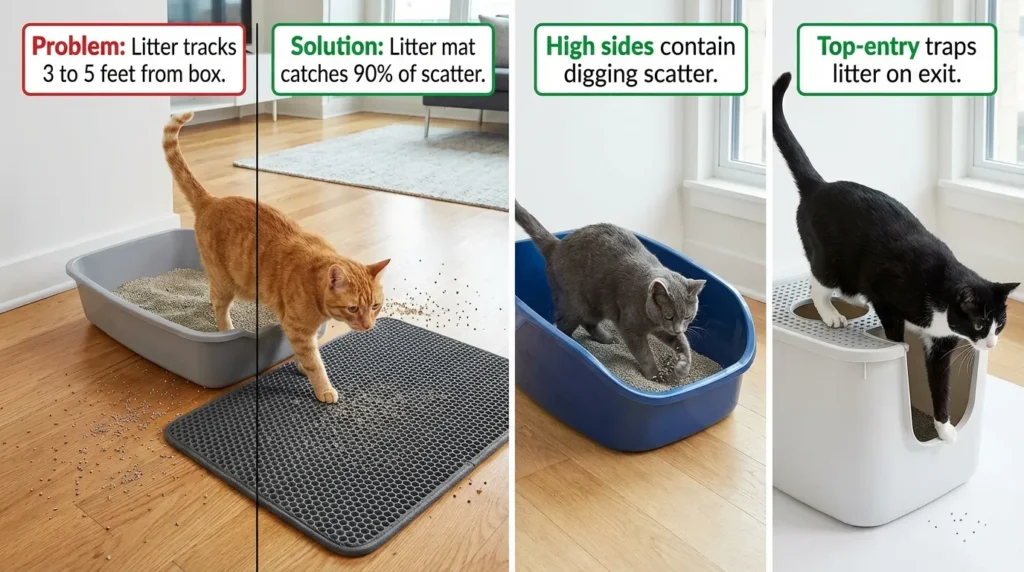
A litter mat catches particles as your cat walks out of the box. It works best when it creates several steps between the box and the rest of the room.
Choose a mat that is:
- Wider than the litter box
- Long enough for at least two or three cat steps
- Easy to lift and shake out
- Comfortable for your cat to walk on
- Firm enough to stay flat
- Made with grooves, ridges, or a honeycomb surface that traps litter
A small mat placed only at the front of the box will catch some litter but may not solve the problem. Place the box so your cat must cross the mat before reaching the main floor.
Honeycomb mats can collect litter in their lower layer. You can lift the top section and return the trapped litter to the box if it is clean. Do not return litter that is wet, soiled, or contaminated with floor debris.
Avoid mats with sharp edges, loose loops, or strong chemical smells. Check the mat often for cracks or curled corners. A damaged mat can become a trip hazard or discourage your cat from leaving the box.

3. Improve the Litter Box Setup
A better box setup reduces the amount of litter your cat kicks out and gives the cat more time to step off the litter before reaching the floor.
Use a larger box
The American Association of Feline Practitioners and other feline-care guidance commonly recommend a box that is large enough for a cat to turn around and dig without touching the sides. A practical starting point is a box about 1.5 times your cat’s body length, measured from the nose to the base of the tail.
Many store-bought boxes are too small for large cats. A wide storage tote with a safe entry cutout can work, but remove sharp edges and make sure the container is stable.
Keep litter at a moderate depth
Most cats need enough litter to dig and cover waste, but excess litter creates more material to scatter. Start with about 2 to 3 inches and adjust based on your cat’s behavior and the litter instructions.
If your cat digs to the bottom, add a little more. If litter regularly piles outside the box, reduce the depth slightly and use a larger box.
Consider a high-sided box
High sides can contain kicked litter. They are especially useful for cats that dig hard or spray urine toward the walls.
Do not use a high-entry box for kittens, older cats, or cats with mobility problems unless they can enter comfortably. A high-sided box with a low front opening may provide containment without creating a difficult step.
Avoid covered-box assumptions
A covered box may contain some scattered litter, but it can also trap odors and make the interior feel cramped. Some cats prefer an open box because it provides a clear view and better airflow.
If you use a covered box, check that it is large enough and that your cat uses it willingly. Litter control is not worth causing box avoidance.
4. Create a Better Exit Path
The area around the litter box matters as much as the box itself. Your cat should have a clear, stable path from the litter to the mat and then to the room.
Place the box:
- On a hard floor that is easy to vacuum.
- On top of a large litter mat.
- Away from thick rugs that hide scattered litter.
- In a quiet, accessible area.
- Away from food and water bowls.
- Where doors, appliances, or people will not block the exit.
A short “litter station” can work well. For example, place the box at one end of a washable mat and leave enough space for your cat to step, pause, and turn before reaching the floor.
Do not force your cat to walk through a narrow tunnel or over a noisy surface. A mat that crackles or slides may cause the cat to jump over it, spreading litter farther.
For homes with multiple cats, provide enough boxes in separate locations. A commonly used guideline is one box per cat, plus one extra, although household layout and cat relationships also matter. More boxes may increase cleaning work, but they can reduce crowding and rushed exits.
5. Clean the Area in a Way That Removes Litter
Regular cleaning stops tracked litter from spreading into every room. It also lets you see whether a change is working.
Use a handheld vacuum or broom around the box once or twice a day, depending on how much litter your cat scatters. A vacuum often works better than a broom because sweeping can push fine particles under furniture.
Clean the mat by:
- Shaking it outdoors when practical
- Vacuuming both sides
- Emptying trapped litter into the trash or back into the box only if it is clean
- Washing it according to the manufacturer’s instructions
- Drying it fully before placing it back
Vacuum nearby rugs and soft furniture if litter is collecting there. Fine particles can hide in fabric and return to the floor later.
Avoid using bleach, ammonia, or strongly scented cleaners around the box. Some cleaners can irritate cats, and ammonia-like odors may be confusing because urine contains ammonia-related compounds. Use a mild, pet-safe cleaner and follow the label directions.

6. Reduce Litter on Your Cat’s Paws and Fur
Most cats do not need their paws wiped after every litter-box visit. Many will find this stressful, and restraint can make them avoid the box.
For long-haired cats, regular grooming can reduce the amount of litter caught between the toes. Carefully trim excess fur around the paw pads only if you can do so safely. Use blunt-ended grooming tools, keep the cat calm, and stop if the cat struggles.
Do not trim fur if you are unsure how to do it. A professional groomer or veterinarian can help, especially with an anxious cat.
Check your cat’s paws if litter sticks often. Dampness, redness, swelling, cracks, or excessive licking may indicate a paw problem. Contact a veterinarian if you notice pain, bleeding, limping, discharge, or a sudden change in litter-box behavior.
Do not apply oils, powders, or household products to the paws to make litter fall off. Cats lick their feet, and many substances are unsafe when swallowed.
A Simple Seven-Day Plan
Change one or two variables at a time. This makes it easier to identify what works and avoids overwhelming your cat.
Day 1: Measure the problem
Look at where litter collects. Is it inside the box, on the mat, beside the mat, or in another room? Note whether the litter is fine, large, dusty, or pellet-shaped.
Day 2: Improve the mat
Use the largest practical mat and place it directly at the box exit. Make sure it lies flat.
Day 3: Check the box
Confirm that your cat can turn around and dig comfortably. Reduce excess litter if the box is consistently overfilled.
Days 4–5: Adjust cleaning
Vacuum or sweep the station at a consistent time each day. Clean the mat and compare the amount of litter collected.
Days 6–7: Consider a litter test
If tracking remains high, test a larger-grain litter in a second box. Let your cat choose rather than removing the familiar option at once.
A successful change should produce less litter beyond the mat without causing avoidance, accidents, stress, or changes in digging behavior.

Troubleshooting: What to Check When Tracking Continues
| Problem | Likely cause | Useful next step |
|---|---|---|
| Litter is beside the box | Box is too small or litter is kicked out | Use a larger or higher-sided box |
| Litter is across the room | Cat carries it on paws or fur | Try larger-grain litter and extend the mat |
| Fine dust covers the floor | Dusty formula or dry particles | Test a lower-dust litter and pour slowly |
| Cat jumps over the mat | Mat is noisy, unstable, or unpleasant | Use a flat, quiet, non-slip mat |
| Tracking increased after a switch | Cat dislikes the new texture | Return to the familiar litter and transition slowly |
| Litter sticks to paws | Damp paws, fine grains, or paw irritation | Check paws and consult a veterinarian if abnormal |
| Cat stops using the box | Litter, location, cleanliness, or health issue | Restore the familiar setup and seek veterinary advice |
A sudden increase in accidents or box avoidance is not just a cleaning problem. Urinary pain, constipation, arthritis, stress, and other health issues can change litter-box behavior. Contact a veterinarian promptly if the behavior is new, persistent, or paired with straining, frequent trips, vocalizing, blood, vomiting, or reduced urine output.
Common Mistakes That Make Tracking Worse
Adding too much litter: A deeper layer gives cats more material to move and kick.
Using a tiny mat: A small mat cannot catch litter from several steps.
Switching litter overnight: A cat may reject a new texture or scent.
Choosing fragrance over cleanliness: Scented litter may mask odor for people but bother some cats.
Putting the box on a thick rug: The rug can trap litter and spread it through the home.
Cleaning only the visible floor: Litter can remain under furniture, inside mat grooves, and in nearby fabric.
Restricting access to the box: A closed door or blocked path can lead to accidents and stress.
Wiping paws by force: This may create fear around the box and handling.
Frequently Asked Questions
What is the best cat litter for preventing tracking?
There is no single best litter for every cat. Larger-grain clay, silica crystals, paper, and wood pellets often track less than fine-grain litter, but acceptance varies. Choose the least-tracking option your cat will use consistently.
Do litter mats really work?
Yes, a well-sized mat can catch a significant amount of loose litter, especially when it covers the full exit path. It will not stop litter carried into the room on fur or scattered beyond the mat.
How deep should cat litter be?
Start with about 2 to 3 inches, then adjust. Some cats prefer more depth for digging, while others use the box better with less. Follow your cat’s behavior rather than filling the box to the top.
Can I stop my long-haired cat from tracking litter?
Regular grooming may help remove loose litter from the fur around the paws. Do not use household products on the feet, and ask a groomer or veterinarian for help with trimming if your cat resists.
Are covered litter boxes better for tracking?
A covered box may contain some kicked litter, but it can also trap odors and feel cramped. Use one only if your cat has enough room and enters it comfortably.
Key Takeaways
- Use a large litter mat with a textured surface and a non-slip base.
- Choose larger-grain litter if your cat accepts it.
- Give your cat a roomy box with moderate litter depth.
- Keep the box on a hard, easy-to-clean surface.
- Vacuum or sweep the area regularly.
- Groom long-haired cats carefully, but do not force paw wiping.
- Change litter gradually.
- Treat sudden litter-box avoidance or painful urination as a veterinary concern.
Conclusion
The best way to stop cat litter from tracking is to control the full path from the litter box to the rest of the home. Start with a larger mat, a roomy box, moderate litter depth, and consistent cleaning. If that is not enough, test a heavier or larger-grain litter slowly.
Watch your cat’s behavior during every change. A cleaner floor matters, but comfortable, reliable litter-box use comes first.