
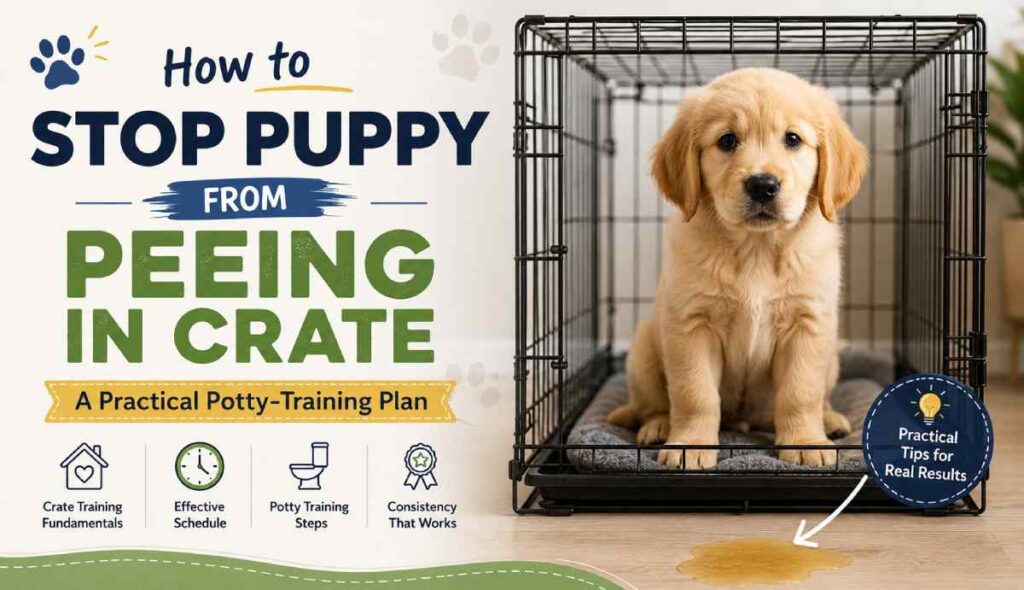
Finding pee in your puppy’s crate is frustrating, especially when you thought crate training was supposed to help with housebreaking. The good news is that crate accidents usually have a reason, and figuring out that reason is more useful than simply trying to make your puppy “hold it” longer.
To stop a puppy from peeing in the crate, focus on three things: the crate setup, the timing of potty breaks, and consistent positive reinforcement. A crate should be appropriately sized, your puppy should get frequent opportunities to eliminate outside, and accidents should be cleaned without punishment. Persistent or sudden accidents can also warrant a veterinary check.
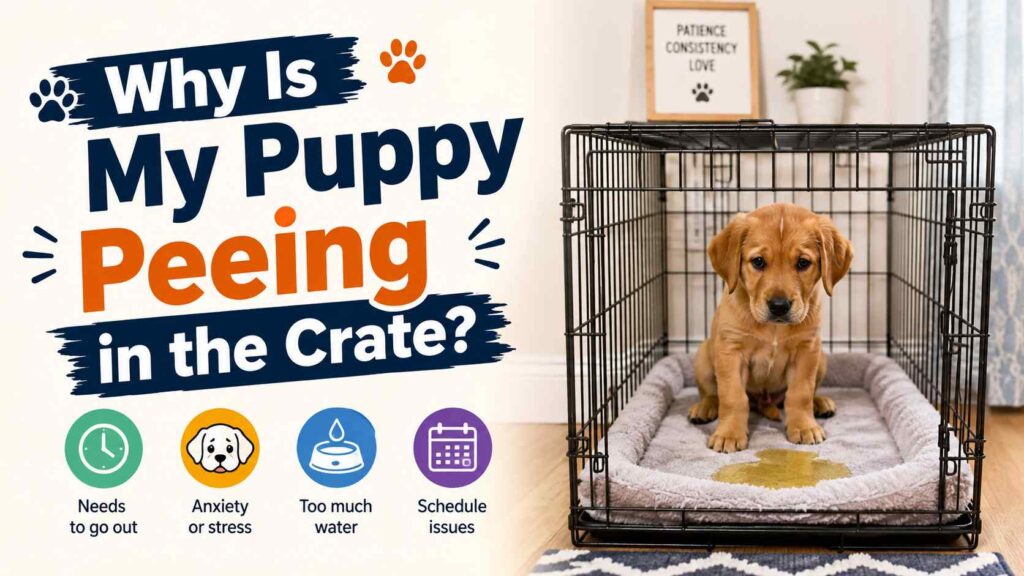
Why Is My Puppy Peeing in the Crate?
Puppies do not automatically have the bladder control needed to stay dry for long stretches. Age, routine, digestion, sleep, activity, and individual development can all affect how often a puppy needs to go.
There is also a difference between not knowing where to potty and not being physically able to wait. A puppy that has been crated longer than it can comfortably manage may have an accident even if training is progressing well.
Other common possibilities include:
- The crate is too large.
- Potty breaks are too far apart.
- Your puppy was not taken outside after sleeping, eating, drinking, or playing.
- The puppy has not yet learned a clear potty routine.
- Stress, changes in routine, digestive upset, or another health problem is contributing.
- Previous accidents have left a urine odor in the crate.
Puppy crate training can help because appropriately sized confinement gives a puppy less room to turn part of its sleeping area into a bathroom. But a crate is not a substitute for frequent potty opportunities.
Check the Crate Size First
A crate should be large enough for your puppy to stand comfortably, turn around, lie down, and stretch, but it should not provide a large unused area where the puppy can sleep at one end and urinate at the other.
This is particularly important with rapidly growing puppies. A crate that was the right size a few weeks ago may now be too spacious.
A crate with a divider can make this easier. You can adjust the usable space as your puppy grows rather than buying a new crate every few weeks.
At the same time, do not make the crate so small that your puppy cannot comfortably change position. The goal is a comfortable sleeping space, not restriction for its own sake.
Give Your Puppy More Frequent Potty Breaks
One of the most common reasons a puppy pees in a crate is simply that the puppy needed to go and was left there too long.
Young puppies generally need frequent bathroom trips, and VCA notes that very young puppies may need overnight potty breaks as well. The exact schedule varies from puppy to puppy, so watch your puppy rather than relying on a rigid formula.
Potty trips are especially important:
- Immediately after waking up
- After eating
- After drinking
- After active play
- After a nap
- Before going into the crate for a longer rest
- Immediately after coming out of the crate
- Before bedtime
A useful pattern is sleep → outside → play or training → outside → rest.
As your puppy becomes more reliable, gradually increase the time between breaks instead of making a large jump all at once.
Make the Outdoor Potty Trip Count
Taking your puppy outside is only part of the process. You also want to make it clear what behavior earns a reward.
Take your puppy to the same general potty area when practical. Keep the trip calm and focused until the puppy eliminates. As soon as they finish, offer praise and an appropriate reward.
This creates a simple association:
Go to the right place → eliminate → good things happen.
Both VCA and AKC emphasize rewarding correct elimination and using supervision and consistency rather than punishment.
Do not turn every successful potty trip into an immediate end to all outdoor activity. Otherwise, some puppies may learn that eliminating makes the fun stop. A little calm praise, followed by another minute or two outside when appropriate, can help keep pottying from becoming something the puppy tries to delay.
What to Do When Your Puppy Pees in the Crate
An accident has already happened, so there is no benefit in scolding the puppy.
Take a calm, practical approach.
Remove the puppy from the soiled area and take them to the normal potty location if they may still need to eliminate. Then clean the crate thoroughly and wash any bedding that has been soiled.
Most importantly, remove the urine odor as thoroughly as possible. Lingering smells can make the crate a more familiar place to eliminate again. AKC specifically recommends thorough cleaning with an odor-neutralizing pet-safe cleaner after crate accidents.
Punishing a puppy after an accident can create fear or confusion without teaching the desired behavior. RSPCA also advises against punishing dogs for toileting accidents and recommends calmly directing them toward the correct toilet area instead.
What not to do
Do not rub your puppy’s nose in the urine, yell at them, or use the crate as punishment.
You want the crate to remain a place associated with rest and safety. VCA specifically advises against using the crate as a consequence for unwanted behavior.
Keep a Simple Potty Log
When accidents keep happening, guessing is often less helpful than keeping notes for a few days.
Write down:
| What to track | Why it helps |
| Wake-up time | Shows when the first potty break is needed |
| Meals | Helps reveal predictable elimination patterns |
| Water intake | May explain increased urgency |
| Play periods | Activity can lead to another potty trip |
| Crate entry and exit | Shows how long your puppy is being asked to wait |
| Successful outdoor trips | Helps you see progress |
| Accidents | Reveals when and where the routine is breaking down |
Patterns often become obvious once they are written down.
For example, a puppy that stays dry during a 45-minute crate nap but frequently has accidents after two hours may simply be reaching its current limit. That points toward adjusting the schedule rather than punishing the puppy.
What If Your Puppy Pees in the Crate at Night?
Nighttime accidents are common in young puppies because they may not yet have enough bladder control to remain dry until morning. VCA notes that very young puppies may need overnight trips and gives shorter intervals for younger puppies than for older ones.
For overnight training, keep the routine boring and predictable.
Take your puppy outside, give them the opportunity to potty, praise the correct behavior, and return to bed. Avoid turning the middle-of-the-night bathroom trip into a play session.
Keeping the crate near your sleeping area can also make it easier to notice when your puppy genuinely needs to go out. VCA recommends placing the crate where the family spends time and notes that a bedroom can be a suitable location at night.
Make the Crate a Comfortable Place
A puppy that feels secure in its crate is easier to manage during potty training.
Introduce crate time gradually, use positive associations, and avoid forcing the puppy to spend unnecessarily long periods confined. The crate should function as a comfortable resting space, not a place where the puppy is repeatedly left beyond its ability to cope.
VCA describes the crate as a safe place for rest and confinement and recommends watching for signs of distress during crate training.
You can pair the crate with calm activities such as resting with a suitable toy or chew, provided the item is appropriate for your puppy and can be used safely without supervision concerns.
Should You Put a Puppy Pad in the Crate?
There is no single setup that suits every puppy, household, or training goal.
If your goal is to teach your puppy that the bathroom is outdoors, putting an absorbent pad directly inside the sleeping area can make that distinction less clear. On the other hand, some households use pads as part of an indoor toileting plan, particularly when outdoor access is limited.
The important point is to establish a consistent toileting location and avoid constantly changing the rules.
If your puppy is being trained specifically to eliminate outdoors, prioritize frequent trips outside, supervision, and rewarding outdoor success. Crate training should support that routine rather than replace it.
When Crate Peeing Could Mean More Than a Training Problem
Occasional accidents can happen during puppyhood. Frequent, sudden, or unusual urination should not automatically be blamed on incomplete potty training.
Urinary problems can cause signs such as frequent urination, painful or difficult urination, inappropriate urination, or blood in the urine.
Contact your veterinarian if:
- Your puppy suddenly starts having frequent accidents after previously improving.
- Your puppy strains, cries, or appears uncomfortable while urinating.
- You see blood in the urine.
- Your puppy is urinating unusually often or producing unusual amounts.
- Accidents are accompanied by vomiting, diarrhea, marked lethargy, or other concerning changes.
- Consistent potty training is not improving the problem.
Persistent house-soiling can have medical or behavioral causes, and veterinary evaluation can help distinguish those possibilities.
A Simple Plan for the Next Seven Days
Rather than changing everything at once, use a consistent routine.
Morning: Take your puppy outside immediately after waking.
After meals and play: Offer another potty opportunity rather than waiting for an accident.
Before crate time: Give your puppy a chance to eliminate first.
During crate time: Keep confinement periods appropriate for your puppy’s current ability.
After crate time: Go directly outside.
For accidents: Stay calm, clean thoroughly, and adjust the schedule or setup that preceded the accident.
For success: Praise and reward outdoor elimination promptly.
Over several days, use your potty log to decide whether your puppy is ready for slightly longer intervals. The goal is not to force the puppy to hold urine for as long as possible. The goal is to create enough successful repetitions that the correct habit becomes predictable.
For related crate-training help, see Puppy Crying in Crate.
The Key to Stopping Crate Accidents
The most effective response to crate peeing is usually not stricter discipline. It is better timing and better prevention.
Make sure the crate fits correctly. Give your puppy frequent opportunities to potty. Take them out at predictable times, reward the behavior you want, and clean accidents thoroughly. As your puppy matures and learns the routine, successful potty habits should become more consistent.
And remember: a puppy having an accident is not the same thing as a puppy being stubborn. Sometimes the puppy simply was not ready to wait.
Frequently Asked Questions
How long can a puppy stay in a crate without peeing?
There is no single time limit that works for every puppy. Very young puppies generally need more frequent breaks, including overnight, while older puppies can gradually manage longer periods. Your puppy’s age, development, routine, and individual needs all matter.
Why does my puppy hold it outside but pee in the crate?
The puppy may be distracted outdoors, may not yet understand that outside is the preferred toilet location, or may simply have reached its physical limit while confined. Supervision, a consistent potty location, and immediate rewards for outdoor elimination can help build the desired habit.
Should I punish my puppy for peeing in the crate?
No. Punishment can create fear or confusion and does not teach the puppy where you want them to eliminate. Calm cleanup and better prevention are more useful.
Should the crate be smaller?
The crate should be appropriately sized, not simply as small as possible. Your puppy should be able to stand, turn around, lie down, and stretch comfortably. Too much extra space can make it easier to create a separate toilet area.
My puppy was doing well and suddenly started peeing in the crate. What should I do?
Look for a change in schedule, time spent in the crate, routine, diet, or environment, but do not overlook health issues. Sudden or persistent changes in urination deserve veterinary attention, particularly when other symptoms are present.