
Setting up a comfortable, secure space for your new dog requires a balance of the right environment and a consistent routine. Crate training is not just about buying a wire box and hoping for the best; it relies on establishing a predictable rhythm for your dog’s day while providing them with a safe, den-like retreat.
To make this process as smooth as possible, you need two foundational elements: a realistic puppy crate training schedule and the right gear to support it. When you combine a well-timed routine with safe, comfortable products, your dog learns to view their crate as a place of rest rather than a penalty box.
Here is exactly how to structure your dog’s day, along with what to look for when choosing a crate and accessories.
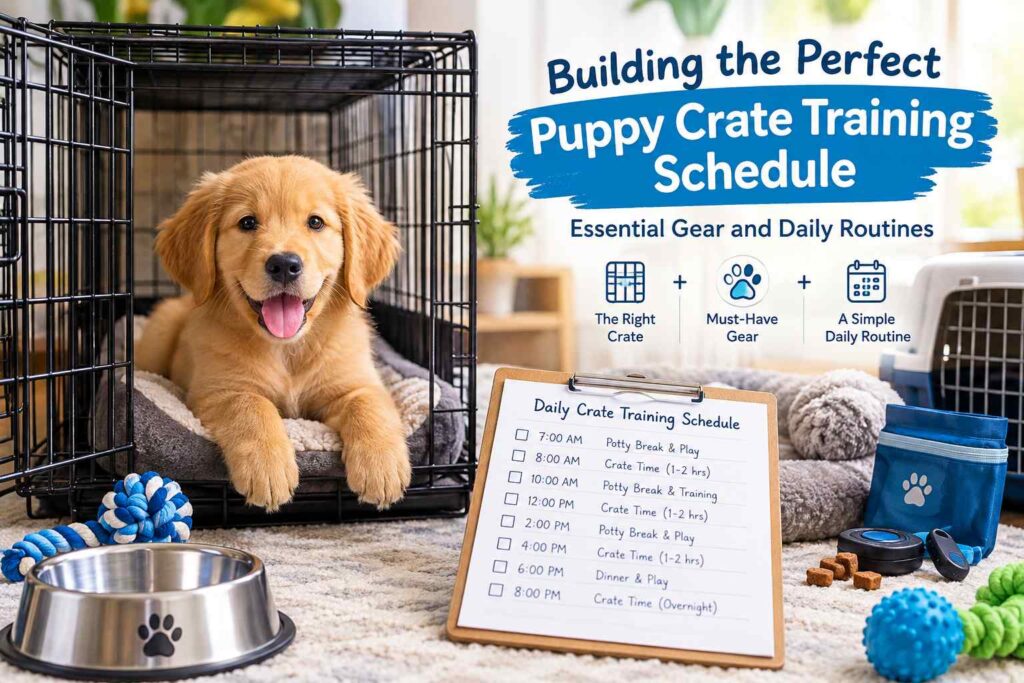
Building a Realistic Puppy Crate Training Schedule
Puppies thrive on predictability. A schedule helps regulate their digestion, establishes sleep patterns, and drastically reduces house training accidents.
When creating your routine, keep the golden rule of puppy bladders in mind: a puppy can generally hold their bladder for one hour for every month of age, plus one. Therefore, a two-month-old puppy needs a potty break at least every three hours during the day.
Below is a sample daily structure for a young puppy (8 to 12 weeks old). You can adjust the exact times to fit your work and sleep habits, as long as the intervals remain consistent.
| Time of Day | Activity | Crate Status |
| 7:00 AM | Wake up and immediate potty trip outside. | Out of crate |
| 7:15 AM | Breakfast, followed by a short play session or training. | Out of crate |
| 8:00 AM | Second potty trip, then settle in with a safe chew toy. | In crate |
| 10:00 AM | Mid-morning potty break and brief playtime. | Out of crate |
| 10:30 AM | Nap time. | In crate |
| 12:30 PM | Lunchtime, potty break, and supervised play. | Out of crate |
| 1:30 PM | Afternoon nap. | In crate |
| 3:30 PM | Potty break, followed by a walk or active play. | Out of crate |
| 4:30 PM | Late afternoon rest. | In crate |
| 6:00 PM | Dinner, potty trip, and family time. | Out of crate |
| 8:00 PM | Evening wind-down (limit water intake after this point). | Out of crate |
| 9:30 PM | Final potty trip before bed. | In crate |
| 2:00 AM | Middle-of-the-night potty break (keep it quiet and calm). | Out of crate briefly |
The Importance of the Midnight Break for Puppy Crate Training Schedule
For the first few weeks, young puppies will not make it through the night. Set an alarm to take them out before they wake up crying. Keep the lights low, do not engage in playtime, and return them immediately to the crate once they finish their business.
Choosing the Right Crate: What to Look For
The market is flooded with crate options, but not all of them are suitable for a puppy in active training. The crate you choose directly impacts how quickly your dog adapts to the schedule.
1. Crate Size and Dimensions
The most common mistake owners make is buying a crate that is too large. If a crate has too much square footage, a puppy will sleep in one corner and relieve themselves in the other.
The crate should only be large enough for the puppy to stand up, turn around comfortably, and lie down with their legs extended. Because puppies grow quickly, look for a crate that includes a divider panel. This allows you to buy a crate that will fit their adult size, while temporarily shrinking the usable space to fit their current size.
2. Crate Materials: Wire vs. Plastic
For early training, you generally have two main options:
- Wire Crates: These are the most popular choice for training. They offer excellent ventilation, allow the puppy to see their surroundings, and usually come with a removable plastic tray that makes cleaning up accidents incredibly easy. Most wire crates also include the crucial divider panel.
- Plastic Travel Crates: Often called airline crates, these are enclosed with ventilation slats on the sides and a wire door. Some dogs prefer these because they naturally feel more like a secluded, dark den. However, they are harder to clean, do not typically come with dividers, and can get warm in hot climates.
Note: Avoid soft-sided fabric crates for young puppies. Sharp teeth and digging claws will quickly destroy the mesh, presenting both an escape risk and an ingestion hazard.
Essential Crate Accessories Worth Considering
An empty crate is uninviting. By adding a few strategic products, you can make the space highly rewarding.
Durable, Safe Chew Toys
Puppies need something to do when they are awake in the crate. A durable, hollow rubber toy (like a classic KONG) is an excellent investment. You can stuff it with wet puppy food, plain peanut butter (ensure it does not contain xylitol/birch sugar), or plain yogurt, and freeze it.
Freezing the toy accomplishes two things: it soothes teething gums and extends the time it takes the puppy to empty it, keeping them occupied while you leave the room.
Crate Covers
If you opt for a wire crate, a crate cover can be a valuable tool. Covering the crate reduces visual stimuli, signaling to the puppy that it is time to rest. You can purchase fitted canvas covers, but a breathable, dark bedsheet works just as well. Always ensure at least one side remains uncovered for adequate air circulation.
Heartbeat Behavioral Aids
The transition from sleeping in a pile of littermates to sleeping alone in a crate can be jarring. Behavioral aid toys, which feature a battery-operated pulsing “heartbeat” and sometimes a heat pack, can provide immense comfort during the first few weeks. These plush toys mimic the physical presence of another dog, often reducing nighttime crying and anxiety.
Bedding Considerations
While it is tempting to buy a thick, plush bed, hold off until your puppy is reliably house-trained and past the heavy chewing phase.
Thick bedding can absorb urine, masking the smell and encouraging the puppy to continue using the crate as a bathroom. Furthermore, bored puppies will often rip apart soft beds and swallow the stuffing, which can cause severe intestinal blockages requiring emergency veterinary surgery.
Start with a simple, thin crate mat or easily washable towels. If your puppy chews on the towels, remove them completely. Many puppies actually prefer the cool surface of the plastic tray. If you find your dog is having accidents despite a solid routine and proper crate sizing, read our guide on how to stop puppy from peeing in crate for targeted troubleshooting steps.
Crate Safety Rules
When establishing your routine and outfitting the crate, safety must dictate your decisions.
- Remove all collars and harnesses: Before your dog goes into the crate, take off their collar. Dog tags and collar loops can easily get caught in the wire mesh of a crate door, creating a severe strangulation risk.
- Never use the crate as punishment: If you angrily force your dog into the crate after they misbehave, they will associate the space with fear and isolation. The crate must remain a neutral or positive environment.
- Monitor the temperature: Crates placed in direct sunlight can quickly overheat. Ensure the crate is in a climate-controlled area of the home, free from drafts and direct heating vents.
- Limit time in the crate: Except for overnight sleeping, young puppies should not be crated for more than a few hours at a time during the day. Extended isolation can lead to behavioral issues, muscle atrophy, and severe anxiety.
Creating a successful crate environment takes a bit of planning and the right supplies, but the investment pays off. By adhering to a steady schedule and providing a safe, size-appropriate space, you are setting your dog up for a lifetime of good habits.
Frequently Asked Questions
How long does it take for a puppy to get used to a crate?
Every dog is different, but most puppies adapt within a few days to two weeks if you are consistent. Keeping the early sessions short, using high-value treats, and never forcing them inside will speed up the process.
Should I put water in the crate with my puppy?
For young puppies in active potty training, it is usually best to leave water bowls out of the crate to prevent spills and help regulate their bladder. Ensure they have plenty of access to fresh water when they are outside of the crate, but cut off water intake about an hour or two before bedtime.
What should I do if my puppy cries in the crate?
First, determine if it is a genuine need (like needing to go to the bathroom) or just a demand to be let out. If they have just been outside, wait for a brief moment of silence before opening the door. Letting a puppy out while they are actively barking teaches them that making noise unlocks the door.