
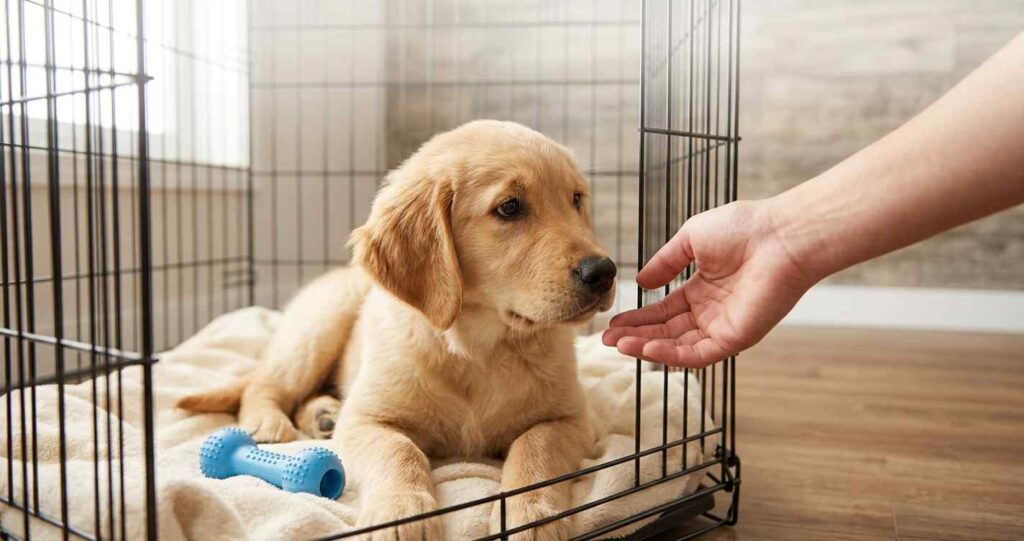
When you are facing a puppy crying in crate environments during their first few days at home, it can feel overwhelming and distressing. Vocalization inside a crate is completely normal for young dogs. Up until they arrived at your home, they spent every moment surrounded by the warmth, sound, and scent of their mother and littermates. Sudden solitary confinement in an unfamiliar enclosure triggers a natural instinct to call for help.
To resolve crate crying without causing emotional trauma or encouraging bad habits, you must first determine why your puppy is crying, address their physical needs, and establish a clear routine that builds positive associations with the crate.
Quick Assessment: Why Is Your Puppy Crying?
Before taking action, identify which type of vocalization your puppy is exhibiting. Responding incorrectly—such as ignoring a full bladder or giving attention to demand barking—can delay progress or worsen the behavior.
| Whining Type | Key Vocal Patterns & Signals | Correct Response |
| Physical Need (Potty/Hunger) | Rhythmic whining, pacing, circling, sudden waking after 2–3 hours of sleep | Take them outside on a leash immediately for a quiet, low-key potty break. |
| Demand / Protest | Intermittent sharp yips, barking while looking at you, pausing to listen for a reaction | Ignore completely. Wait for at least 10–15 seconds of total silence before engaging or releasing. |
| Distress / Panic | Continuous shrieking, heavy panting, frantic digging, biting at wires, drooling | Intervene immediately. The puppy is overwhelmed; slow down training and reset the environment. |
Immediate Action Plan: What to Do Right Now
If your puppy is actively crying in their crate, follow this decision tree to handle the situation calmly and effectively.
Step 1: Check for Physical Needs
Young puppies have limited bladder capacity. As a general rule, a puppy can hold their bladder during the day for roughly one hour per month of age (e.g., an 8-week-old puppy can hold it for roughly 2 hours).
- If they haven’t eliminated recently: Put them on a leash, carry them or lead them calmly outside to their potty spot, and give them 3–4 minutes to go.
- Keep interaction neutral: Do not speak in high-pitched excitement, play, or offer affection during an overnight or quiet-time potty break. If they go, give brief, calm praise and return them to the crate.
- If they do not go within 4 minutes: Place them back inside the crate without frustration or punishment.
Step 2: Handle Demand Whining with Calm Consistency
If you have ruled out bathroom needs, hunger, or physical pain, a puppy crying in crate setups is likely testing boundaries or seeking attention.
- Turn your body away: Avoid eye contact, talking, or touching the crate while they are actively whining. Any attention—even saying “no”—signals to the puppy that crying gets a response.
- Reward silence: Mark the exact moment of quiet with a calm verbal cue (like “yes”) and drop a small treat inside, or wait for a quiet gap before opening the door.
4 Steps to Stop Crate Whining Long-Term
Long-term success relies on making the crate a space your puppy chooses for rest rather than a place where they feel trapped.
1. Build High-Value Crate Associations
Never use the crate exclusively for when you leave or go to sleep. Feed your puppy’s daily meals inside the open crate. Provide long-lasting, safe chew toys (such as rubber toys stuffed with puppy-safe filling) only while they are relaxing inside.
2. Manage Proximity During Early Days
Isolation combined with confinement causes double the anxiety for a young dog. During the first two weeks, place the crate in your bedroom near your bed at night. Hearing your breathing and smelling your presence drastically reduces night-time crying. During the day, keep the crate in a central living area where family activity occurs.
3. Exercise and Wind Down Before Crate Time
A puppy placed in a crate with bottled-up energy will inevitably vocalize. Before crate time, ensure your puppy receives:
- Physical exercise: Age-appropriate play, such as short games of fetch or tug.
- Mental stimulation: Sniffing games, basic obedience training, or puzzle toys.
- A wind-down period: 5–10 minutes of calm stroking or low-key interaction before placing them inside.
4. Practice Daytime Micro-Sessions
Do not wait until bedtime to practice Puppy crate training. Throughout the day, toss high-value treats into the crate and allow the puppy to walk in and out freely with the door open. Gradually progress to closing the door for 5 seconds, treating through the wire, and opening it before any whining starts.
Critical Mistakes That Worsen Crate Crying
- Using the Crate as Punishment: Never send a puppy to their crate in anger. This creates a negative association that turns the space into a place of fear.
- Opening the Door During Active Crying: Releasing a puppy while they are barking or whining teaches them that noise opens the door.
- Relying on the “Cry It Out” Method for Excessive Panic: While brief protest whining can be ignored, allowing a puppy to panic for extended periods can cause genuine distress and long-term behavioral issues.
- Leaving Collars or Harnesses On: Always remove collars, tags, and harnesses before crating to prevent dangerous snagging hazards.
When Crate Crying Signals Severe Distress
Normal protest whining usually diminishes within 10 to 15 minutes as the puppy settles. However, if resolving a puppy crying in crate situation seems impossible due to extreme panic, you may be dealing with true confinement distress or isolation anxiety.
Consult a certified professional force-free dog trainer or a veterinarian if you observe:
- Frantic attempts to dig or bite out of the wire, risking dental or nail injuries.
- Excessive drooling that leaves the puppy’s chest or crate bed soaked.
- Inability to settle even when you are sitting directly next to the crate.
- Urinating or defecating inside the crate immediately after being placed inside.
Frequently Asked Questions
How long should I let my puppy cry in the crate?
Minor protest whining usually lasts 5 to 15 minutes. If a puppy is crying continuously for longer than 20–30 minutes, or if the crying escalates into frantic panic, you should intervene calmly to check physical needs or adjust your training distance.
Should I cover my puppy’s crate with a blanket?
A breathable sheet or custom crate cover can reduce visual stimulation and help many puppies settle faster. However, ensure adequate ventilation and make sure your puppy cannot pull the fabric through the wires to chew or swallow it.
Why is my puppy crying in the crate suddenly after being fine?
Sudden regression in crate training can be caused by teething discomfort, developmental fear periods (common around 8–12 weeks and again during adolescence), changes in daily routine, or an underlying medical issue such as a urinary tract infection.