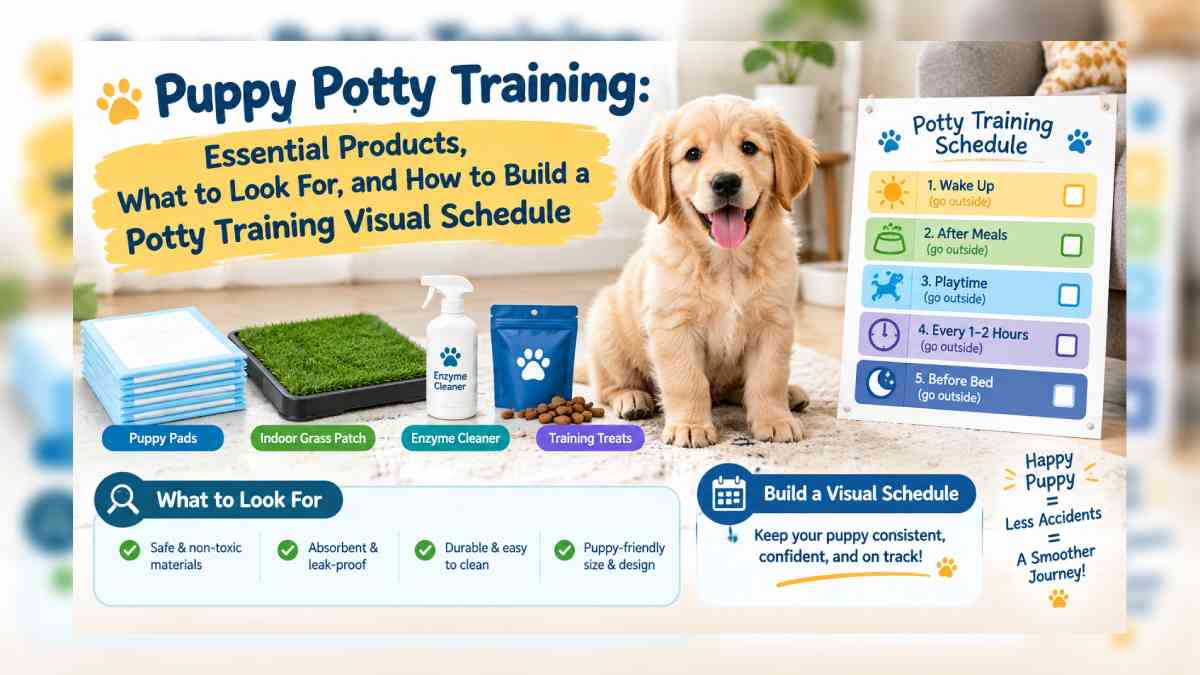
Puppy Potty Training: Essential Products, What to Look For, and How to Build a Potty Training Visual Schedule
Housebreaking a new puppy is one of the most important early challenges every dog owner faces. While the process requires patience, success rarely depends on luck. It comes down to two foundational elements: a predictable daily routine—best managed with a potty training visual schedule—and selecting the right tools to support good habits.
Without a structured plan, potty training often devolves into guessing games, missed cues, and frustration. Puppies have small bladders and undeveloped muscle control, meaning their urge to eliminate happens quickly and frequently. By combining a clear visual schedule with thoughtfully selected management products, you create an environment where your puppy can easily understand what is expected of them.
Why a Potty Training Visual Schedule Is Essential
Puppies thrive on routine. Their biological systems run like clockwork: eating, drinking, playing, and sleeping all trigger the digestive tract and bladder in predictable patterns. A visual schedule maps out these natural rhythms so that every human caregiver in the household remains consistent.
The Science of Puppy Bladder Control
A helpful guideline for estimating a puppy’s maximum physical bladder capacity during rest is their age in months plus one hour.
- 8 Weeks Old: 2 to 3 hours maximum during rest.
- 12 Weeks Old: 3 to 4 hours maximum during rest.
- 16 Weeks Old: 4 to 5 hours maximum during rest.
However, active puppies need to eliminate far more frequently than resting puppies. During periods of play, eating, or drinking, an eight-week-old puppy may need a potty break every 20 to 30 minutes.
Setting Up a Visual Routine
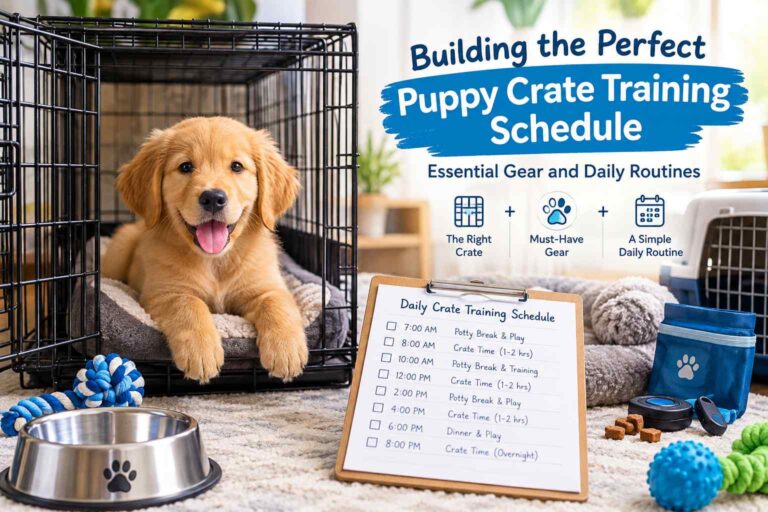
Placing a physical chart or visual schedule on the refrigerator or command center keeps the entire household aligned. A visual schedule uses clear time blocks, color coding, or simple icons to mark key transition points throughout the day.
| Time Block | Activity / Event | Potty Action Required |
| 6:30 AM | Wake Up | Immediate outdoor trip directly from crate |
| 7:00 AM | Breakfast & Water | Supervised indoor time |
| 7:15 AM | Post-Meal Transition | Outdoor trip (10–15 mins after eating) |
| 7:30 AM – 9:00 AM | Crate Rest / Nap | Rest period |
| 9:00 AM | Wake Up | Immediate outdoor trip |
| 9:15 AM – 10:00 AM | Supervised Play | Mid-play trip at 9:35 AM |
| 12:00 PM | Lunch & Water | Outdoor trip 10–15 mins after meal |
| 3:00 PM | Post-Nap | Immediate outdoor trip |
| 5:30 PM | Dinner & Water | Outdoor trip 10–15 mins after meal |
| 7:00 PM | Water Bowl Removed | Prevents late-night bladder fullness |
| 10:00 PM | Final Nighttime Trip | Outdoor trip before bedtime crate entry |
Using a schedule like this eliminates ambiguity. If two or more people share caregiving duties, logging every successful trip and accident on a shared sheet prevents double-feeding or forgotten potty breaks.
Essential Potty Training Gear and What to Look For
While a schedule provides the framework, physical tools help manage your environment and reinforce positive behavior. Not all pet products are created equal; choosing high-quality, functional gear saves time, protects your home, and keeps your puppy safe.
1. Crates and Containment Playpens
Dogs naturally avoid sleeping in their own waste once they develop den instincts. A crate leverages this instinct by encouraging the puppy to hold their bladder until they are released.
What to Look For:
- Divider Panels: Buy a crate sized for your puppy’s expected adult dimensions, but ensure it includes a movable divider panel. If the crate is too large, the puppy will sleep in one corner and eliminate in another. The usable space should allow the puppy to stand up, turn around, and lie down comfortably—nothing more.
- Safety & Construction: Wire crates offer good ventilation and visibility, while plastic travel crates provide a cozier, more enclosed feel. Ensure latches are secure and wire ends are smooth to prevent injury.
- Playpens (X-Pens): A playpen attached to a crate offers a safe, contained zone for play without giving the puppy free run of the house where accidents can go unnoticed.
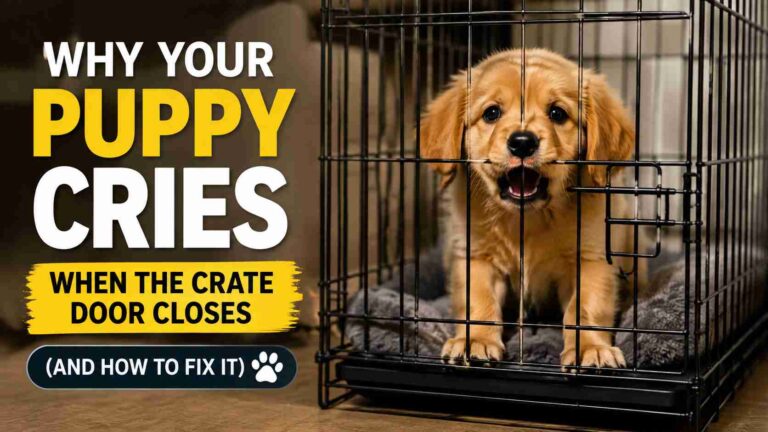
For step-by-step guidance on introducing your dog to their enclosure safely, review our detailed guide on puppy crate training schedule strategies.
2. Enzymatic Cleaners
When a puppy has an accident indoors, standard carpet cleaners or ammonia-based household sprays are insufficient. Urine contains uric acid crystals that bind to carpet fibers, wood, and tile grout. While standard soap may remove the odor to human noses, a dog’s keen sense of smell can still detect the residual scent, marking that spot as a designated bathroom.
What to Look For:
- True Bio-Enzymatic Formulas: Look for products that specifically state they contain enzymatic cultures or beneficial bacteria designed to break down uric acid into carbon dioxide and water.
- Non-Toxic & Pet-Safe Ingredients: Ensure the cleaner is safe to use around animals once dry, free of harsh bleaching agents, and safe for carpet fibers or hardwoods.
- Multi-Surface Compatibility: Check whether the product is approved for wood, upholstery, or rugs, depending on your flooring type.
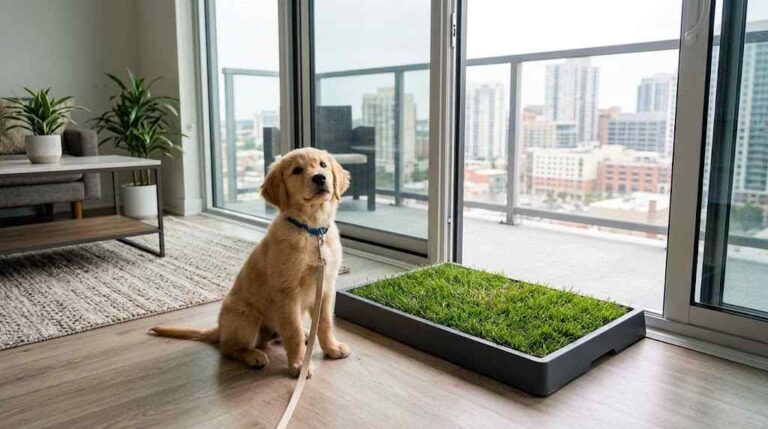
3. Potty Pads vs. Indoor Grass Patches
Deciding where your puppy should eliminate depends heavily on your living situation. Apartment dwellers or high-rise residents may need an indoor solution, whereas single-family homeowners usually train directly to outdoor yards.
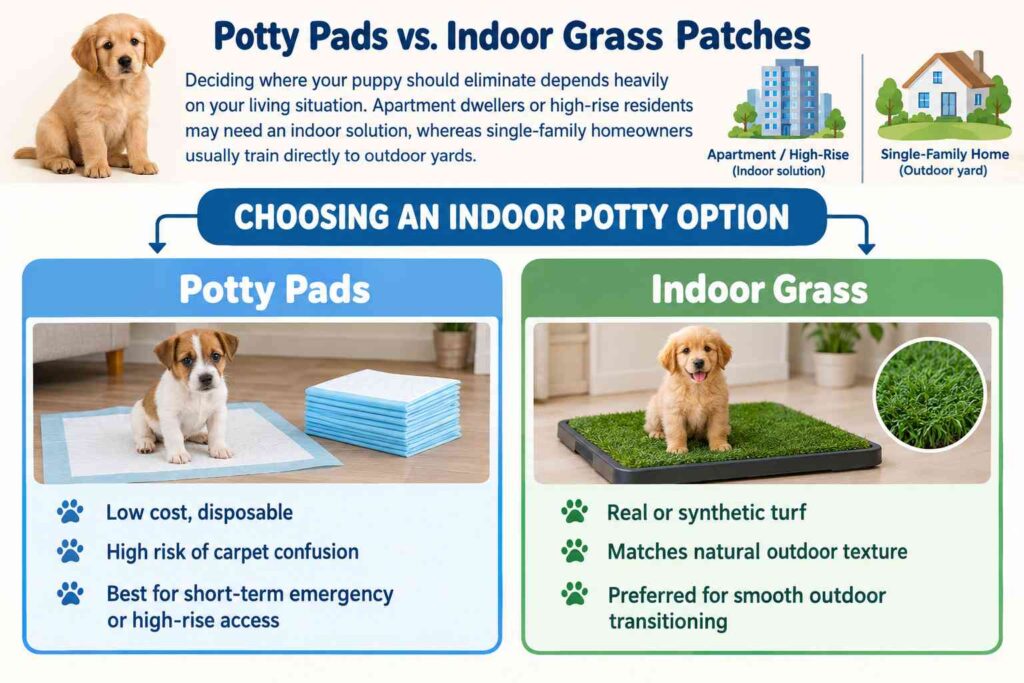
Absorbent Potty Pads:
- Pros: Convenient, inexpensive, easy to dispose of.
- Cons: Can teach puppies that soft, fabric-like surfaces underfoot (like rugs, bathmats, or blankets) are acceptable bathroom spots.
- What to Look For: Multi-layer construction with a leak-proof polymer backing, tear-resistant top sheet, and built-in odor neutralizers. Look for pads with adhesive corners to prevent sliding.
Hydroponic Grass & Synthetic Turf Trays:
- Pros: Mimics the texture and smell of real outdoors, making the eventual transition to yard-only pottying significantly easier.
- Cons: Requires regular cleaning (synthetic) or ongoing subscription replacement (real grass).
- What to Look For: For synthetic trays, choose multi-piece systems with a raised drainage grate and a deep collection tray underneath. For real grass, look for locally sourced, soil-free hydroponic sod pads that do not deteriorate quickly indoors.
4. Communication Tools (Bells & Chimes)
Potty bells hang from a door handle and allow a puppy to alert you when they need to go outside, replacing unwanted behaviors like barking, whining, or scratching at doors.
What to Look For:
- Durability: Choose heavy-duty nylon straps with firmly riveted brass or stainless steel bells. Avoid flimsy ribbon-based options that a puppy can chew off and swallow.
- Adjustable Length: Look for straps with multiple snap points so you can position the bottom bell directly at your puppy’s nose height.
- Alternative Button Systems: Electronic touch-buttons placed near floor level are a great option for shy puppies or smaller breeds that lack the force to ring heavy metal bells.
5. Training Leashes and Treat Pouches
Potty training requires direct supervision. Letting a puppy wander into the yard alone rarely works, as they easily become distracted by leaves, bugs, or scents.
What to Look For:
- 4-to-6-Foot Standard Nylon/Leather Leash: Retractable leashes should never be used for potty training; they lack precise control and encourage pulling. A standard fixed-length leash keeps the puppy focused on the task.
- Silicone or Washable Treat Pouches: Timing is everything in canine learning. You must reward your puppy within 1 to 3 seconds of them completing elimination. A clip-on treat pouch ensures high-value rewards (like small pieces of cooked chicken or soft training treats) are always on hand outdoor.
How to Combine Your Visual Schedule with Your Tools
Having the right products is only half the equation; integrating them into a seamless daily routine is what delivers results.
Step-by-Step Outing Workflow
- Follow the Clock: Consult your visual schedule. When a potty event is indicated (e.g., immediately upon waking), go straight to the crate.
- Leash Up First: Clip the leash onto your puppy’s collar or harness before opening the crate door or immediately upon picking them up. Do not let them wander across the floor on their way to the door.
- Ring the Bell: As you reach the door, gently guide the puppy’s paw or nose to touch the potty bell, say a consistent cue (like “Outside”), and open the door immediately.
- Go to the Designated Spot: Walk on-leash directly to the same 5×5 foot area of the yard every time. This designated spot accumulates scent cues that prompt elimination.
- Give the Cue and Wait: Stand quietly in one spot and give your verbal cue (“Go potty”) once. Give the puppy 3 to 5 minutes to sniff and circle. Avoid playing or talking excessively during this window.
- Mark and Reward Instantly: The second your puppy finishes eliminating, mark the moment verbally (“Yes!”) and deliver a high-value treat from your pouch within two seconds. Follow up with soft verbal praise.
- Return or Transition: If they went potty, grant 20–30 minutes of supervised play indoors or extra yard time. If they did not go within 5 minutes, return indoors and place them back in their crate or pen, resetting the timer for 15–20 minutes before trying again.
Common Pitfalls That Sabotage Potty Training
Even with a detailed visual schedule and top-rated products, minor mistakes can slow down progress. Avoiding these common traps keeps your training moving forward.
Cleaning with Ammonia-Based Products
Ammonia is a byproduct of urine breakdown. When you clean a potty accident with an ammonia-rich glass or floor cleaner, the residual scent signals to the puppy that the area is a designated bathroom spot. Always use dedicated bio-enzymatic formulas instead.
Punishing Indoor Accidents
Catching a puppy mid-accident can be frustrating, but punishing them (rubbing their nose in waste, yelling, or swatting) is counterproductive. Puppies do not associate delayed punishment with their earlier action. Instead, they learn that eliminating in front of you is dangerous. This causes them to hide behind couches or under beds to relieve themselves indoors, making training significantly harder.
Safety & Health Note: If your puppy is suddenly having frequent accidents, strain to urinate, or cannot hold their bladder despite following a strict schedule, consult a veterinarian. Conditions like Urinary Tract Infections (UTIs), intestinal parasites, or diabetes can mimic behavioral potty training issues and require medical treatment.
Giving Freedom Too Early
Unearned freedom is the leading cause of housebreaking relapses. A puppy should not have full access to multiple rooms until they have gone 4 to 6 weeks without a single indoor accident. Keep your puppy in your direct line of sight, tethered to you via a light leash, or inside a secure crate or pen when you cannot supervise them directly.
Setting Realistic Expectations
Potty training is a developmental process, not an overnight event. Most puppies achieve basic bladder control and understand the concept of housebreaking between 4 and 6 months of age, but full reliability usually takes until 7 to 8 months.
By staying consistent with your potty training visual schedule, keeping your environment managed with appropriate crates and enzymatic cleaners, and rewarding success immediately, you set your puppy up for a lifetime of good indoor habits.
Frequently Asked Questions
How long does it take to fully potty train a puppy?
Most puppies take between 4 to 6 months to become reliably potty trained, though complete reliability without supervision often takes until 8 to 12 months of age. Factors like breed size, consistency, and early management play major roles in the timeline.
Should I use potty pads if I plan to train my puppy outdoors eventually?
If you have easy, safe access to a private outdoor space, it is usually best to skip pads entirely and train directly outdoors. Using pads can create a preference for soft indoor surfaces. However, for residents of high-rise apartments or puppies waiting on final vaccinations in high-risk disease areas, indoor real-grass patches or leak-proof pads offer a necessary temporary alternative.
How do I adjust a visual schedule if my family members work different shifts?
The visual schedule should revolve around the puppy’s internal timeline rather than a specific clock time. Post a daily log sheet next to the schedule where each family member writes down the exact time the puppy ate, drank, went potty, or had an accident. The next person on duty simply looks at the last entry and calculates the next required outing based on the puppy’s age and activity.
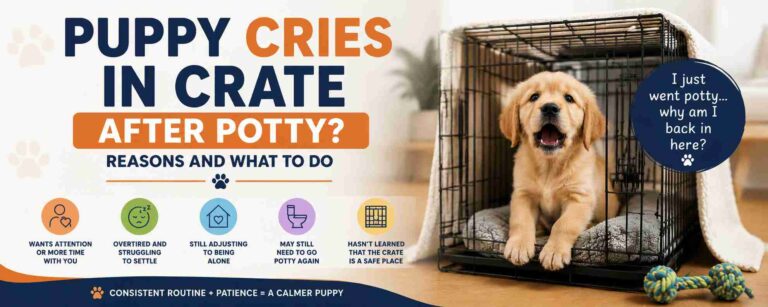
What should I do if my puppy keeps having accidents inside their crate?
First, verify that the crate is properly sized using a divider panel; it should only be large enough for the puppy to stand, turn, and lie down. Next, shorten the duration the puppy spends in the crate, as their bladder capacity may be exceeded. Remove soft bedding temporarily if the puppy is using it to absorb urine, and thoroughly clean the crate pan with an enzymatic cleaner to remove lingering odors.