
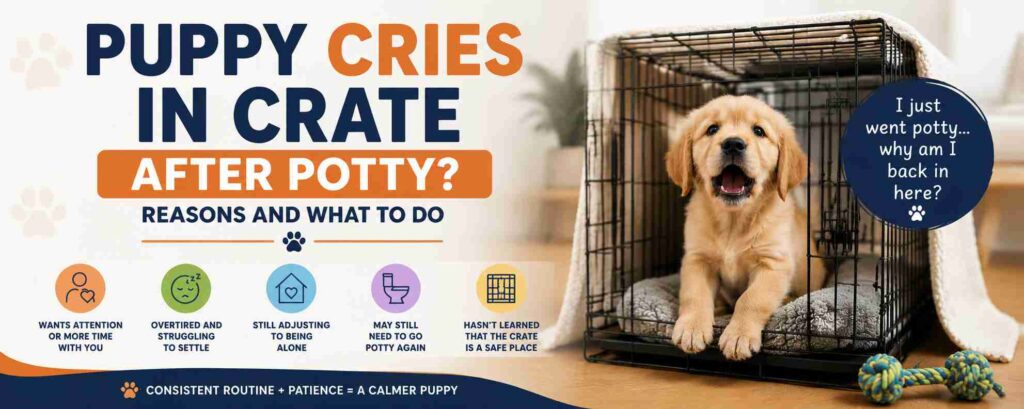
Bringing a puppy outside for a potty break and putting them back into their crate should feel like a successful routine. But many owners experience a confusing moment: the puppy cries in the crate after potty, even though they have just gone to the bathroom.
In most cases, a puppy crying after a potty break is not a sign that something is wrong. Young puppies are still learning that the crate is a safe resting place, and they may cry because they want attention, feel lonely, are not ready to settle down, or are still adjusting to their new routine.
The key is learning why your puppy is crying and responding in a way that supports calm crate habits without accidentally teaching them that crying always leads to freedom.
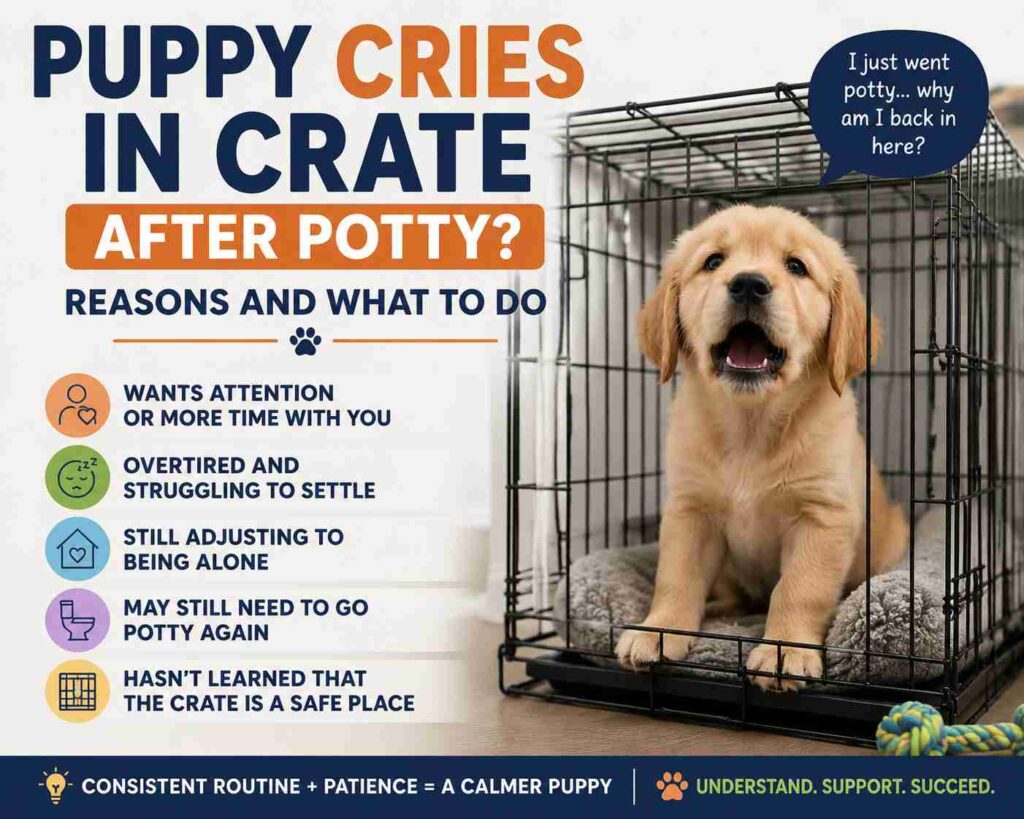
Why Does a Puppy Cry in the Crate After Potty?
A puppy may cry after a potty break because they are experiencing one or more of these common reasons:
- They still want attention or interaction.
- They have not learned how to relax in the crate.
- They are overtired and struggling to settle.
- They are uncomfortable with being alone.
- They are still adjusting to a new home.
- They need a different crate routine.
- They may still need another potty opportunity, especially if they are very young.
A potty trip solves one need, but it does not automatically solve every reason a puppy may vocalize.
Your Puppy May Not Understand That Potty Time Is Over
For many puppies, going outside is exciting. They experience new smells, movement, sounds, and attention from their owner. When they return to the crate, the sudden change from activity to quiet can feel frustrating.
A puppy may think:
“We were just outside having fun. Why are we stopping now?”
This is especially common in young puppies who have not yet developed strong self-settling skills.
A consistent routine helps your puppy learn that:
Potty → calm return → crate → rest
is a normal part of the day.
Common Reasons Puppy cries in crate after potty Put Back in the Crate
1. Your Puppy Wants More Time With You
Puppies are social animals. After waking up and going outside, many puppies want to continue interacting with their people.
They may cry because:
- They want to play.
- They want to be held.
- They want attention.
- They do not want the interaction to end.
This does not necessarily mean they need another potty trip.
If every cry results in being released from the crate, a puppy can quickly learn:
“If I cry, the crate door opens.”
That lesson can make crate training harder over time.
2. Your Puppy Has Not Learned to Relax in the Crate
A crate is not automatically comforting to a puppy. Dogs learn associations through repeated experiences.
A puppy who only enters the crate when people leave or when fun stops may see it as a place where good things disappear.
Positive crate experiences can help your puppy build confidence.
Helpful habits include:
- Feeding meals near or inside the crate.
- Giving appropriate chew items while supervised.
- Allowing short periods of calm crate time during the day.
- Keeping the crate associated with rest, not punishment.
3. Your Puppy Is Overtired
Many puppies become louder when they actually need sleep.
An overtired puppy may:
- Whine.
- Bark.
- Bite at objects.
- Struggle to settle.
- Seem restless despite being tired.
Like young children, puppies do not always know how to calm themselves when they are exhausted.
After potty, a quiet crate routine may help them transition from activity to sleep.
4. Your Puppy Is Still Adjusting to Being Alone
A new puppy has experienced a major life change. They may have recently left their littermates and entered an unfamiliar environment.
Crying can happen because:
- The crate feels unfamiliar.
- They are used to sleeping near others.
- They are not comfortable with separation yet.
Building independence gradually is usually more effective than expecting a puppy to immediately enjoy being alone.
5. The Potty Break May Not Have Fully Solved the Problem
Sometimes a puppy cries after potty because they still need to go.
This is more likely if:
- The puppy is very young.
- They drank a lot of water.
- They became distracted outside.
- They did not actually eliminate.
- Their bathroom schedule has changed.
Before assuming the crying is behavioral, consider whether there is a genuine need.
What Should You Do When Your Puppy Cries After Potty?
Your response matters. The goal is to meet your puppy’s needs while helping them learn calm crate behavior.
Follow a Calm Potty-to-Crate Routine
Try keeping the routine predictable:
- Take your puppy outside for a bathroom break.
- Keep the potty trip focused and calm.
- Praise appropriate potty behavior.
- Return indoors quietly.
- Place your puppy in the crate.
- Allow time for settling.
Avoid turning every nighttime potty trip into playtime.
Should You Ignore a Puppy Crying in the Crate After Potty?
It depends on the situation.
Ignoring every sound is not always appropriate, especially with very young puppies or puppies who may have a real need.
Consider:
- Did your puppy actually go potty?
- Is the crying escalating?
- Is this a new behavior?
- Could your puppy be uncomfortable?
- Has enough time passed since the last bathroom break?
If you are confident your puppy’s needs are met, giving them a chance to settle can help them practice calm behavior.
Avoid These Common Crate Training Mistakes
Letting the Puppy Out Every Time They Cry
This can accidentally reward crying.
Instead, try to create opportunities for your puppy to experience calm behavior leading to positive outcomes.
Puppy Cries In Crate After Potty Making Potty Trips Too Exciting
If nighttime or rest-time potty breaks include:
- Playing,
- Long conversations,
- Lots of movement,
- Extra attention,
your puppy may learn that waking up leads to fun activities.
Keep necessary potty trips boring and predictable.
Using the Crate as Punishment
A crate should be a safe resting area.
Avoid sending your puppy to the crate only after unwanted behavior, because this can create negative associations.
How Long Should You Let a Puppy Cry in the Crate After Potty?
There is no single amount of time that works for every puppy.
Age, temperament, previous training, and individual needs all affect how quickly a puppy learns to settle.
A very young puppy may need more support, while an older puppy who understands crate routines may settle more easily.
For more guidance on this topic, see: How Long to Let a Puppy Cry in the Crate.
Signs Your Puppy May Need Extra Help
Most crate crying is part of normal puppy adjustment, but contact a veterinarian if you notice concerns such as:
- Sudden changes in behavior.
- Signs of pain or illness.
- Vomiting or diarrhea.
- Extreme distress.
- Injuries from trying to escape the crate.
- Significant changes in eating, drinking, or bathroom habits.
A puppy that seems physically uncomfortable may need attention beyond crate training adjustments.
How to Help Your Puppy Become More Comfortable in the Crate
Building crate confidence takes patience and consistency.
Helpful steps include:
Create Positive Associations
Reward calm behavior around the crate. The goal is for your puppy to view the crate as a normal resting place.
Practice During the Day
Do not make the crate only a nighttime or separation tool.
Short, positive daytime sessions can help your puppy learn that crate time is normal.
Keep Expectations Realistic
A puppy is still developing emotional control and learning household routines. Progress is usually gradual.
Frequently Asked Questions
Why does my puppy cry after going potty at night?
A puppy may cry after a nighttime potty break because they are not ready to settle, want attention, feel uncomfortable alone, or are still learning the sleep routine. Keep nighttime trips calm and predictable.
Should I take my puppy out again if they cry after potty?
If your puppy just eliminated and appears comfortable, they may not need another trip outside. However, very young puppies or puppies showing signs of needing to go may need another opportunity.
How do I stop my puppy from crying in the crate after potty?
Focus on a consistent routine, avoid rewarding crying with immediate release, and help your puppy build positive crate associations through calm training sessions.
Is crate crying normal for a new puppy?
Yes, many puppies cry while adjusting to crate training and being separated from their owners. The important part is responding consistently while making sure their needs are met.