Puppy Potty Training Mistakes to Avoid (And What to Do)
Common Puppy Potty Training Mistakes-and What to Do Instead. Potty training a new puppy is rarely a straight line. Many dog owners expect a few accidents during the first week, only to find themselves weeks later still cleaning urine stains off the living room rug. When progress stalls, it is easy to assume the puppy is being stubborn, dominant, or slow to learn.
In reality, puppies do not misbehave out of spite. zz delays almost always stem from communication gaps, environmental setup errors, or subtle misunderstandings of canine biology. Small adjustments in how you supervise, clean, and reward can transform a frustrating cycle into a smooth routine.
Here are nine of the most common puppy potty training mistakes, why they derail your progress, and the exact steps to take instead.
1. Punishing Accidents After the Fact
Finding a puddle on the floor three minutes—or three hours—after it happened is frustrating. However, scolding your puppy, rubbing their nose in the mess, or bringing them over to look at it does not teach them where to go.
Dogs live in the immediate moment. They associate your reaction with whatever they are doing at the exact second you react. If you react angrily to a puddle on the carpet while your puppy is sitting quietly near you, the puppy learns that you are unpredictable and scary when urine is present, not that urinating indoors was wrong.
What to Do Instead
- If you catch them in the act: Gently interrupt with a calm, neutral word like “outside” or a quick clap. Immediately scoop the puppy up and carry them to their designated outdoor bathroom spot. If they finish outside, give quiet praise.
- If you find the mess later: Clean it up silently without acknowledging the puppy. Take a mental note of how long it had been since their last trip outside, and adjust your timer for the next break.
2. Using Non-Enzymatic Cleaners
Standard household disinfectants, bleach, or ammonia-based cleaners may make your floors smell fresh to human noses, but they leave behind chemical traces that attract dogs back to the exact same spot.
Urine contains uric acid crystals, which do not break down with standard soap and water. Furthermore, ammonia smells chemically similar to urine components to a dog’s keen sense of smell. Cleaning a spot with an ammonia cleaner essentially marks that area as an acceptable target for their next turn.
Standard Cleaner –> Leaves Uric Acid Crystals –> Dog Smells Target –> Accident Repeats
Enzymatic Cleaner –> Breaks Down Organic Compounds –> Odor Neutralized –> Spot Forgotten
What to Do Instead
Invest in an enzymatic cleaner designed specifically for pet waste. Enzymatic formulas contain biological enzymes that break down uric acid crystals into natural compounds, removing both the stain and the microscopic odor markers that invite repeated accidents.
3. Granting Unrestricted House Access Too Soon
Giving a young puppy free run of the house invites trouble. When a puppy has access to multiple rooms, they treat the living room rug or the spare bedroom corner as a separate area away from their sleeping zone.
Puppies naturally avoid soil where they sleep and eat. However, if the home feels vast, they do not view the far corner of the house as part of their living space.
[ Large Living Space ] ──> Puppy moves away from bed ──> Soils hidden corner
[ Restricted Space ] ──> Entire area feels like “den” ──> Signals to go out
What to Do Instead
Restrict your puppy’s environment using crate training, exercise pens (X-pens), or baby gates. Maintain a clear line of sight.
- The Tethering Method: Keep the puppy on a lightweight six-foot leash attached to your belt while you work or move around the house.
- Zone Expansion: Keep the puppy confined to one easily cleaned room (like a kitchen or utility room) until they go two full weeks without an indoor accident before granting access to a second room.
4. Miscalculating Bladder Capacity and Holding Times
Expecting a two- or three-month-old puppy to hold their bladder for five or six hours while you are away is biologically unrealistic. A puppy’s bladder muscle control develops gradually over their first six months.
A general guideline for maximum daytime bladder capacity is:

For example, a 2-month-old puppy can physically hold their bladder for a maximum of 3 hours under ideal, resting conditions. During active play, drinking, or excitement, that time drops significantly—sometimes to every 20 or 30 minutes.
Physical Potty Timetable Guidelines
| Puppy Age | Estimated Max Holding Time (Resting) | Recommended Break Frequency (Active/Awake) |
| 8–10 Weeks | 1 to 2 Hours | Every 30–45 Minutes |
| 10–14 Weeks | 2 to 3 Hours | Every 45–60 Minutes |
| 14–18 Weeks | 3 to 4 Hours | Every 1 to 2 Hours |
| 18+ Weeks | 4 to 6 Hours | Every 2 to 3 Hours |
Note: Individual hold times vary based on breed size, water consumption, and activity levels.
5. Rewarding at the Wrong Time or Location
Rewarding your puppy is essential for fast house training, but improper timing can lead to confusion.
A common mistake is waiting until the puppy comes back inside the house to hand them a treat. When you treat inside, the puppy connects the reward with entering through the back door or walking into the kitchen, not with urinating on the grass outside.
Incorrect Flow: Pee Outside ──> Walk Inside ──> Get Treat (Puppy thinks: “Walking inside gets treats!”)
Correct Flow: Pee Outside ──> Treat IMMEDIATELY ──> Walk Inside (Puppy thinks: “Peeing outside gets treats!”)
What to Do Instead
- Keep high-value treats (like small bits of freeze-dried liver or plain cooked chicken) in your pocket or a pouch while outside.
- Wait until your puppy finishes completely. As soon as the last drop hits the grass, deliver the treat directly to their mouth within two seconds, accompanied by calm praise.
6. Relying Heavily on Pee Pads (Without a Transition Plan)
Puppy pads offer convenience, especially for high-rise apartment dwellers or unvaccinated puppies with limited yard access. However, long-term or unguided pad usage often creates substrate confusion.
Puppies learn what surfaces feel like beneath their paws when eliminating. Soft paper pads feel remarkably similar to bathroom mats, living room rugs, blankets, and bed sheets. If a puppy learns that soft fabric on the floor is an acceptable toilet, they will naturally target other household fabrics.
Puppy Pad (Soft Fabric Texture) <== Similar Texture ==> Carpet / Rug / Bathmat
Puppy Grass (Natural Texture) <== Distinct Texture ==> Outdoor Yard / Turf
What to Do Instead
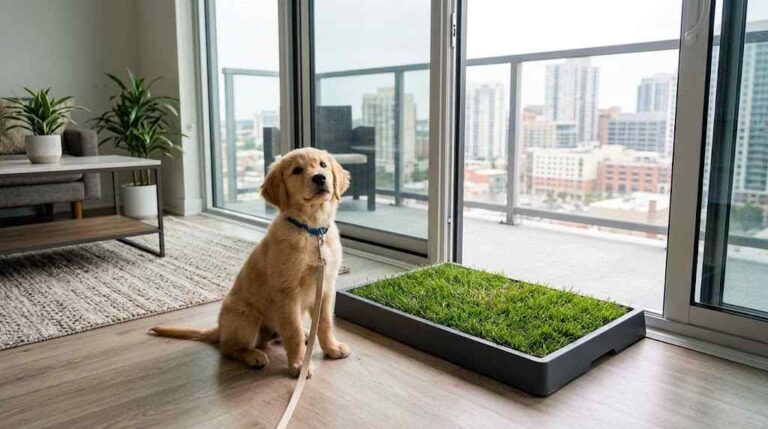
If outdoor trips are safe and practical, bypass paper pads entirely and train directly on grass or dirt. If you must use pads initially, consider real grass patches or synthetic turf trays to establish an authentic texture preference.
7. Missing Subtle Pre-Elimination Signals
Owners often report that an accident happened “out of nowhere.” In reality, puppies display clear physical signs right before they eliminate. Because these signals last only a few seconds, they are easy to miss if you are distracted by a phone or television.
Common Pre-Elimination Signals to Watch For:
- Sudden sniffing of the floor while lowering the head.
- Abruptly stopping play or walking away from a toy.
- Circling in a tight area.
- Moving toward a door, hallway, or hidden corner.
- Sudden restlessness or pacing.
What to Do Instead
Maintain active supervision during out-of-crate time. If you notice any of these behaviors, immediately invite your puppy outside or carry them out to their designated spot.
8. Taking the Puppy Directly Inside After They Potty
When a puppy finishes their business outside, owners often pack up and head straight back indoors.
If your puppy loves being outdoors, ending outdoor play the moment they eliminate teaches them a unintended lesson: peeing ends the fun. To prolong their time outside, the puppy may hold their bladder longer and longer on walks, only to relieve themselves immediately upon returning home where it is safe.
Pee Outside –> Immediately Brought Inside –> Fun Ends –> Dog Learns to Delay Peeing
Pee Outside –> 5 Minutes of Play/Exploration –> Good Things Continue –> Fast Potty Habits
What to Do Instead
Once your puppy goes potty outdoors, offer immediate praise and reward them with an extra 5 to 10 minutes of sniffing, walking, or playing. This ensures outdoor elimination acts as a gateway to more fun rather than an end to outdoor time.
9. Overlooking Potential Medical Triggers
If a previously house-trained puppy suddenly starts having frequent accidents, or if a young dog cannot hold their urine for even 20 minutes while awake, do not assume it is a behavioral issue.
Medical conditions can make bladder control impossible, even for a well-trained puppy.
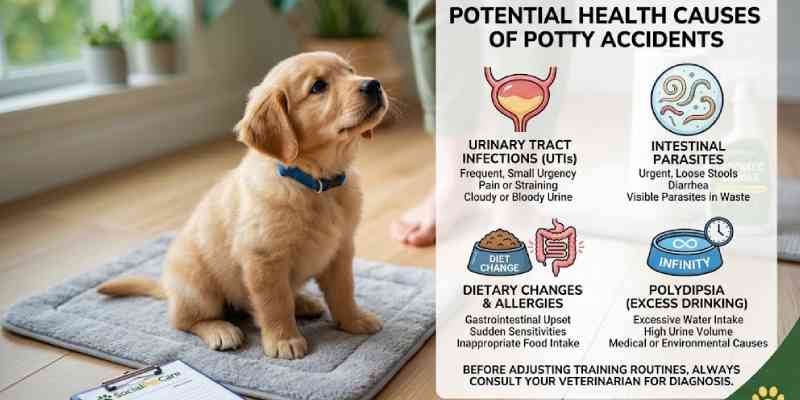
Potential Health Causes of Potty Accidents:
- Urinary Tract Infections (UTIs): Causes frequent, painful straining and small puddles.
- Intestinal Parasites: Leads to urgent, loose stools or diarrhea that the puppy cannot hold.
- Dietary Inconsistencies: Sudden food changes or excessive treats causing gastrointestinal upset.
- Polydipsia (Excessive Drinking): Driven by underlying health issues, high temperatures, or elevated sodium levels.
If your puppy shows signs of discomfort, cloudy urine, blood in urine, or a sudden loss of bladder control, schedule an evaluation with a licensed veterinarian to rule out medical issues before adjusting your training routine.
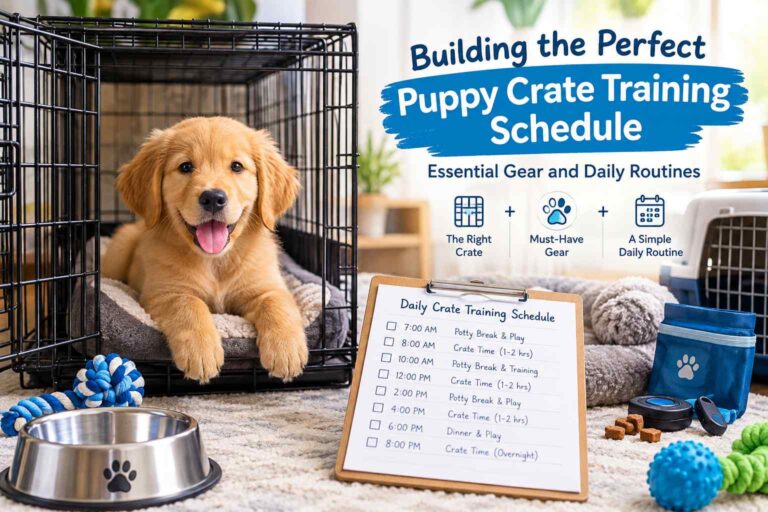
Daily Schedule Template for Success
Establishing a consistent schedule is the single most effective way to eliminate Puppy Potty Training Mistakes. Puppies thrive on predictable routines for eating, sleeping, and potty breaks.
07:00 AM ──> Immediate Potty Break
07:15 AM ──> Breakfast & Water
07:30 AM ──> Outdoor Potty Break
07:45 AM ──> Supervised Play / Training
08:30 AM ──> Crate / Nap Time
11:30 AM ──> Midday Potty Break & Play
Essential Daily Routine Guidelines:
- Take the puppy out immediately after waking up in the morning or finishing a nap.
- Take them out within 10 to 15 minutes after eating or drinking water.
- Take them out immediately after intense indoor play or wrestling sessions.
- Log times and results in a simple notebook or phone app for three to five days to spot patterns.
Consistent routines minimize opportunities for indoor accidents, giving your puppy more opportunities to earn rewards for going in the right place.
Frequently Asked Questions about Puppy Potty Training Mistakes
Why does my puppy pee inside right after coming back from outside?
This usually happens because the puppy was distracted while outdoors by smells, noises, or weather, forgetting to empty their bladder. Once back inside, the warm, familiar environment allows their body to relax, causing them to eliminate. To fix this, keep outdoor trips focused on business, minimize distractions, and if they don’t go within 5 minutes, bring them inside to a crate or pen for 10 minutes before trying again.
How long does it typically take to completely potty train a puppy?
Most puppies take between 4 to 6 months to become fully house-trained, though total consistency can take up to a year depending on breed size, routine consistency, and individual development. Small and toy breeds often take longer due to smaller bladders and faster metabolisms.
Should I take away my puppy’s water bowl at night?
It is generally safe and helpful to pick up your puppy’s water bowl approximately 2 hours before their final bedtime routine. This reduces the likelihood of late-night bladder pressure while still allowing adequate hydration throughout the day. Always consult your veterinarian if it is exceptionally hot or if your puppy has specific medical needs.