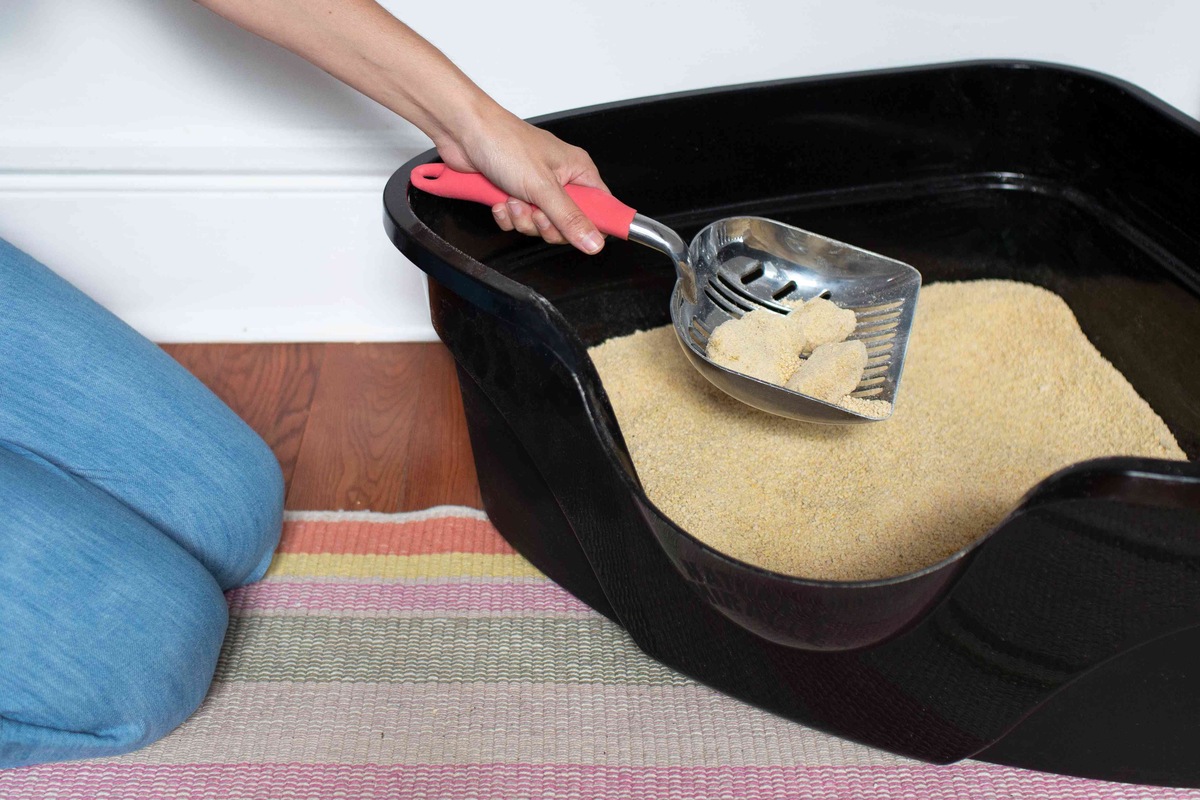
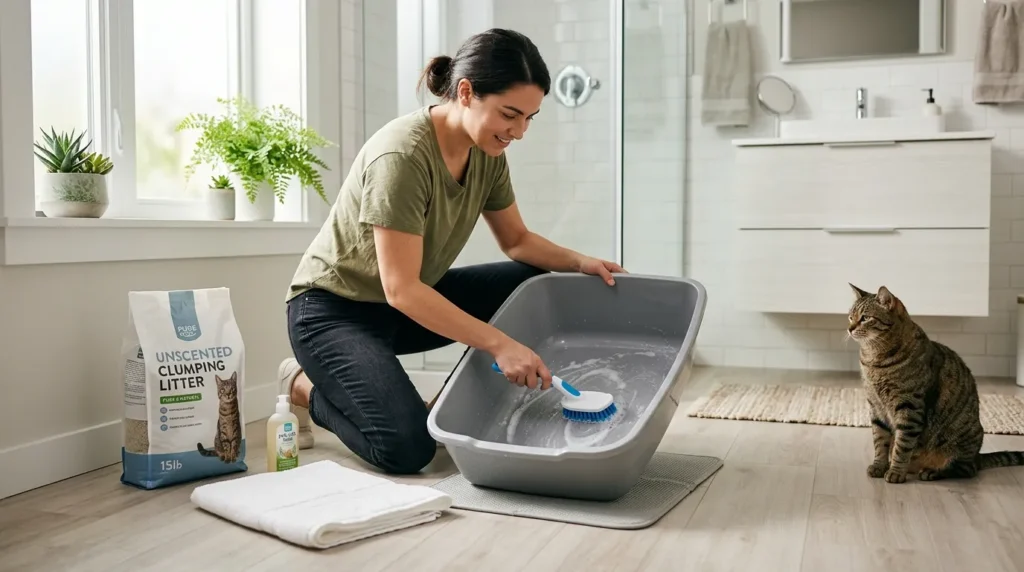
The best way to wash a litter box is to empty it fully, scrub it with warm water and mild unscented dish soap, rinse it well, and let it dry before adding fresh litter. Clean the box in a well-ventilated area, wear gloves, and never mix bleach with ammonia or other cleaners.
In the United States, the Centers for Disease Control and Prevention (CDC) advises daily litter removal and good hand hygiene. Full box washing also helps control odor, remove stuck waste, and give your cat a cleaner place to toilet.

What You Need to Wash a Litter Box
Gather the supplies before you start:
- Disposable or reusable rubber gloves
- A trash bag
- Warm water
- Mild, unscented dish soap
- A soft scrub brush or sponge
- Paper towels or a clean towel
- A hose, sink, tub, or outdoor wash area
- Fresh cat litter
- An optional pet-safe disinfectant
Use a separate brush and sponge for the litter box. Do not use kitchen tools that will later touch food.
A mild, unscented soap is usually enough for routine cleaning. Strong scents can bother cats. Some cats may avoid a box that smells like perfume, pine, citrus, or harsh chemicals.
If you use a disinfectant, read its label first. The product must be suitable for the box material and used as directed. Keep your cat away from the wet box until the product has been rinsed or dried as the label requires.
How Often Should You Wash a Litter Box?
Scoop urine clumps and feces at least once a day. Wash the entire box about once a week if you use clumping litter and the box stays in good shape.
You may need to wash it more often when:
- The box has a strong odor after scooping
- Wet litter sticks to the bottom or sides
- Your cat has diarrhea
- A cat has a contagious illness
- Several cats use the same box
- The box is small or uncovered
- The litter has been changed after an accident
A covered box may hide odor, but it does not remove waste. Odor often means urine has reached the box surface or that the litter needs to be changed.
A useful routine is:
| Task | Typical frequency |
|---|---|
| Remove feces and urine clumps | Daily |
| Add fresh litter | As needed |
| Wash the box | About weekly |
| Replace a cracked or deeply scratched box | When odor remains after washing |
These time frames are starting points, not strict rules. Your cat’s health, litter type, box size, and number of cats all affect the schedule.
How to Wash a Litter Box Step by Step
Follow these steps for a standard plastic litter box.
1. Move the box to a safe cleaning area
Take the box outside, to a laundry sink, or to a bathtub that you can clean afterward. Open a window or turn on ventilation if you are indoors.
Keep children and pets away from the area. Place the litter box on a surface that can handle water.
2. Put on gloves
Wear disposable gloves or washable rubber gloves. Gloves protect your hands from waste and cleaning products.
The CDC gives extra caution to pregnant people and people with weakened immune systems because cat feces can carry organisms linked to toxoplasmosis. When possible, someone else should clean the litter box. If that is not possible, wear gloves and wash your hands well afterward.
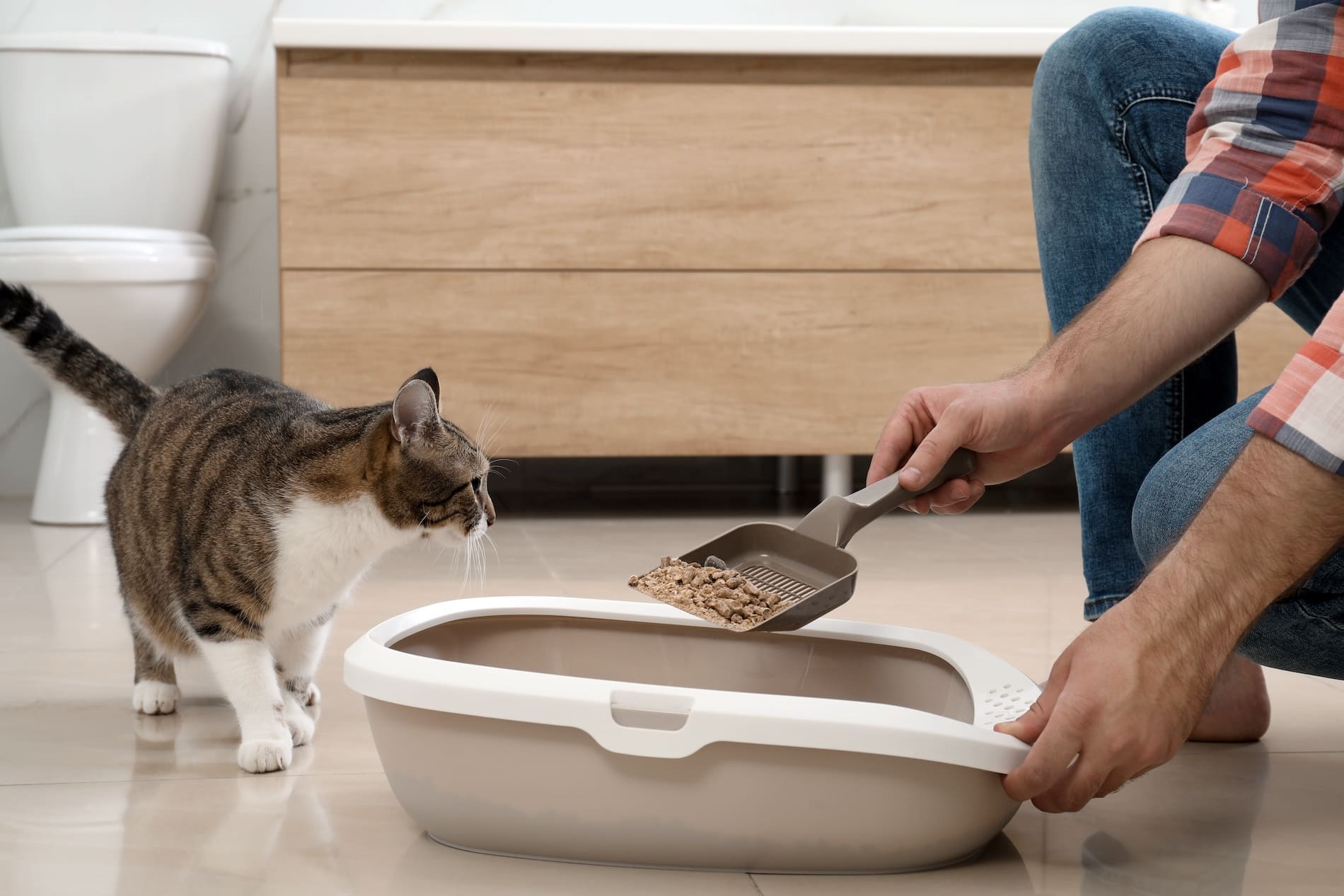
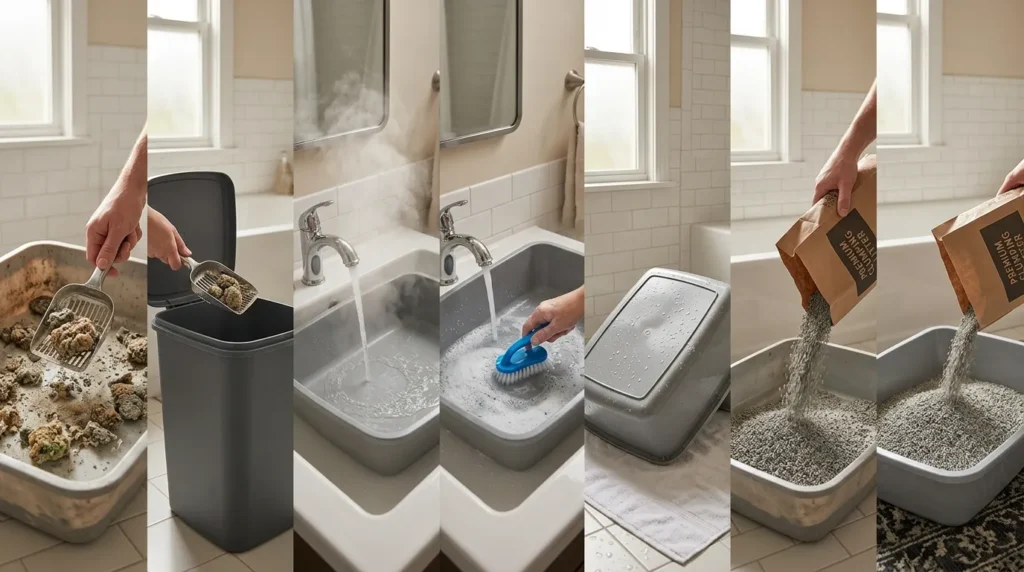
3. Empty the old litter
Pour the used litter into a trash bag. Do not pour litter into a toilet, sink, drain, or storm drain. Clay litter can clog plumbing, and flushable litter may still cause problems in some systems.
Tie the bag closed. If the litter is very dusty, pour it slowly and avoid shaking the box.
4. Remove stuck waste
Use a litter scoop, plastic scraper, or old spatula to lift stuck clumps. Work gently so you do not gouge the plastic.
Deep scratches can trap urine and bacteria. If the box has many scratches, cracks, or rough spots, replacing it may work better than repeated scrubbing.
5. Rinse with warm water
Rinse the empty box with warm water. This loosens dust and softens dried waste.
Do not start with bleach or another strong cleaner. Any remaining urine can react with some cleaners and create harmful fumes.
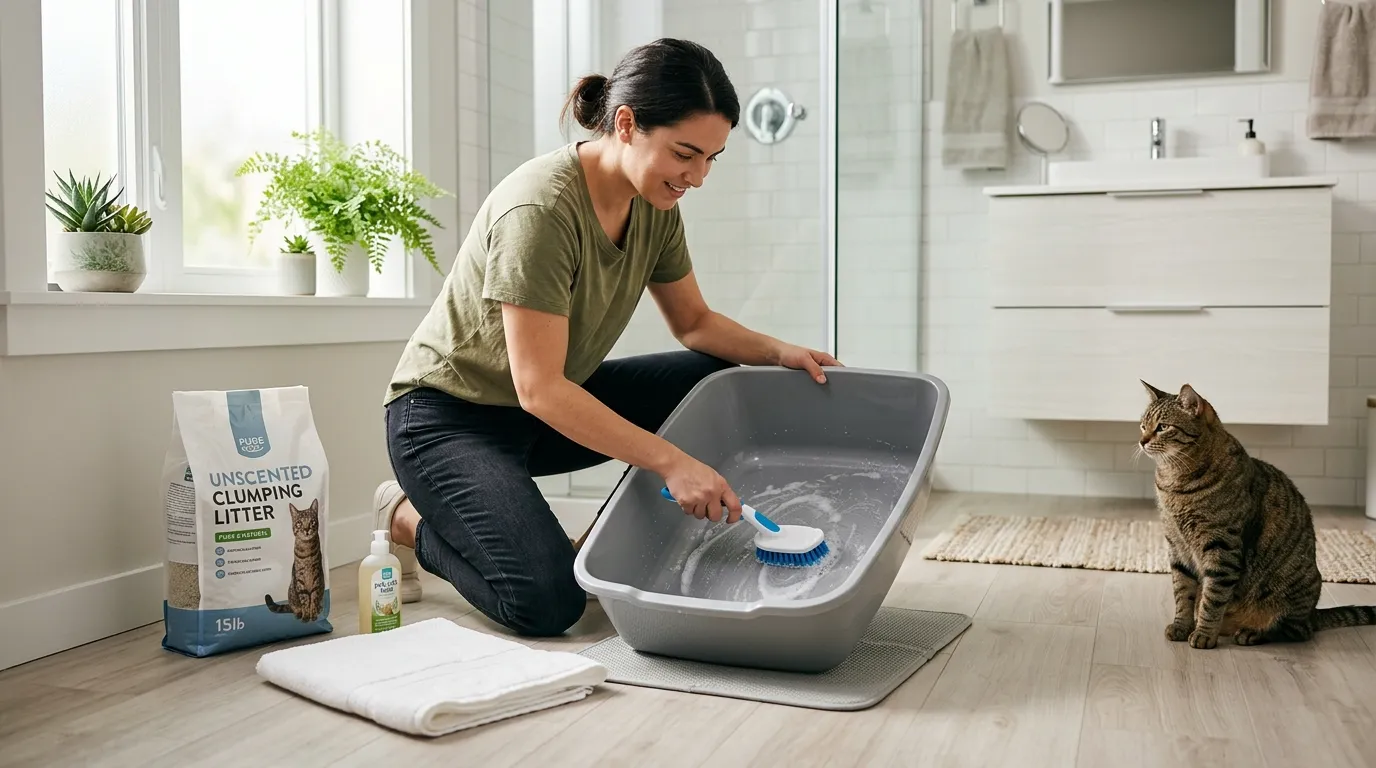
6. Scrub with mild soap
Add a small amount of mild, unscented dish soap and warm water. Scrub the base, corners, rim, underside, and any grooves.
Pay close attention to corners. Urine can collect there and dry into a hard film. A soft brush works well without damaging the plastic.
Avoid steel wool and abrasive powders. They can create scratches that hold odor.
7. Rinse the box completely
Rinse until no soap remains. Soap residue may irritate your cat’s paws or skin.
If you wash the box in a bathtub or sink, clean and rinse that area after the litter box is finished. Do not wash food dishes, baby items, or personal items in the same water.
8. Disinfect only when needed
Routine washing with soap and water is often enough. Disinfection may be useful after illness, diarrhea, or heavy contamination.
Use only a product whose label allows use on the box material. Follow the label for dilution, contact time, ventilation, rinsing, and storage.
Never mix bleach with ammonia, vinegar, toilet cleaner, or any other cleaning product. Urine can contain ammonia. Remove all waste and rinse the box before using a bleach product. When in doubt, skip the disinfectant and use soap, water, and careful rinsing.
9. Dry the box fully
Dry the box with a clean towel or let it air-dry. The box should be completely dry before you add litter.
Moisture can make litter stick to the bottom. It can also leave your cat with wet paws.
10. Add fresh litter
Add the same litter your cat already accepts unless you are making a planned change. Sudden changes in texture or scent can cause a cat to avoid the box.
Use enough litter for your cat to dig and cover waste, but do not overfill the box. Many cats prefer a shallow to moderate layer rather than a very deep bed.
Place the clean box back in a quiet, easy-to-reach spot. Do not move it far from its usual location unless you are changing the setup on purpose.
Signs the cleaning worked
The box should:
- Have no visible waste
- Have no slippery soap film
- Have no strong urine smell
- Feel dry to the touch
- Have no sharp edges or loose cracks
- Be accepted by your cat after fresh litter is added

How to Remove Strong Litter Box Odor
Strong odor that returns soon after washing often has a cause beyond dirty litter. Check the box, the area below it, and nearby walls or floors.
Try this process:
- Wash the box with mild soap and warm water.
- Rinse it until no soap remains.
- Dry it fully.
- Check the floor and wall for urine spray.
- Clean nearby surfaces with a cleaner made for that material.
- Replace the box if the smell remains in scratches or cracks.
- Scoop more often if the box becomes dirty between washes.
Do not mask urine odor with air fresheners. Fragrance may bother your cat, and it does not remove the source.
An enzymatic cleaner may help with urine on floors, rugs, or other surfaces. Use one that is made for the affected material. Follow its label, and never combine it with bleach or other cleaners.
A cat that suddenly stops using the box may have a medical problem, stress, a litter preference issue, or a box-location problem. Contact a veterinarian if your cat strains, cries, urinates often, produces little urine, has blood in the urine, or stops urinating. A blocked urinary tract is an emergency, especially in male cats.
How to Clean Different Types of Litter Boxes
The basic method works for most boxes, but the material changes what you should avoid.
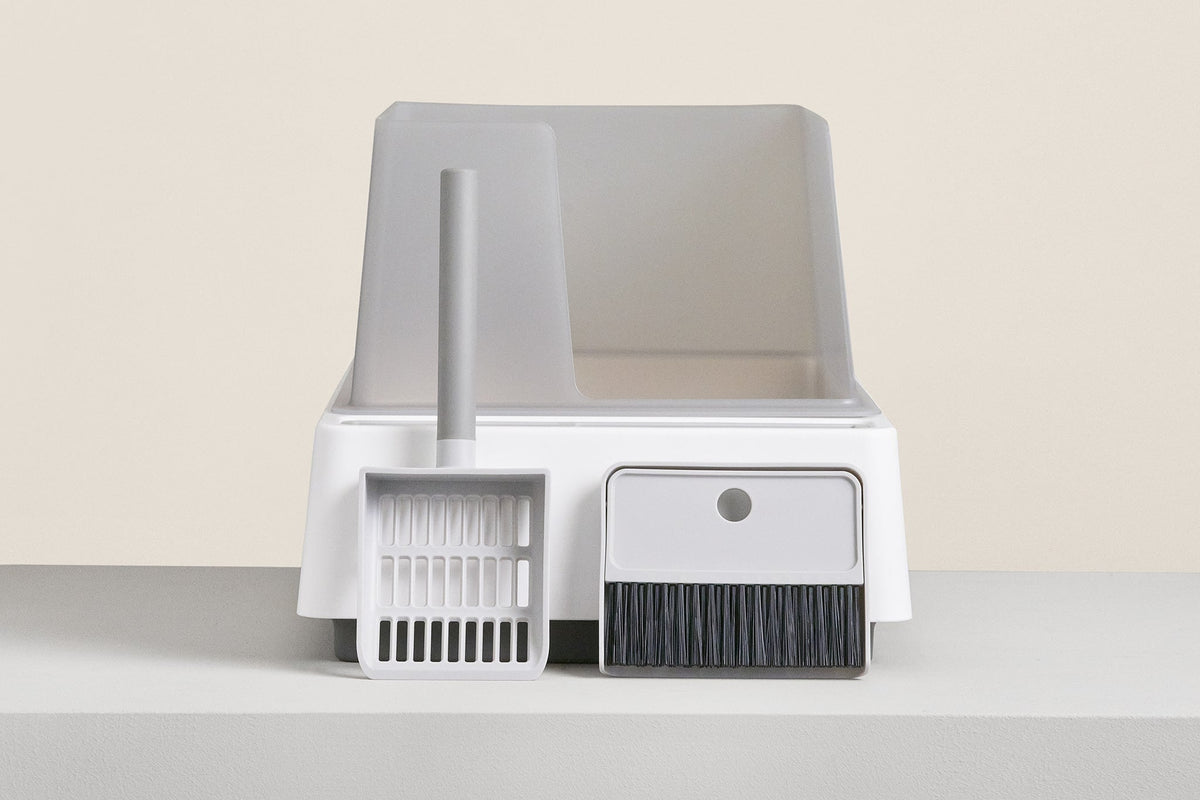
Plastic litter boxes
Plastic boxes are easy to wash but can hold odor after years of use. Use mild soap, a soft brush, and warm water.
Replace a plastic box when it is cracked, badly scratched, or smelly even after a full wash.
Stainless steel litter boxes
Stainless steel does not absorb urine as easily as plastic. It can be washed with mild soap and water.
Avoid harsh abrasives that may damage the finish. Dry the box well to reduce water spots and keep the surrounding area dry.
Self-cleaning litter boxes
Follow the manufacturer’s manual. Many automatic boxes have motors, sensors, wiring, or removable parts that must not get wet.
Unplug the unit before cleaning. Remove the waste tray and washable parts as directed. Do not spray water into the motor housing or electronic base unless the manual specifically allows it.
Litter box liners
Liners may make disposal easier, but some cats dislike the feel of plastic under their claws. A cat may also scratch through the liner and trap urine beneath it.
If you use a liner, check it each day. Replace it when it tears or leaks.
What Not to Use on a Litter Box
Avoid cleaners that can harm your cat or make the box unpleasant to use.
Do not use:
- Ammonia-based cleaners
- Bleach mixed with any other cleaner
- Strongly scented soaps
- Essential oils
- Pine-oil cleaners unless the label clearly states safe use around cats
- Abrasive powders
- Steel wool
- Unapproved pesticides
- Air fresheners inside or beside the box
Cats have a strong sense of smell. A box that smells clean to a person may smell overpowering to a cat.
Keep all cleaners stored in their original containers. Never transfer chemicals to an unmarked bottle.

How to Wash a Litter Box After a Cat Is Sick
If your cat has diarrhea, parasites, or another illness, remove waste as soon as practical and clean the box more often.
Use gloves. Wash the box with soap and water first. If a veterinarian or product label recommends disinfection, use the correct product and contact time. Rinse the box well unless the label says otherwise, then let it dry completely.
Clean nearby floors and scoops too. Wash reusable gloves after use, or dispose of disposable gloves in a sealed trash bag.
Ask your veterinarian for specific cleaning instructions when:
- More than one pet has symptoms
- The illness may spread between animals
- Your cat has a confirmed parasite
- The box has diarrhea or blood in it
- A person in the home is pregnant or immunocompromised
Do not use stronger chemicals simply because a cat is sick. The right product, contact time, and rinsing method matter more than a harsh smell.

Common Litter Box Cleaning Mistakes
Leaving wet litter in the corners
Wet litter can form a hard layer that holds odor. Scrape it away during the full wash.
Using hot water with strong chemicals
Heat and chemicals can create fumes or damage some materials. Use the product only as its label directs.
Washing but not rinsing
Soap left on the box may irritate paws and can make cats avoid the box. Rinse until the surface feels clean.
Reusing a damaged box
A cracked or deeply scratched box may never lose its odor. Replacement is often the practical fix.
Changing litter during every wash
Cats may reject a new texture or scent. Keep the litter type stable unless there is a clear reason to change it.
Placing the clean box near food
Keep litter boxes away from food and water bowls. Cats usually prefer a quiet place with a clear escape route.
Ignoring repeated accidents
Cleaning the box is only one part of the solution. Repeated accidents can point to illness, stress, poor box placement, or a box that is too small.

Frequently Asked Questions
Can I wash a litter box in the bathtub?
Yes, but remove all litter and waste first. Wash the box with mild soap, rinse the tub afterward, and disinfect the tub only with a product suitable for that surface. Do not wash the box in a tub used by people without cleaning the tub afterward.
Can I use bleach to clean a litter box?
You can use bleach only when the product label permits it and you follow the dilution, ventilation, contact, and rinsing instructions. Remove all urine and litter first. Never mix bleach with ammonia, vinegar, or another cleaner.
For routine cleaning, mild soap and water are usually simpler and less likely to leave a strong odor.
How do I clean a litter box without making my cat avoid it?
Use an unscented soap, rinse well, dry the box fully, and return it to a familiar location. Avoid perfumes and sudden litter changes. If your cat still avoids the box, check for pain, stress, access problems, or a box that is too small.
Should I wash a litter scoop too?
Yes. Rinse the scoop after removing stuck waste, then wash it with mild soap and warm water. Dry it before storing it. Replace it if it becomes cracked or heavily soiled.
How do I clean a litter box during pregnancy?
The CDC recommends that pregnant people avoid cleaning cat litter when possible. Ask someone else to do it. If no one else can help, wear disposable gloves, avoid touching your face, clean the box daily, and wash your hands well with soap and water afterward. Follow your health care provider’s advice for your situation.
Key Takeaways
- Empty the box before adding cleaner.
- Use warm water and mild, unscented dish soap for routine washing.
- Scrub corners, rinse away all soap, and dry the box fully.
- Never mix bleach with ammonia or other cleaners.
- Scoop every day and wash the box about weekly, adjusting for your home.
- Replace boxes with deep scratches, cracks, or odor that will not wash away.
- Contact a veterinarian when litter box problems begin suddenly or come with signs of illness.
Conclusion
A clean litter box needs a simple routine, not harsh chemicals. Scoop waste daily, wash the box with mild soap and warm water, rinse it well, and keep it dry. Use extra care after illness, and replace the box when damage traps odor.
Your next step is to inspect the box today. If it has cracks, deep scratches, or a lasting urine smell, replace it. Otherwise, give it a full wash and set a daily scooping schedule.
Further Reading
- Centers for Disease Control and Prevention: Toxoplasmosis
- Centers for Disease Control and Prevention: Healthy Pets, Healthy People
- U.S. Environmental Protection Agency: Six Steps to Safe and Effective Disinfectant Use