
A Warm Welcome and Real Vet Story
Last winter in Chicago, a pet parent brought in an old Golden Retriever named Max. The poor pup was sluggish and refused his evening kibble. I knew he needed something warm and easy to digest. I told his owner to make a special batch of homemade bone broth for dogs using a simple kitchen slow cooker. Within two days of adding this liquid gold to his food, Max was wagging his tail and jumping like a puppy again.
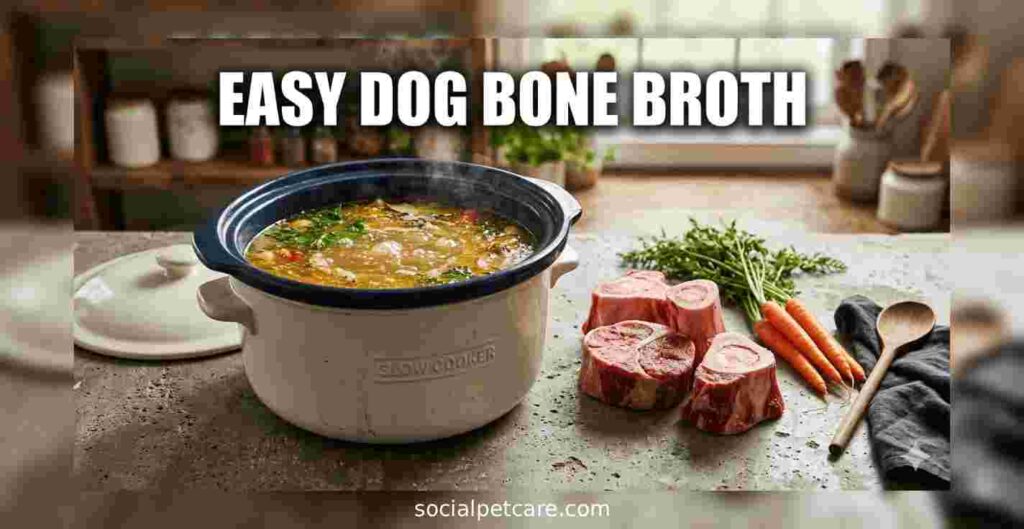
To make a healthy dog broth place raw beef marrow bones in a slow cooker. Fill the pot with water until the bones are fully covered. Add two tablespoons of apple cider vinegar to draw out nutrients. Cook on low heat for twenty-four hours, let it cool completely, and skim off all the top fat layer. Strain out every single bone before serving the jelly-like liquid to your pup.
Key Takeaways for Busy Pet Parents
- Bone broth supports sore joints with natural collagen.
- Raw marrow bones or chicken feet work best for this recipe.
- Cooking for twenty-four hours breaks down the bones fully.
- Always throw away all cooked bones to keep your dog safe.
- You can freeze the broth in ice trays for easy treats.
Health Benefits of This Slow Cooker Elixir
This liquid treat is packed with amazing tools for your dog’s body. I often recommend it for dogs recovering from sickness or surgery. It provides a soft, soothing coat for the stomach lining.
Joint Support and Pain Prevention
As dogs grow older, their joints start to wear down. This leads to pain and stiffness during morning walks. The long cooking time extracts collagen, glucosamine, and chondroitin from the animal joints. These natural elements help repair worn cartilage and keep your dog moving freely.
Gut Health and Sensitive Stomachs
Many dogs suffer from leaky gut or chronic diarrhea. This happens when the gut lining becomes inflamed and loose. The amino acids in this warm liquid seal those tiny holes in the stomach wall. It makes digestion easy and stops bad bacteria from causing gas or loose stools.
Nutrition Rules for a Homemade Bone Broth for Healthy Dogs
Adding this fluid to your dog’s daily meal plan is a great way to boost their hydration. However, you must follow strict safety rules when choosing your base.
Safe Bones and Meats to Use for homemade bone broth for dogs
Beef marrow bones, knuckles, and joint bones are the top choices for a rich broth. You can also use chicken feet or turkey necks from your local market. These parts contain high amounts of cartilage which creates a thick, thick jelly.
Dog-Safe Vegetables and Herbs
You can add raw carrots, celery, and sweet potatoes to the pot for extra vitamins. Fresh parsley is also a wonderful choice because it freshens bad dog breath naturally. These plants add a pleasant aroma that will make your dog drool as it simmers.
Toxic Foods to Avoid at All Costs
Never add onions, garlic, leeks, or chives to a pot of crockpot bone broth dogs. These ingredients can destroy a dog’s red blood cells and cause severe illness. You must also leave out salt, black pepper, and store-bought bouillon cubes which contain harmful chemicals.
Comparing Different Homemade Broth Bases
Different types of bones provide unique perks for your dog’s body. This table breaks down the nutritional focus of each common option to help you choose the best match.
| Bone Base Type | Main Nutritional Benefit | Best For | Cooking Time |
| Beef Marrow Bones | High in healthy fats and iron | Low-weight dogs needing energy | 24 to 36 hours |
| Chicken Feet & Necks | Packed with pure joint collagen | Senior dogs with arthritis | 12 to 24 hours |
| Pork Knuckle Bones | Rich in calcium and magnesium | Active dogs with high energy | 24 hours |
| Turkey Necks & Wings | Lean protein with low fat levels | Overweight dogs on a strict diet | 12 to 24 hours |
Step-by-Step Cooking Guide
Making this batch is simple, but you must follow the correct order to extract the nutrients safely. Here is my trusted veterinary cooking method.
1.Load the Pot:5 minutes.
Place your raw bones into the bottom of a cold slow cooker. Ensure they fit tightly so you do not need too much water to cover them.
2.Add Water and Vinegar:5 minutes.
Pour fresh water over the bones until they are covered by one inch. Add two tablespoons of apple cider vinegar to help pull the minerals out of the bones.
3.Simmer on Low:24 hours.
Put the lid on tight and set your machine to low heat. Let the mixture simmer slowly for twenty-four hours without opening the lid.
4.Strain and Cool:2 hours.
Turn off the heat and let the liquid cool slightly. Pour the broth through a fine mesh strainer and throw away all the soft, cooked bones.
5.Skim the Fat:4 hours.
Place the strained liquid into your fridge overnight. Scrap off the hard white fat layer from the top before serving the clear jelly to your pet.
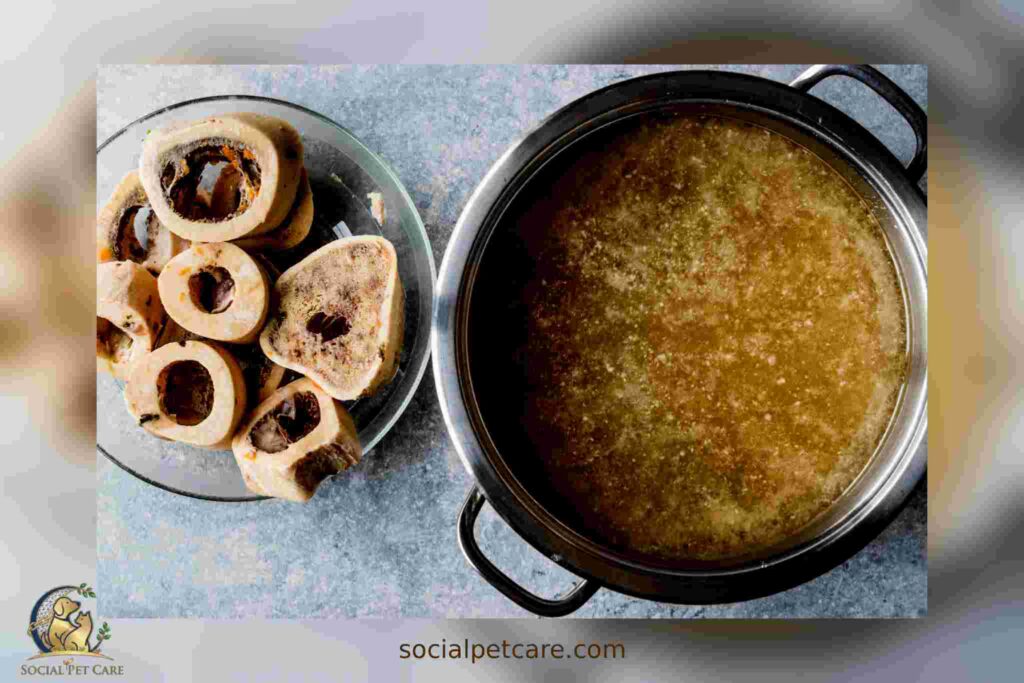
Look at the image above to see how the clear broth looks after straining out the solids. The raw marrow bones on the side are the ideal type to use for this process. They have a thick outer wall and a hollow center filled with nutrient-rich marrow.
Expert Tips Box for Perfect Broth Consistency
As a longtime vet, I have a great hack for testing your batch. If your cooled broth turns into a thick, wiggly gelatin in the fridge, you did it perfectly. That wiggle means you extracted a massive amount of healing collagen for your dog’s joints. If it stays thin and watery, you either used too much water or did not simmer it long enough. Next time, add a few chicken feet to guarantee that perfect jelly texture.
How Broth Enhances Behavior and Training
Food motivation is a powerful tool when working with dogs. You can use this tasty liquid to solve common behavioral issues at home.
High-Value Rewards for Food Motivation
Many dogs get bored of standard dry treats during training sessions. You can pour this savory liquid into a small spray bottle or freeze it into tiny cubes. Use these intensely flavorful treats to reward your dog during potty training or leash walks. The rich aroma will keep their eyes locked onto you.
Stress Relief for Anxious Eaters
Anxious dogs often refuse to eat when they hear loud noises or experience separation stress. A warm splash of this soup can comfort a nervous dog during a thunderstorm. Licking also releases calming hormones in a dog’s brain. Freezing the broth inside a rubber toy keeps them happily distracted for hours.
Grooming Benefits and Safety Triggers
A dog’s skin and coat are direct indicators of their internal health. This home recipe works from the inside out to keep your pet looking beautiful.
Shinier Coats and Softer Skin
Dry, itchy skin is a major complaint during the dry summer months in places like Austin or Phoenix. The amino acids in the broth feed the deep layers of the skin. This reduces shedding and promotes a glossy, soft fur coat. You will notice less scratching and fewer dandruff flakes within a few weeks.
When to See Your Local Vet
While this fluid is incredibly healing, it is not a cure-all for severe medical conditions. If your dog exhibits sudden lethargy, persistent vomiting, or a fever, do not rely on home remedies. Take your dog to a local clinic immediately. Always monitor your dog for any allergic reactions when introducing a new food type.
Common Mistakes Pet Owners Frequently Make
Many well-meaning pet parents make simple errors that can harm their dogs. Avoiding these traps ensures your cooking stays safe and healthy.
Feeding Cooked Bones to Your Dog
This is the single most dangerous mistake you can make. Cooked bones become soft and brittle during the long simmering process. They can easily splinter inside your dog’s mouth, throat, or stomach. This causes severe internal bleeding or a fatal choking hazard. Always throw all bones into a secure outdoor trash can.
Leaving the Top Fat Layer On the Broth
When the broth cools in the fridge, a thick white crust of fat forms on top. You must scrape this layer off completely and throw it away. Feeding this heavy fat to your dog can trigger pancreatitis, which is a painful inflammation of the pancreas. A lean, fat-free jelly is the only safe form for daily feeding.
Conclusion and Final Steps
Taking control of your pet’s nutrition does not have to be complicated or expensive. Preparing a simple pot of [homemade bone broth for dogs] is a loving way to support their long-term health. It helps their joints stay flexible and keeps their digestive tract happy. Grab some raw bones from your butcher this weekend and give it a try. Your furry best friend will thank you with endless tail wags and sloppy kisses.
This article is for informational purposes only and should not replace professional veterinary advice.
Frequently Asked Questions for Homemade Bone Broth for Dogs
Can I use regular grocery store broth for my dog?
Most store-bought options contain high levels of sodium, onions, and artificial preservatives that can harm your pet’s stomach. It is always safer to make a plain batch at home to control every ingredient.
How long does this slow cooker liquid stay fresh in the fridge?
You can safely keep the liquid in a sealed glass jar for up to five days. If you make a large batch, pour it into freezer-safe containers for longer storage.
Can puppies safely consume bone broth?
Yes, puppies can benefit greatly from the vitamins and minerals during their rapid growth phases. Start with a tiny spoonful mixed into their puppy food to avoid overloading their young tummies.
What should I do if my broth does not turn into jelly?
Your liquid is still full of good nutrients even if it stays watery. Next time, try using more joints or chicken feet and reduce the amount of water you add.
Can I feed this liquid to my sick cat too?
This plain, unsalted recipe is completely safe and healthy for felines as well. It provides excellent hydration for cats who suffer from urinary issues or kidney disease.
How often should I give this treat to my dog?
You can pour a few spoonfuls over their meals once or twice every day. Just make sure to adjust their main kibble portions to prevent unwanted weight gain.
Should I cook the bones on high heat or low heat?
Always use the low setting on your kitchen appliance to let the nutrients extract gently. High heat can burn the liquid and ruin the delicate proteins.
What is the best type of vinegar to use for this recipe?
Raw apple cider vinegar is the best choice because it is safe for dogs and highly effective. You can use white vinegar if you do not have any apple cider vinegar on hand.
Can I leave the marrow inside the bones while cooking?
Yes, the marrow adds amazing healthy fats and a rich flavor that dogs absolutely love. Just remember to skim the hardened grease off the top after chilling.
Is it normal for my dog to have soft stool after trying it?
A sudden change in diet can cause minor stomach upset for a day or two. Lower the portion size until their digestive system adjusts to the rich nutrients.