
Quick answer
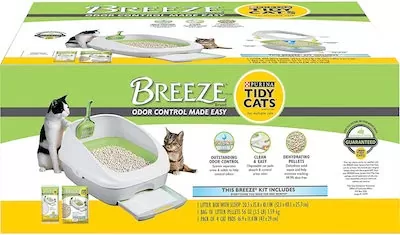
The Purina Tidy Cats Breeze litter system is a low-dust setup that uses reusable plastic pellets, a slotted tray, and an absorbent pad drawer. Urine passes through the pellets into the pad. Solid waste stays on top for easy scooping.
The system can work well for U.S. cat owners who want less tracking and fewer full litter changes. It may not suit cats that dislike pellet texture, homes with several large cats, or owners who want the lowest possible long-term cost.
This review is based on documented product features, care instructions, and common use factors. It is not a hands-on lab test or a survey of verified customer reviews.
What is the Breeze cat litter system?
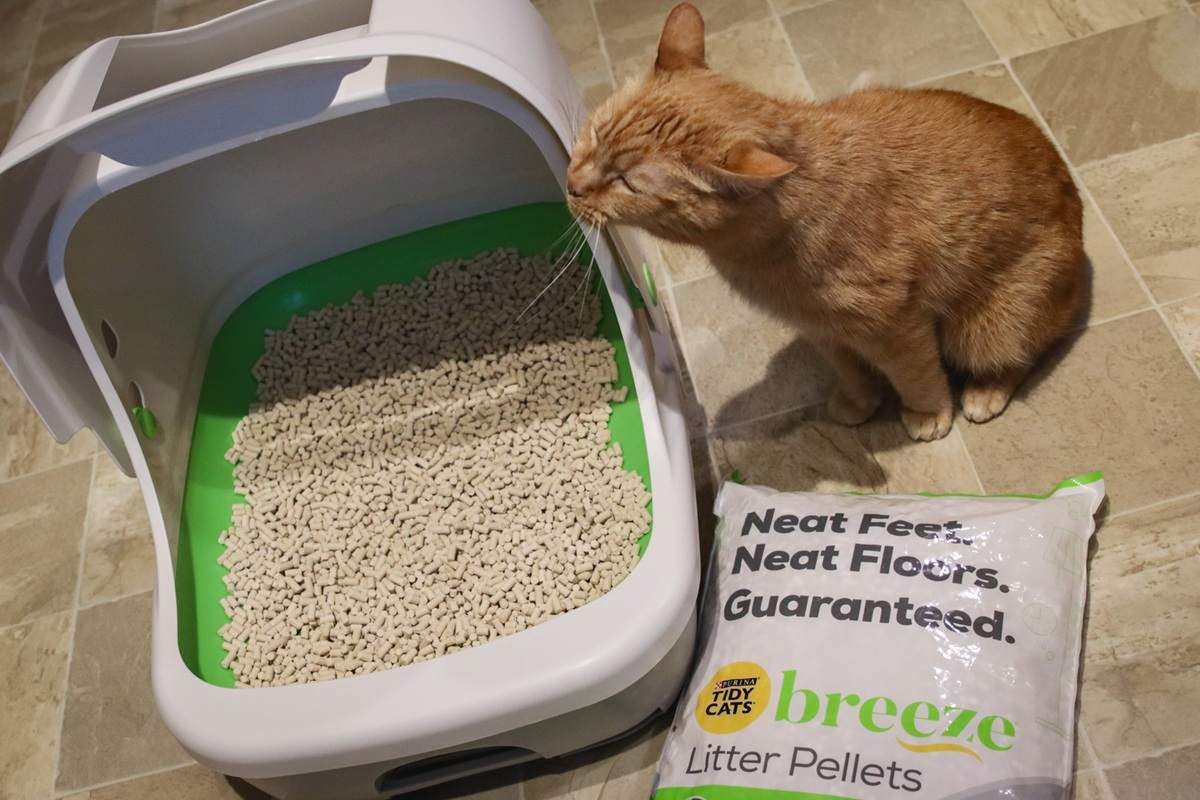
The Breeze system separates urine and solid waste instead of absorbing both in one litter bed.
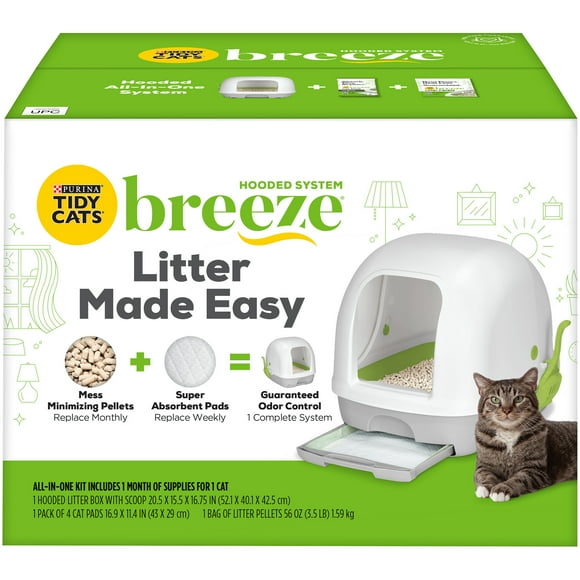
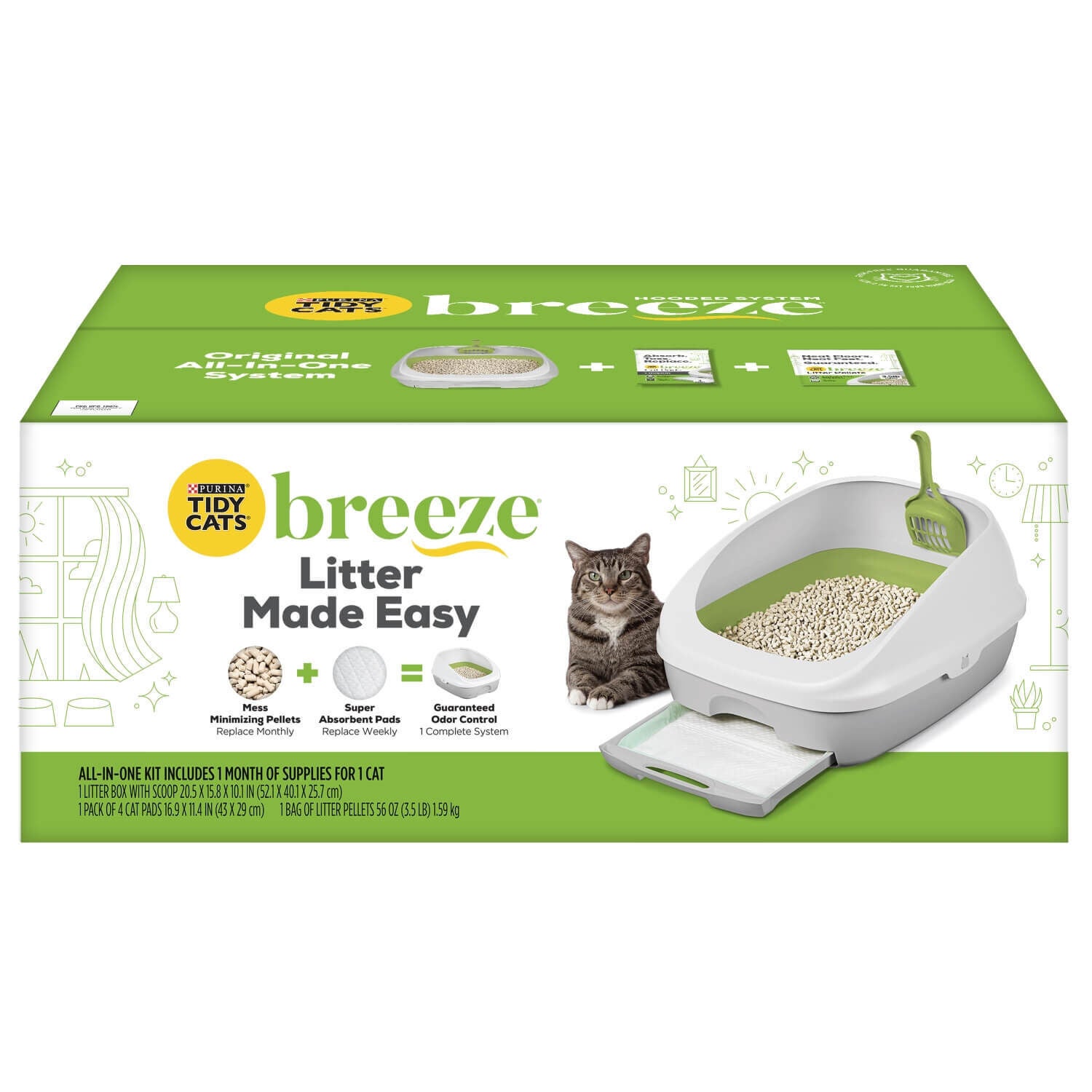
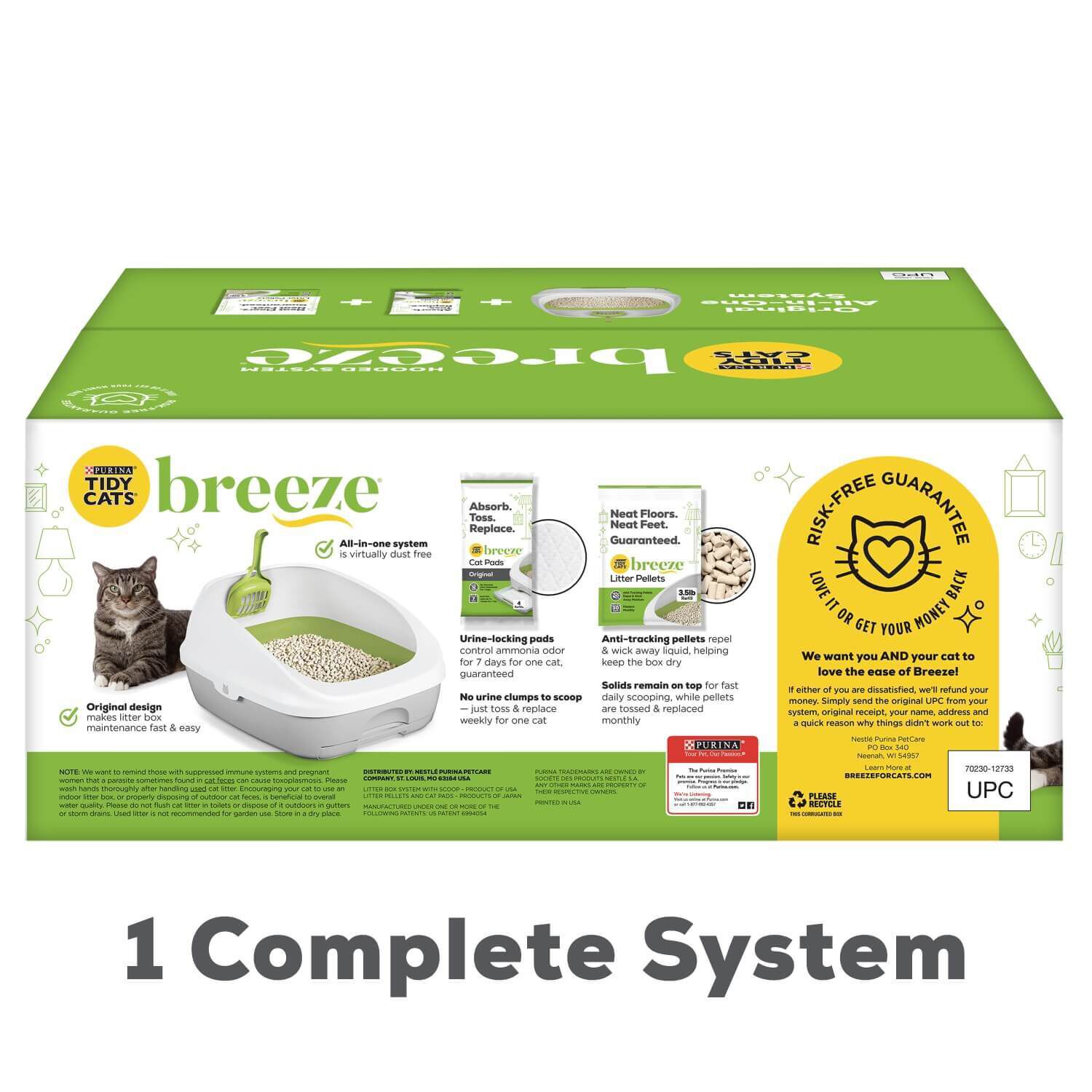
Its main parts are:
- A plastic litter box with a slotted or grated floor
- Reusable, low-dust Breeze pellets
- A slide-out drawer
- Disposable absorbent pads
- A scoop for removing solid waste
The pellets are too large to pass through the tray. Urine moves through the gaps and collects in the pad below. Feces stays on top of the pellets.
This design changes the cleaning routine. You scoop solid waste from the surface, then replace the urine pad on a regular schedule. You do not scoop urine-soaked litter because the pellets do not absorb it.
Purina markets several Breeze configurations in the United States. Product names, box sizes, and included supplies may change, so check the package and current product page before buying.
What makes Breeze different from regular litter?
Traditional clumping litter forms a solid mass around urine. The owner removes both urine clumps and feces each day.
Breeze handles these wastes in two separate places:
| Feature | Breeze system | Clumping litter |
|---|---|---|
| Main material | Plastic pellets | Clay, plant, or other absorbent litter |
| Urine handling | Passes to a pad | Forms clumps |
| Solid waste | Scooped from the top | Scooped from the litter bed |
| Dust | Usually low | Depends on the formula |
| Tracking | Often lower than fine litter | Can be higher |
| Main waste item | Used pads and feces | Urine clumps and feces |
The key trade-off is simple: Breeze may reduce litter mess, but it adds pads and special pellets to the routine.
Breeze cat litter system review: Main strengths and weaknesses
The Breeze system’s strongest feature is waste separation. Its largest drawbacks are pad cost, pellet acceptance, and the need to clean the tray itself.
Advantages
- Less litter tracking: Large pellets are less likely to stick to paws than fine clay granules.
- Low dust: The system does not use a bed of powdered clay litter.
- Simple urine check: A wet pad can make changes in urine output easier to notice.
- Easy solid-waste removal: Feces stays on top of the tray.
- Reusable tray: The box does not need to be thrown away after each litter change.
- Useful for some households with allergies: Lower dust may help reduce airborne litter particles, but it does not remove cat allergens.
- Cleaner-looking floor: Large pellets are easier to sweep up than fine litter.
Disadvantages
- The pellets do not clump: They cannot hide or absorb urine odor by themselves.
- Pads add recurring cost: A busy multi-cat home may use them quickly.
- Some cats reject the texture: Cats often have strong preferences about litter feel.
- The tray still needs washing: A pad drawer does not eliminate odor or bacteria.
- The initial setup costs more than a basic box: You need the tray, pellets, pads, and a scoop.
- Large or elderly cats may need more space: A standard tray may feel cramped.
- It is not a self-cleaning box: You still need daily care.
What the system does not prove
A low-dust design does not prove that Breeze will solve every allergy or odor problem. Cat allergens come mainly from proteins in skin flakes, saliva, and urine. A litter system can change dust and odor without removing those allergens.
Likewise, a visible change in urine amount is not a medical diagnosis. If a cat strains, urinates often, produces little urine, or stops using the box, contact a veterinarian promptly.

Which Breeze model is best?
The right Breeze model depends more on cat size, number of cats, and available floor space than on the name printed on the box.
Standard Breeze systems
A standard model may fit:
- One average-size adult cat
- Smaller homes
- Owners who want a compact tray
- A cat already comfortable with pellet litter
Measure the inner floor space before purchase. Outer dimensions can make a box look larger than the usable area.
Breeze XL systems
An XL model may be better for:
- Large cats
- Cats that turn around often before eliminating
- Homes where the cat avoids smaller boxes
- Owners who can provide more floor space
An XL box still may not meet the needs of every large or overweight cat. The cat should be able to enter, turn, squat, and leave without pressing against the sides.
Multi-cat households
One Breeze box can be used by more than one cat, but that does not mean one box is enough.
A common veterinary guideline is to provide one box per cat, plus one extra, placed in separate, easy-to-reach areas. This is a starting point, not a rigid rule for every home.
For two cats, a practical plan may include:
- Two or more boxes
- Extra pads and pellets
- More frequent pad changes
- Daily odor checks
- A backup box during the transition
If several cats use one tray, the pad can become saturated before it looks full. That can lead to odor and box avoidance.
How much does Breeze cost to use?
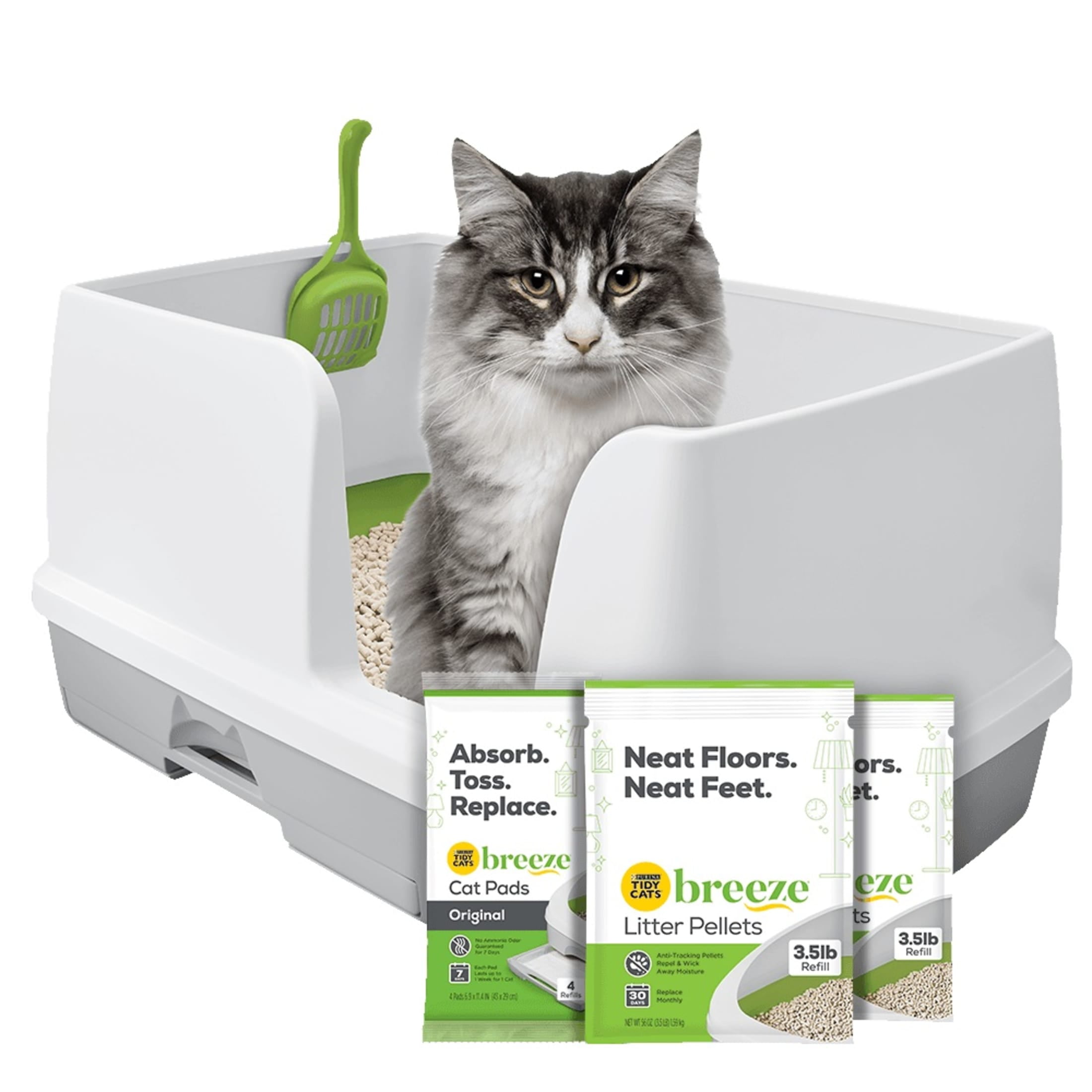
The long-term cost depends on pad use, pellet replacement, the number of cats, and where you buy supplies. A simple calculation helps more than a fixed price estimate.
Basic cost formula
Use this formula:
Monthly supply cost = pads used × pad price + pellet replacement cost + waste bags and cleaning supplies
For example, a hypothetical home that uses eight pads per month should compare the cost of eight pads with the monthly cost of its current litter. This is only an example. Actual use varies by cat and household.
Costs that are easy to miss
Include these items in your comparison:
- Replacement pads
- Replacement pellets
- Extra trays for multi-cat homes
- Enzyme cleaner or unscented soap
- Scoop liners or waste bags
- A larger box if the first model is too small
- Temporary supplies during litter training
Breeze can be cost-effective for a single cat if the owner uses supplies carefully. It may cost more than clumping litter in homes with multiple cats or cats that produce large amounts of urine.
Do not compare only the shelf price of a Breeze starter kit. Compare the expected cost over three months or six months.

How to set up and clean a Breeze litter box
Correct setup matters because the system depends on urine reaching the pad. Place the pad in the drawer, put the drawer fully under the tray, and spread the pellets evenly across the top.
Setup steps
- Assemble the tray and drawer according to the package instructions.
- Insert a fresh pad with the absorbent side facing up.
- Push the drawer fully closed.
- Add the recommended amount of Breeze pellets.
- Place the box in a quiet area with an easy escape route.
- Keep food and water away from the box.
- During training, place the new box near the old box.
Daily routine
- Remove solid waste at least once a day.
- Check the pad for saturation.
- Check for urine outside the drawer.
- Sweep loose pellets from the floor.
- Look for changes in urine color, amount, or frequency.
Frequent scooping helps odor control. It also makes the box more inviting to cats that avoid dirty trays.
Pad replacement
Replace the pad before it becomes saturated. A saturated pad may leak, smell, or allow urine to remain near the tray.
The correct schedule depends on:
- Number of cats
- Cat size
- Water intake
- Kidney or urinary health
- Room temperature
- Ventilation
- Pad type
Follow the product instructions, then adjust based on odor and wetness. Do not wait for a leak.
Washing the tray
Remove the pellets and wash the plastic tray on a regular schedule. Use mild, unscented soap and rinse well.
Avoid strong fragrances, bleach mixtures, and harsh cleaners around cats. Never mix bleach with ammonia or urine residue. Dry the tray before adding fresh pellets and a new pad.
How to switch a cat to Breeze pellets
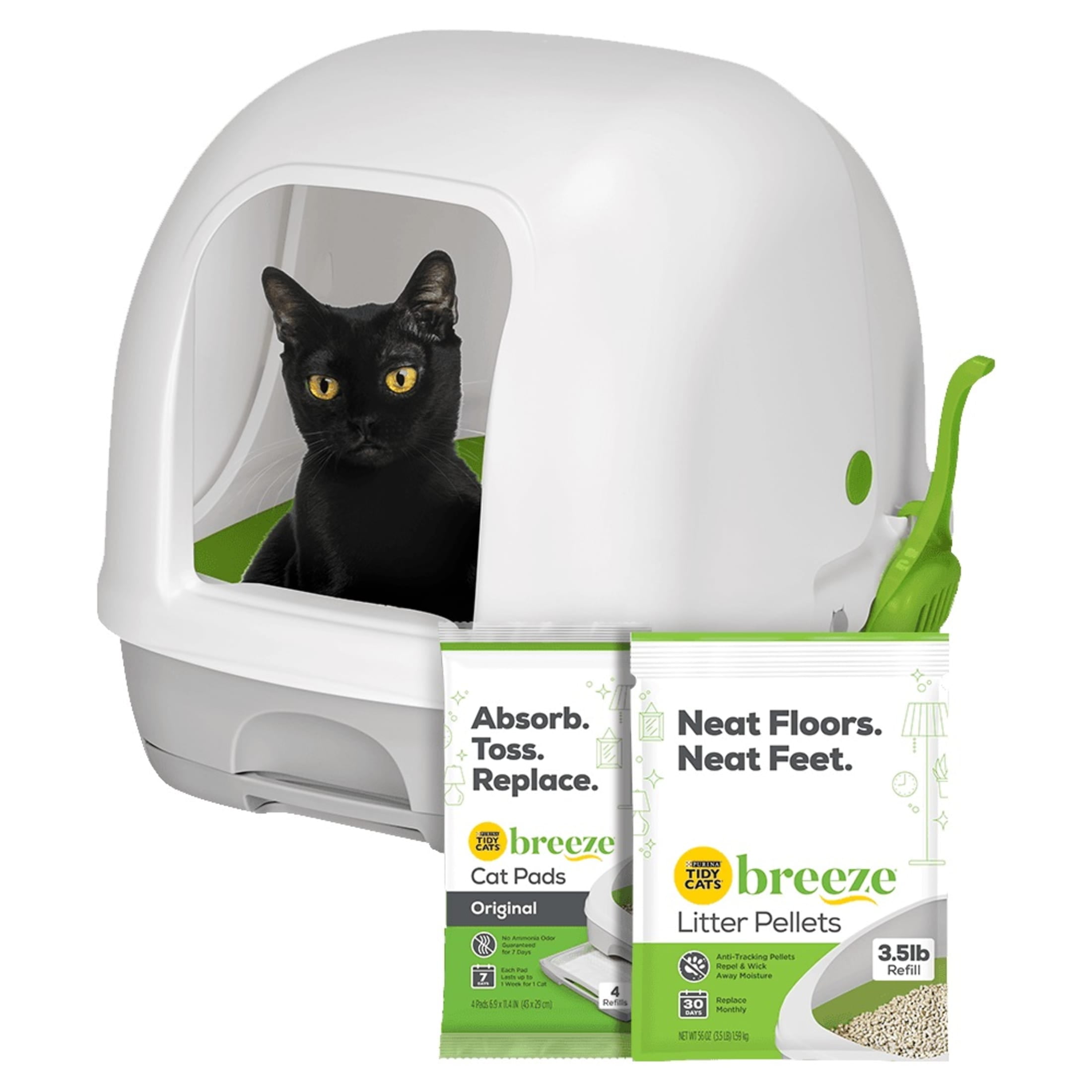
A slow transition usually works better than a sudden change. Cats may reject a new box because of its texture, smell, location, or shape.
A practical transition plan
- Put the Breeze box beside the current box.
- Keep the old litter available at first.
- Place a small amount of the old litter on top of the pellets if needed.
- Let the cat investigate without forcing it inside.
- Remove some old litter over several days.
- Keep both boxes available until the cat uses Breeze reliably.
- Move the box only after use is consistent.
Never punish a cat for avoiding the new box. Punishment can increase stress and make elimination problems worse.
Signs the transition is working
- The cat enters the box without hesitation.
- Urine reaches the pad.
- Solid waste remains on the tray.
- The cat returns to the box without accidents.
- The cat does not scratch frantically at the floor near the box.
If the cat refuses the box, return to the last step that worked. Some cats need a longer transition. Others may never accept pellet litter.
Odor control: Does Breeze smell?
Breeze can control odor well when the pad is changed on time and solid waste is removed each day. It cannot prevent odor if urine remains in a full pad, on the tray, or on the floor.
Odor may come from:
- A saturated pad
- Urine under or beside the drawer
- Pellets that need washing
- Feces left on the tray
- Too few boxes for the number of cats
- Poor room ventilation
- A cat spraying outside the box
- A medical problem that changes urine volume
Avoid adding perfumes or scented products to the pellets. Strong smells may bother cats and can cause box avoidance.
If odor remains after cleaning, inspect the floor, wall, baseboard, and underside of the tray. A cat may be urinating beside the box rather than inside it.

Is Breeze safe for cats?
Breeze is generally designed for normal household cat use when maintained as directed. Safety still depends on the individual cat and the way the box is cleaned.
Safety points
- Keep used pads and feces away from children.
- Wash hands after handling waste.
- Do not let cats chew or swallow pellets.
- Replace damaged trays or cracked plastic parts.
- Keep the box in a dry place.
- Use unscented cleaners and rinse the tray well.
- Do not block the cat’s path to the box.
- Do not use a covered box if the cat becomes fearful or avoids it.
Watch for changes in litter-box behavior. Straining, repeated trips, crying, blood in urine, vomiting, or producing little or no urine can signal an urgent problem. A male cat that cannot urinate needs immediate veterinary care.
The litter box can help you notice changes, but it cannot diagnose them.
Breeze vs. clumping litter: Which is better?
Neither system is best for every home. The choice depends on what causes the most trouble now.
| Choose Breeze when you value… | Choose clumping litter when you value… |
|---|---|
| Less tracking | Familiar texture for most cats |
| Low visible dust | Easy control of urine clumps |
| Separate urine monitoring | Broad product choice |
| Large pellets | Lower equipment cost |
| A reusable tray | No need to buy special pads |
Breeze is worth considering if fine litter spreads through your home or if you prefer to see urine collected on a pad.
Clumping litter may be better if your cat dislikes pellets, if replacement pads are costly in your area, or if you want to use many types of litter in different boxes.
A mixed approach can work during a transition. Keep one box with the old litter and one with Breeze. This gives the cat a choice and helps you measure acceptance.

Common Breeze problems and fixes
The cat will not use the box
Likely causes: sudden change, wrong box location, pellet texture, dirty tray, or stress.
Try this:
- Add the old box beside Breeze.
- Use a gradual transition.
- Clean the tray with mild, unscented soap.
- Move the box away from loud appliances.
- Add another box.
- Contact a veterinarian if the change is sudden.
Urine is leaking
Likely causes: the drawer is not fully closed, the pad is misplaced, the tray is cracked, or the pad is full.
Try this:
- Reinsert the pad.
- Push the drawer all the way in.
- Inspect the tray and drawer for damage.
- Replace the pad sooner.
- Clean the surface below the box.
The room smells
Likely causes: missed feces, a full pad, dirty pellets, or urine outside the box.
Try this:
- Scoop more often.
- Change the pad.
- Wash the tray.
- Inspect nearby floors and walls.
- Increase ventilation.
- Add another box if more than one cat uses the tray.
Pellets are scattered
Likely causes: vigorous digging, a low tray edge, or pellets stuck to paws.
Try this:
- Place a large litter mat outside the box.
- Sweep daily.
- Use a larger model if the cat is cramped.
- Avoid deep pellet layers that encourage excess digging.
- Check whether the cat is anxious or struggling to cover waste.
The cat urinates beside the box
Do not assume this is a behavior problem. Pain, urinary disease, stress, or box aversion can cause accidents.
Clean the area with an enzymatic cleaner made for pet urine. Then arrange veterinary advice, especially if the change is new or repeated.

Who should buy the Breeze system?
Breeze is a reasonable choice for:
- A single cat that accepts pellet texture
- Owners who want less tracking
- Homes that prefer low visible dust
- People who want to monitor urine on a pad
- Owners willing to buy replacement pads
- Cats that use an open, quiet box reliably
It may be a poor fit for:
- Cats that strongly prefer fine litter
- Homes with many cats and limited floor space
- Owners seeking the lowest ongoing cost
- Cats that need a very large box
- Anyone who cannot check the box daily
- Cats with new urinary or elimination problems
The best test is a controlled trial. Keep the old box available, track pad use for two to four weeks, and record whether the cat uses Breeze without accidents.
Frequently asked questions
Do Breeze pellets need to be replaced?
Yes. Pellets collect some waste residue and can become dirty over time. Remove damaged or soiled pellets and wash the tray as directed. Replace the full pellet supply when it no longer stays clean or controls odor.
Can I flush Breeze pellets down the toilet?
Do not flush them unless the exact product label says flushing is allowed and local plumbing guidance permits it. Many litter products can clog pipes or create problems in septic systems. Place used waste in a sealed bag according to local waste rules.
Can kittens use the Breeze system?
Some kittens can use it, but they may need a low-entry box and close supervision. Young kittens may chew or swallow unfamiliar objects. Ask a veterinarian before using pellet litter with a kitten that mouths litter.
How many Breeze boxes do I need?
Start with one box per cat plus one extra when possible. Spread boxes through the home. A single box may not be enough even if all cats appear to share it at first.
Can Breeze help with a cat’s urinary health?
It can make urine easier to see on the pad, but it does not treat urinary disease. Any sudden change in urination needs attention. Straining or inability to urinate is an emergency.
Final verdict
The Breeze cat litter system is a practical alternative to standard clumping litter. Its strongest benefits are low tracking, low visible dust, and separate urine collection. Its main costs are replacement pads, special pellets, and a cleaning routine that still requires daily care.
For one cat that accepts pellets, Breeze may be a clean and useful option. For a cat that rejects the texture or a large multi-cat home, regular clumping litter may be simpler and less costly.
Start with one properly placed box, keep the old litter box during the transition, and judge the system by three things: reliable use, acceptable odor, and total monthly cost.