
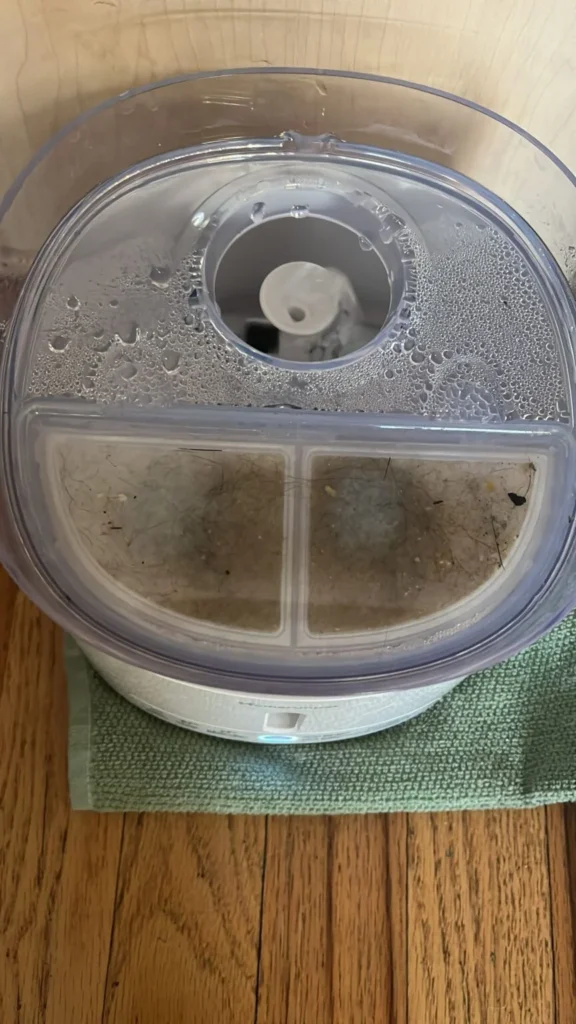
For most cat water fountains in the United States, replace the main charcoal or carbon filter every 2 to 4 weeks. Replace or wash a foam pre-filter based on the product manual, often every 1 to 3 months. Multi-cat homes, dusty rooms, hard water, and food or hair in the bowl may require more frequent changes.
The exact schedule depends on the fountain model and filter type. A filter that looks clean may still be exhausted, while a filter that becomes slimy, clogged, or smelly should be changed at once.
Why Cat Water Fountain Filters Need Regular Changes
A fountain filter usually has one or more jobs:
- Activated carbon helps reduce odors and may improve taste.
- Mesh or paper layers catch dirt, hair, and food particles.
- Foam filters trap larger debris before it reaches the pump.
- Mineral filters may help reduce some deposits in hard water.
These parts do not work forever. Carbon becomes less useful as it absorbs odors and other compounds. Mesh can clog with hair and food. Foam can hold slime and bacteria if it is not rinsed often.
A filter also does not make dirty water safe forever. It cannot replace fresh water, routine bowl washing, or pump cleaning. Think of the filter as a small net and odor catcher, not a water-treatment plant.

How Often Should You Change Each Type of Filter?
The best schedule is the one listed in the fountain’s U.S. instruction manual. If the manual is unavailable, the following timetable is a practical starting point.
| Filter type | Typical replacement schedule | Care between replacements |
|---|---|---|
| Activated carbon or charcoal filter | Every 2–4 weeks | Rinse before use if the manual permits |
| Foam pump pre-filter | Every 1–3 months | Rinse weekly or when visibly dirty |
| Fine mesh or paper filter | Every 2–4 weeks | Do not scrub unless the manual allows it |
| Mineral or hard-water cartridge | Follow the brand’s schedule | Check for scale and reduced flow |
| Reusable stainless-steel screen | Replace only if damaged | Wash during fountain cleaning |
Some manufacturers recommend changing carbon filters about once a month. Others use a two-week schedule, especially for small fountains or homes with more than one cat.
Change the filter sooner when:
- Two or more cats use the fountain.
- Your cat drops food, treats, or toys into the water.
- The fountain sits near litter dust or a shedding area.
- Your home has hard water.
- The water starts to smell.
- The pump flow becomes weak.
- The filter looks brown, slimy, or clogged.
- Your cat has a health condition that affects hydration or urination.
If several cats share one fountain, a two-week carbon filter schedule may be more suitable than waiting a full month. That is a practical adjustment, not a universal medical rule.
Filter Replacement Is Not the Same as Fountain Cleaning
Changing the filter alone is not enough. Biofilm can grow on the bowl, pump, lid, and filter housing. Biofilm is a thin, sticky layer of microbes and residue that may feel slippery.
For most cat fountains, clean the main parts at least once a week. Clean more often if the water becomes cloudy, the fountain is greasy, or several cats use it.
A basic cleaning routine is:
- Unplug the fountain.
- Pour out the old water.
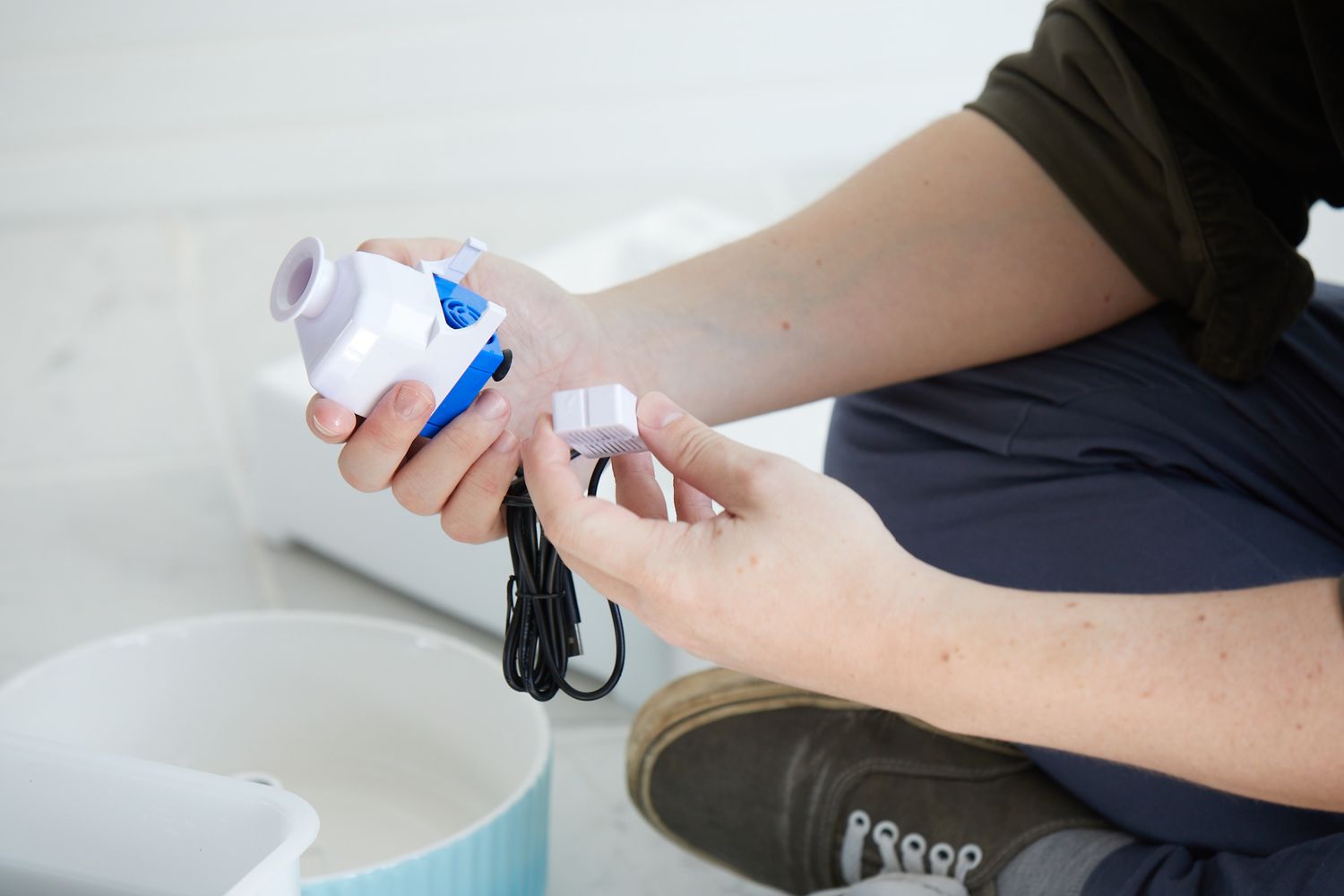
- Remove the filter and pump.
- Wash the bowl, lid, and filter holder with warm water and mild dish soap.
- Open the pump cover if the manual allows it.
- Remove hair and debris from the impeller.
- Rinse away all soap.
- Install a new filter or a properly cleaned reusable filter.
- Refill with fresh water.
Do not use bleach, disinfectants, essential oils, or scented cleaners unless the manufacturer gives specific instructions. Residue can irritate a cat’s mouth and stomach. Never run a fountain dry because the pump may overheat or wear out.

A Simple Step-by-Step Filter Change
Replacing a cat fountain filter usually takes only a few minutes.
1. Check the filter type and model
Look at the fountain’s manual, package, or model number. Filters are not always interchangeable. A round carbon filter, a flat cartridge, and a foam pump sleeve may look similar but serve different purposes.
2. Unplug the fountain
Disconnect power before touching the pump or water. This reduces the risk of electric shock and prevents the pump from running without water.
3. Remove the old filter
Note how the old filter is positioned. Some carbon filters have a specific top and bottom. Others must sit inside a plastic holder or behind a foam sleeve.
4. Rinse the replacement filter if directed
Loose carbon dust may make the first water look gray or black. Many manufacturers advise rinsing a new carbon filter under clean water before installing it. Do not use soap.
Follow the product instructions if they say not to rinse the filter or require soaking.
5. Clean the filter compartment
Wipe away hair, food, slime, and mineral scale. Installing a new filter in a dirty compartment shortens its useful life.
6. Reassemble and refill
Place the filter in the correct direction. Fill the fountain to the marked level or above the pump’s minimum water line.
7. Check the water flow
The water should move as the design intends. If flow is weak, turn the fountain off and inspect the pump, impeller, intake screen, and filter position.
A successful filter change should leave the water clear, reduce odor, and restore normal flow. It should not create a persistent chemical smell or unusual noise.

Signs Your Cat Fountain Filter Needs Changing
The calendar is useful, but visible signs can give a better warning.
The water smells bad
A stale or musty smell may mean the carbon is exhausted. It may also mean the pump or bowl needs cleaning. Change the filter and wash the fountain rather than doing only one of those tasks.
The water looks cloudy
Cloudiness can come from food, dust, minerals, microbial growth, or carbon particles from a new filter. Rinse a new filter first. If cloudiness continues, stop using the fountain until you have cleaned it and identified the cause.
The pump becomes noisy
A clogged filter can reduce water flow and make the pump work harder. Hair wrapped around the impeller can cause the same symptom. Inspect both before buying another filter.
The fountain has slime
Slime usually indicates buildup in the bowl, pump, or filter area. Replace disposable filters and wash all removable parts. A new filter cannot remove slime that is already attached to the fountain.
Your cat avoids the fountain
Cats may reject water that smells stale, tastes unusual, or has too much debris. They may also dislike noise, a low water level, or a location near food or the litter box. Clean the fountain and offer a separate bowl of fresh water while you troubleshoot.

Do You Need to Change the Filter More Often With Hard Water?
Hard water can shorten filter life because it contains higher levels of minerals such as calcium and magnesium. These minerals may leave white scale on the bowl, pump, and water outlet.
If you see chalky deposits, use this routine:
- Inspect the fountain every few days.
- Rinse the bowl and pump more often.
- Follow the manual for safe descaling.
- Consider filtered tap water if it is suitable for your household.
- Never assume a carbon filter removes all minerals.
Some fountains use special mineral cartridges, but their performance and replacement schedule vary by design. Use only the cartridge approved for that fountain.
Water quality also varies by city and by home plumbing. In the United States, your local water utility’s annual consumer confidence report can provide general information about municipal tap water. That report does not determine the correct filter schedule for a specific fountain.
Should You Replace or Wash a Cat Fountain Filter?
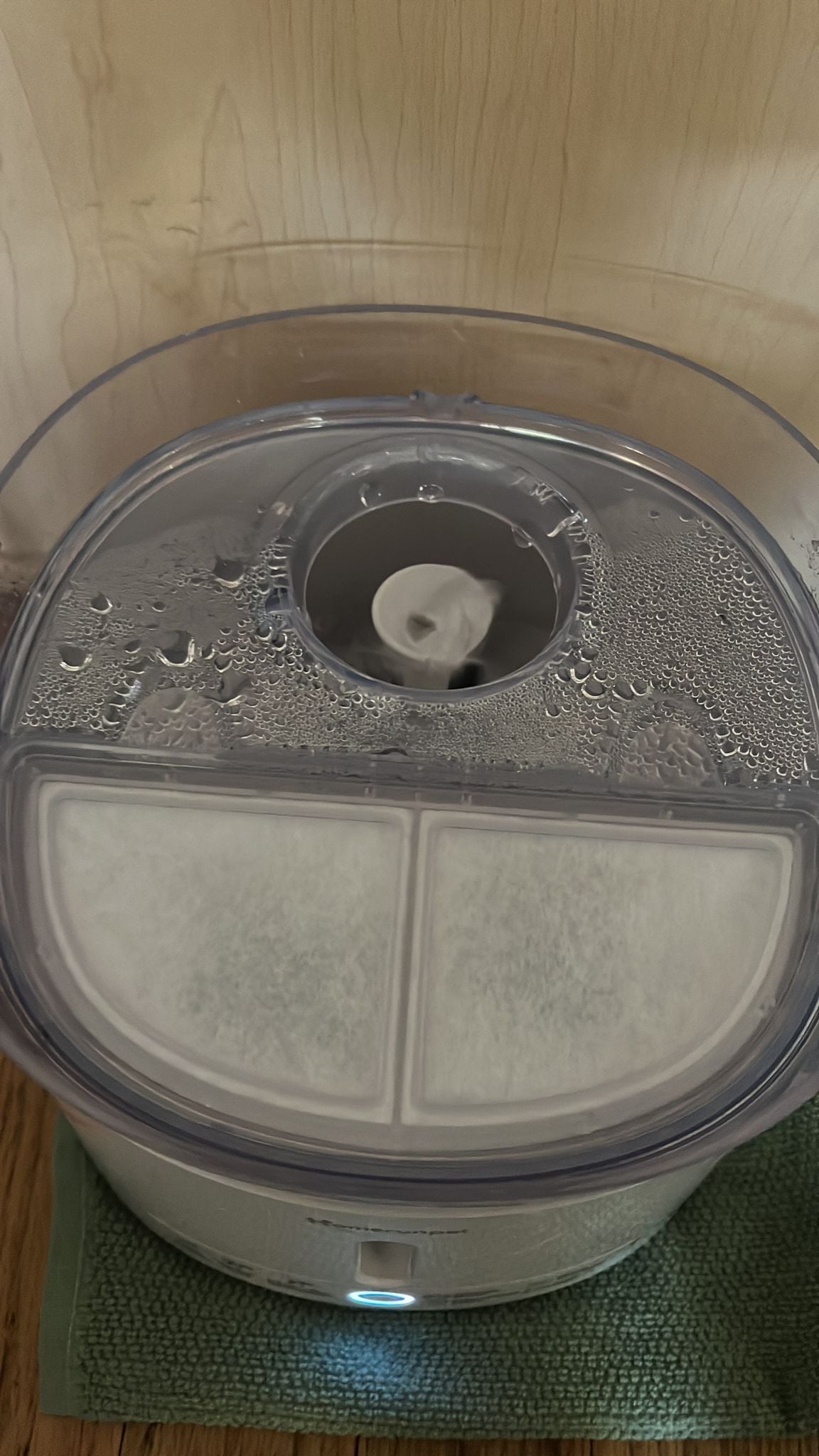
Replace a disposable carbon or paper filter. Wash only a filter that the manufacturer identifies as reusable.
Rinsing a carbon filter may remove loose dust and surface debris, but it does not restore exhausted carbon. Scrubbing can damage the filter layers or push debris deeper into the material.
Foam filters are often washable. Rinse them under running water until the water runs clear. Replace the foam if it stays slimy, tears, smells bad, or no longer fits securely.
Do not wash disposable filters with soap. Soap can remain trapped in the material and enter the drinking water.
A Practical Filter Schedule for Different Homes
Use the table below as a planning guide, then adjust it for your fountain and cat.
| Household or fountain condition | Suggested carbon-filter approach |
|---|---|
| One cat, clean fountain, soft or treated water | Every 3–4 weeks |
| One cat with frequent hair or food in water | Every 2–3 weeks |
| Two or more cats sharing one fountain | About every 2 weeks |
| Hard water with visible scale | Inspect often; change sooner if flow drops |
| Cat recovering from illness or drinking more than usual | Monitor water quality daily and follow veterinary advice |
| Fountain near litter dust or heavy shedding | Inspect weekly and change as needed |
| Filter becomes slimy or smells bad | Replace immediately after cleaning the fountain |
These are maintenance ranges, not guarantees. The manufacturer’s instructions take priority because filter size, pump design, and materials differ.

Common Mistakes to Avoid
Waiting for the filter to look dirty
Carbon can lose usefulness before it appears heavily soiled. Use the calendar and inspect the water rather than relying only on appearance.
Cleaning only the filter
The pump and bowl can collect residue even when the filter is new. Clean the entire fountain during each filter change.
Using the wrong replacement
A filter that fits loosely may allow water to bypass the filter media. Confirm the model, shape, size, and product version before purchasing replacements.
Letting the pump run dry
Low water can damage the pump. Check the water level every day, especially in warm weather or homes where cats splash.
Using human water-treatment assumptions
A cat fountain filter is not necessarily designed to remove bacteria, viruses, lead, fluoride, or all minerals. Read the product specifications carefully. Do not treat a basic charcoal filter as a certified purifier.
Ignoring a change in drinking behavior
A dirty filter may discourage drinking, but increased thirst can also signal a health problem. Contact a veterinarian if your cat suddenly drinks much more or less, urinates unusually often, vomits, seems weak, or stops eating.
How Much Water Should Be in the Fountain?
Keep enough water in the reservoir to cover the pump’s required intake level. The correct fill line varies by model.
Check the level daily. Cats may splash, evaporate, or move water while drinking. A low level can cause noise, weak flow, or pump damage.
Fresh water is more important than filling the fountain to its maximum capacity. If the reservoir is large but the water sits for many days, empty and wash it instead of simply topping it off.
A separate clean water bowl is also a sensible backup. It gives your cat another option during cleaning or if the fountain stops working.

Frequently Asked Questions
Can I change a cat fountain filter once a month?
Often, yes. Many carbon filters are designed for about monthly replacement. Change it sooner if the fountain serves multiple cats, the water smells, the flow drops, or the filter becomes dirty.
How often should I clean the cat water fountain?
Clean the bowl and pump at least weekly in many homes. Clean it more often if food, hair, slime, or mineral scale builds up. Follow the manufacturer’s care instructions for removable parts.
Can I use tap water in a cat water fountain?
You can usually use tap water if it is safe for people in your area and the fountain manual allows it. Local water quality and household plumbing vary. If your cat dislikes the taste or your fountain develops heavy scale, ask your veterinarian about suitable water options.
Do cat water fountains need filters?
Not always. A fountain may run without a filter, but the filter can help catch debris and reduce odors. Without one, you still need to clean the fountain and pump regularly.
What if my cat drinks less after I change the filter?
Confirm that the filter was rinsed as directed and installed correctly. Check for carbon dust, soap residue, unusual noise, or a stronger water stream. Offer fresh water in a separate bowl. If reduced drinking continues, contact a veterinarian because poor water intake can become a health concern.
Bottom Line
Change most cat fountain carbon filters every 2 to 4 weeks, with every 2 weeks often better for multi-cat homes or dirty, hard-water conditions. Wash reusable foam filters regularly and replace them when they stay dirty, smell bad, or lose their shape.
The safest routine is simple: inspect the water every day, clean the fountain at least weekly, replace disposable filters on schedule, and follow the instructions for your exact model. If your cat’s drinking habits change suddenly, treat that as a health question—not only a filter problem.