How Much Pumpkin to Give a Constipated Dog
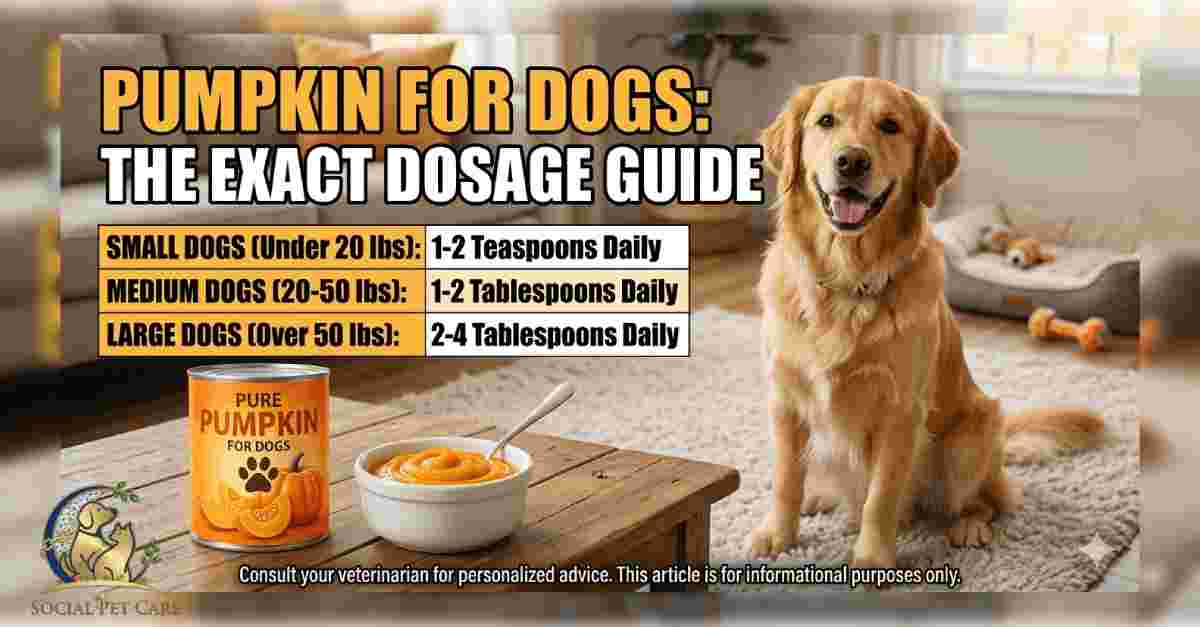
If your dog has mild constipation, plain pumpkin may help provide extra dietary fiber. A commonly cited amount is 1–4 tablespoons of pumpkin per meal, depending on the dog’s size. Start toward the lower end rather than giving a large amount at once, and make sure your dog has plenty of fresh water. Merck Veterinary Manual also lists 1–4 tablespoons of pumpkin per meal as a dietary-fiber option for constipated dogs.
However, pumpkin is not a cure for every cause of constipation. A dog that is repeatedly straining, unable to pass stool, vomiting, unusually tired, painful, or showing other concerning symptoms may need veterinary care rather than more fiber. Constipation can sometimes be associated with an obstruction or another underlying medical problem.
How Much Pumpkin Should You Give a Dog for Constipation?
The amount depends largely on your dog’s size and individual situation.
For mild constipation, a practical range is:
- Small dogs: start with a small portion and work toward the lower end of the 1–4 tablespoon range if appropriate.
- Medium-sized dogs: a moderate portion may be appropriate.
- Large dogs: they may tolerate amounts toward the upper end of the range.
Because the published 1–4 tablespoon recommendation is a broad range rather than a precise weight-based prescription, it is better to avoid assuming that a larger dog automatically needs the maximum amount. Your veterinarian can recommend an appropriate amount if your dog has a medical condition, takes medication, is elderly, or has recurring constipation.
Start with less rather than more
Adding a lot of fiber suddenly can cause digestive upset. If you are trying pumpkin for an otherwise well dog with mild constipation, beginning conservatively is sensible rather than immediately giving the largest suggested amount.
Also make sure your dog is drinking adequately. Fiber needs water to work properly, and veterinary guidance specifically emphasizes hydration when increasing dietary fiber for constipation.
What Kind of Pumpkin Is Safe for Dogs?
Choose plain, unseasoned pumpkin.
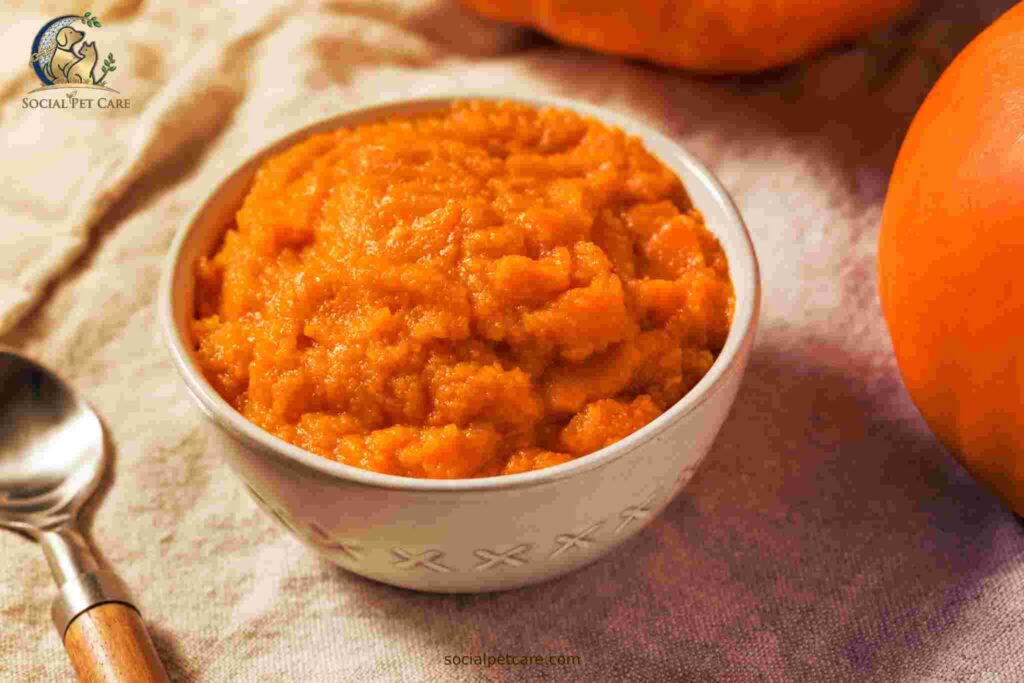
The simplest option is canned pumpkin puree whose ingredients are essentially 100% pumpkin. You can also use cooked pumpkin that is plain, peeled, and free from added salt or seasoning.
Avoid pumpkin pie filling
Pumpkin pie filling is not the same thing as plain pumpkin puree. Pie products can contain added sugar, spices, and other ingredients that aren’t appropriate for dogs. Some products may also contain ingredients that are toxic to dogs, so check the label carefully.
A good rule is simple: if the label says pumpkin puree and contains no unnecessary additives, it is a much better choice than pumpkin pie filling.
Why Can Pumpkin Help With Mild Dog Constipation?
Pumpkin is a source of dietary fiber. Fiber can affect stool consistency and intestinal contents by interacting with water in the digestive tract.
For constipation, the goal isn’t simply to add as much fiber as possible. Adequate hydration matters too. Merck Veterinary Manual notes that animals should be well hydrated before starting fiber supplementation because insufficient hydration can increase the risk of fiber contributing to an impaction.
That is why adding a reasonable amount of plain pumpkin while ensuring access to fresh water makes more sense than repeatedly increasing the pumpkin if your dog isn’t improving.
How to Give Pumpkin to a Constipated Dog
You can mix the pumpkin into your dog’s normal food.
A simple approach is:
- Choose plain pumpkin puree.
- Begin with a modest amount appropriate for your dog’s size.
- Mix it with the regular meal.
- Make sure fresh water is readily available.
- Monitor your dog’s bowel movements and overall behavior.
- Contact your veterinarian if the constipation persists, worsens, or is accompanied by concerning symptoms.
There is no benefit to forcing a large quantity of pumpkin into a dog that is unable to pass stool. If an obstruction or significant impaction is present, adding more fiber is not an appropriate substitute for veterinary evaluation.
How-much-pumpkin-to-give-a-constipated-dog
When Pumpkin May Not Be Enough
Constipation can have many possible causes. Dogs may become constipated because of inadequate water intake, dietary problems, ingestion of bones or other poorly digestible material, certain medications, or underlying conditions affecting the digestive tract or other parts of the body.
A dog that repeatedly develops constipation should not simply be given pumpkin every time without investigating why it keeps happening.
Veterinarians may use dietary changes for mild cases, but more serious constipation can require medications, enemas, or removal of retained feces.
Signs Your Dog May Actually Be Constipated
Typical signs include:
- Repeatedly straining to poop
- Passing small amounts of hard, dry stool
- Producing little or no stool despite trying
- Taking longer than usual to defecate
- Showing discomfort while attempting to poop
More serious cases can involve lethargy, loss of appetite, vomiting, or abdominal discomfort.
Remember that repeated straining does not automatically mean simple constipation. A veterinarian may need to determine whether stool is actually retained and whether something is obstructing its passage.
When Should You Call the Vet?
Contact your veterinarian if your dog’s constipation is persistent, recurrent, or getting worse, especially if you are unsure whether your dog may have eaten a bone, toy, garbage, or another object.
Seek prompt veterinary attention if constipation is accompanied by vomiting, significant abdominal pain or swelling, marked lethargy, loss of appetite, or an inability to pass stool. These signs can indicate that something more serious is happening.
Do not give human laxatives or other constipation medicines unless your veterinarian specifically tells you to. Some human medications can be dangerous for animals.
Can You Give Pumpkin to a Puppy With Constipation?
Puppies deserve extra caution. Their nutritional requirements, size, age, and potential causes of constipation differ from those of adult dogs.
If a puppy is constipated, particularly if it is very young, repeatedly straining, not eating, vomiting, or acting unwell, it is better to consult a veterinarian rather than trying progressively larger amounts of pumpkin at home.
Can Too Much Pumpkin Cause Problems?
Yes. More pumpkin is not necessarily better.
Pumpkin adds fiber to the diet, and a sudden or excessive increase in fiber can cause digestive changes. The goal is to use a modest amount when appropriate, not to keep increasing the serving until the dog produces stool.
If your dog does not improve after a reasonable dietary approach, the next step should be finding out why—not simply adding more pumpkin.
The Bottom Line
For a dog with mild constipation, plain pumpkin can be a useful source of dietary fiber. Veterinary references commonly give a range of 1–4 tablespoons per meal, depending on the dog’s size, while emphasizing adequate hydration.
Use plain 100% pumpkin puree, not pumpkin pie filling, and start conservatively. Most importantly, don’t use pumpkin to delay veterinary care when your dog is painful, vomiting, lethargic, repeatedly constipated, or unable to pass stool.
Frequently Asked Questions
How much pumpkin should I give my dog for constipation?
A commonly cited range is 1–4 tablespoons per meal, depending on the dog’s size. Start conservatively and make sure the dog is adequately hydrated.
Can I give my dog canned pumpkin for constipation?
Yes, provided it is plain pumpkin puree without added spices, sugar, or other unnecessary ingredients.
Can dogs eat pumpkin pie filling?
It is best avoided. Pumpkin pie filling can contain ingredients that aren’t appropriate for dogs, and some formulations may contain potentially toxic ingredients.
How long does pumpkin take to help a constipated dog?
The response can vary depending on the cause and severity of constipation. If your dog remains constipated or develops other symptoms, don’t keep increasing pumpkin without veterinary advice.
Can pumpkin make dog constipation worse?
Adding excessive fiber without adequate hydration can be problematic. Merck Veterinary Manual specifically recommends ensuring adequate hydration before adding fiber to a constipated animal’s diet.
What if my dog is straining but nothing comes out?
Don’t assume that more pumpkin will solve the problem. Persistent inability to defecate can require veterinary assessment, particularly if your dog is painful, vomiting, lethargic, or has a swollen abdomen.





One Comment