
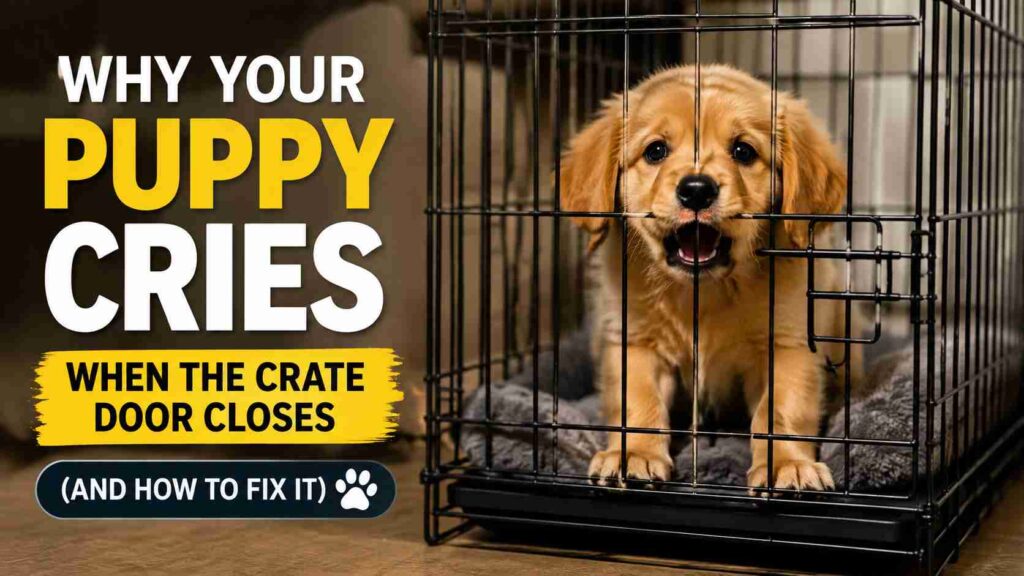
It is a frustrating scenario for many new dog owners: your puppy happily walks into their crate, settles down with a toy, and seems perfectly content. But the moment you swing the wire door shut, the peace shatters. The whining, barking, and pawing begin immediately.
If your puppy cries when the crate door closes, they are not necessarily rejecting the crate itself. Instead, they are reacting to the sudden loss of freedom. To a puppy, an open crate is a comfortable den. A closed crate feels like a trap.
Bridging the gap between an open door and a closed door requires breaking the process down into tiny, manageable steps. By changing how your puppy perceives the door, you can help them feel safe and relaxed even when they are fully confined.
Why the Door is the Trigger and Why Your Puppy Cries When the Crate Door Closes
Before fixing the problem, it helps to understand it from the dog’s perspective. Puppies are born into litters where they have the constant warmth and freedom to move toward their mother. Confinement is an entirely foreign concept to them.
When the crate door is open, the puppy is in control. They can leave to get a drink of water, stretch their legs, or find you. When the door clicks shut, that control is gone. This triggers a mild (or sometimes severe) panic response.
The goal of your training is to change the meaning of the door closing. Instead of signaling “you are trapped,” the closing door needs to become a predictor of excellent things happening.
The Step-by-Step Door Desensitization Protocol
To fix this issue, you must lower your criteria. If shutting the door causes crying, you cannot start by shutting the door. You have to start with an action your puppy can tolerate without anxiety, keeping training sessions very short—no more than three to five minutes at a time.
Grab a handful of high-value treats. Small pieces of boiled chicken, plain hot dogs, or freeze-dried liver work much better than dry kibble for this exercise.
Step 1: The Door Touch
With your puppy resting happily inside the open crate, sit next to it. Reach out and simply touch the door without moving it. Immediately toss a high-value treat between your puppy’s paws. Repeat this 10 to 15 times. Your puppy should start looking at the door, then looking at your hand in anticipation.
Step 2: The One-Inch Move
Once your puppy is comfortable with you touching the door, move it just one inch inward, then immediately return it to the fully open position. Toss a treat. Repeat this until the puppy remains entirely relaxed. If they tense up or try to bolt, you have moved the door too far.
Step 3: The Halfway Point
Gradually increase how far you swing the door. Move it halfway closed, pause for one second, open it, and treat. The key is to open the door before the puppy feels the need to escape. You are teaching them that the door always opens back up.
Step 4: The Fake Close
Swing the door all the way shut, but do not drop the latch. Let it touch the frame for two seconds, then open it and reward. Build up the time the unlatched door sits flush against the frame, moving from two seconds to five seconds, then to ten.
Step 5: The Latch and Release
The sound of the metal latch sliding into place is often the final trigger for a puppy. Close the door, slide the latch into place, and instantly unlatch it and open the door. Toss a jackpot (three or four treats at once). Gradually extend the time the door remains latched. Start with three seconds, then ten, then thirty.
Using High-Value Distractions
While you are working on the step-by-step protocol above, you can also use long-lasting rewards to build positive associations with confinement.
When you need to close the door for slightly longer periods, give your puppy something that takes time and focus to consume.
- Stuffed Chew Toys: Fill a heavy-duty rubber toy with wet puppy food, plain yogurt, or dog-safe peanut butter, and freeze it.
- Lick Mats: These can often be attached directly to the inside wires of the crate.
The rule for these high-value items is simple: they only exist inside the crate. When the door opens, the special toy goes back in the freezer. The puppy learns that the only way to access their favorite treat is behind a closed crate door.
Common Crate Training Mistakes to Avoid
Even with a solid training plan, small human errors can slow down your puppy’s progress. Be mindful of these common missteps.
Making a Big Deal About Openings
When you open the crate door, do it calmly and quietly. Do not use an excited voice or immediately initiate playtime. If exiting the crate is the best part of your puppy’s day, they will spend their entire time inside waiting for the door to open. The party should happen inside the crate, not outside of it.
Pushing Past the Threshold
If you move too fast and the whining starts, you might wonder How Long to Let a Puppy Cry in the Crate before stepping in. While a minute or two of mild fussing is normal, you should never let a puppy escalate into a full panic. If they are crying, you have exceeded their threshold. Wait for a three-second pause in the crying to open the door, then drop back to an easier step in your training protocol.
Using the Crate for Punishment
Never use the crate as a “time-out” zone when you are angry. If you aggressively place the puppy inside and slam the door because they chewed a shoe, the crate becomes associated with negative human emotions and punishment.
Leaving Collars or Harnesses On
This is a critical safety rule. Never leave a collar, harness, or leash on a puppy when closing them inside a wire crate. The hardware can easily become caught on the metal bars, creating a severe strangulation hazard, especially if the puppy panics and tries to escape. Always strip the puppy “naked” before latching the door.
Recognizing True Panic vs. Normal Protesting
It is normal for a puppy to let out a few whimpers or a soft sigh when they realize they cannot follow you into the kitchen. This mild protesting usually stops within five to ten minutes if they are ignored and have a safe chew toy to focus on.
However, true confinement anxiety or separation anxiety looks very different. If your puppy is experiencing genuine panic, continuing to force them into a closed crate can cause psychological trauma and physical injury.
Warning signs of true panic include:
- Heavy, continuous panting when not hot.
- Excessive drooling (leaving puddles in the crate tray).
- Frantic digging at the crate floor.
- Biting or pulling at the metal bars.
- Urination or defecation in the crate out of fear.
- Vocalizations that sound like screaming rather than whining.
If your puppy displays these signs, pause crate training and consult with a certified positive-reinforcement dog trainer or your veterinarian. They may recommend switching to a different type of confinement, such as a sturdy playpen, while you work on underlying anxiety issues.
FAQ about Why Your Puppy Cries When the Crate Door Closes
Should I sit next to the crate after closing the door? Yes, in the beginning. Shutting the door and immediately walking out of the room is too much change at once. Sit next to the latched crate, read a book or check your phone, and occasionally drop a treat inside. Once they are calm with you sitting there, you can start practicing standing up and walking around the room.
Does putting a blanket over the crate help? Covering the crate with a breathable blanket can help many puppies settle down. It blocks visual stimulation, creating a dark, den-like environment that encourages sleep. However, monitor your puppy carefully; a small percentage of dogs feel more trapped when covered. Ensure the room is well-ventilated and cool so the puppy does not overheat.
Should I feed my puppy their meals with the door closed? Feeding meals inside the crate is an excellent strategy. Start by placing the bowl inside while leaving the door wide open. Once the puppy is comfortable with that, gently close the door while they are actively eating, but open it before they finish their last bite. Eventually, you can leave the door closed for a few minutes after they finish eating.