
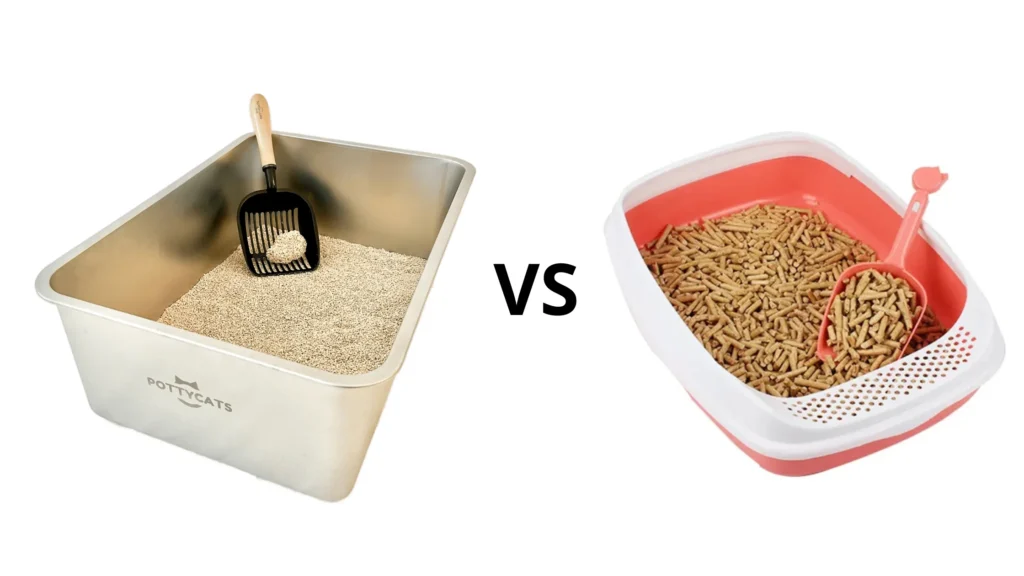
For most cat owners in the United States, clumping litter is the easier choice for odor control and daily cleaning, while pine pellets are often the better choice for low dust, less tracking, and lower waste. Neither option is best for every cat.
The right litter depends on your cat’s habits, your cleaning routine, dust concerns, budget, and local disposal rules. A cat that dislikes change may also prefer the texture it already knows.
This guide compares clumping litter and pine pellets by performance, safety, cost, odor control, tracking, waste, and ease of use.
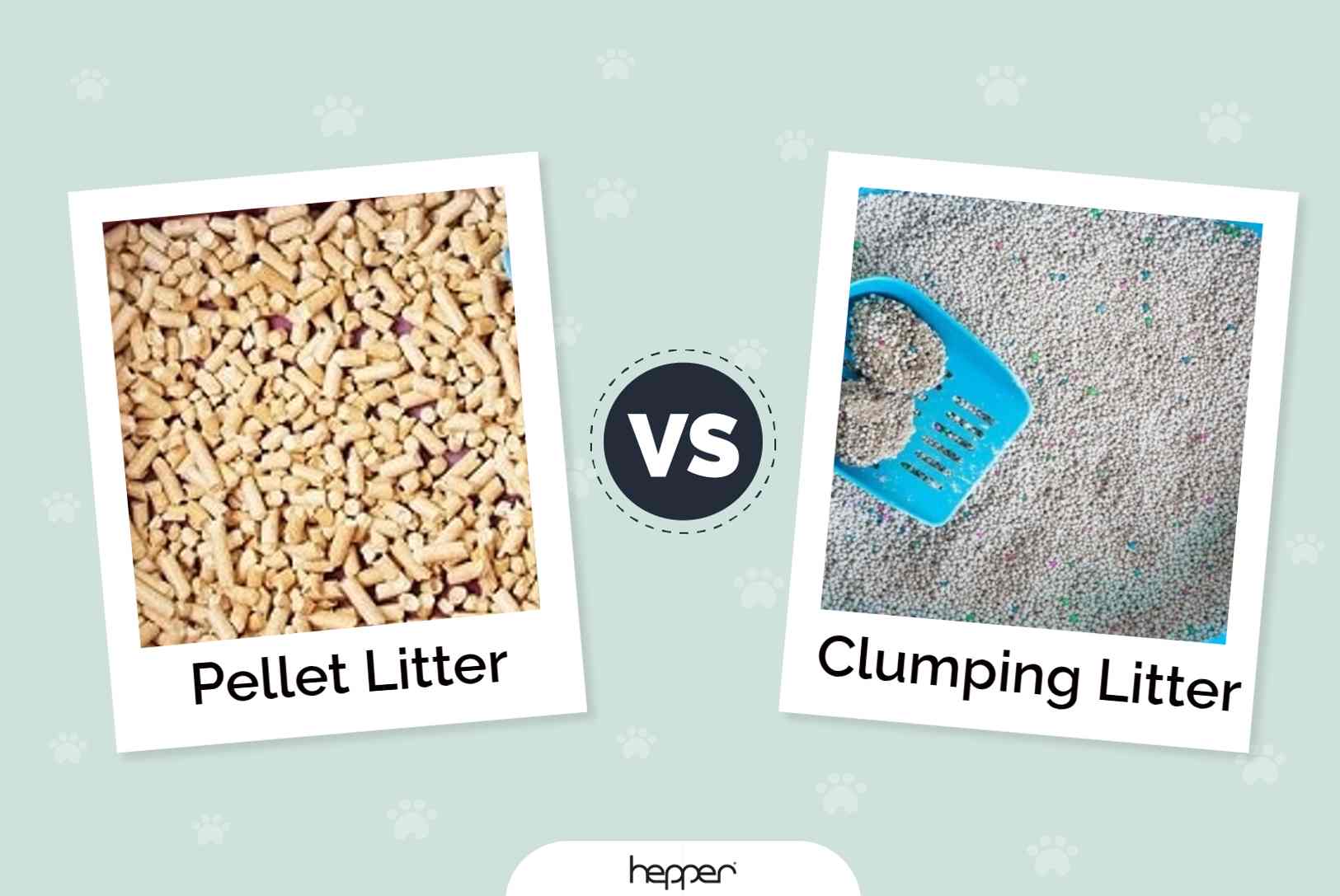
Quick answer: clumping litter or pine pellets?
Choose clumping litter if you want:
- Fast daily scooping
- Strong urine odor control
- A texture most cats accept
- Easy tracking of urine and stool changes
- A good fit for automatic litter boxes, when the device allows it
Choose pine pellets if you want:
- Very low dust
- Less litter tracked around the home
- A natural wood scent
- Less litter waste in some homes
- A litter that does not form clay clumps
For many households, clumping litter wins on convenience. Pine pellets can win on cleanliness outside the box and dust control.
| Factor | Clumping litter | Pine pellets |
|---|---|---|
| Main material | Usually clay, sometimes plant fiber | Compressed wood |
| Urine handling | Forms a scoopable clump | Breaks into sawdust |
| Odor control | Usually strong | Good when maintained well |
| Dust | Varies by brand | Usually low, but not always dust-free |
| Tracking | Moderate to high | Low to moderate |
| Scooping | Scoop urine and stool | Remove stool; sift or remove wet sawdust |
| Cat acceptance | Often high | Mixed |
| Best feature | Easy waste removal | Low tracking and low dust |
| Main drawback | Dust, tracking, and clay waste | More setup and texture change |
What is clumping litter?
Clumping litter is litter that binds with liquid and forms a firm mass. Most clay clumping litter uses sodium bentonite, a clay that expands and sticks together when wet.
This lets you remove urine without emptying the whole box. You scoop the wet clump and stool, then add fresh litter as needed.
Some clumping litters use corn, wheat, cassava, tofu, or other plant fibers. These products may behave like clay clumping litter, but their odor control, dust level, and clump strength can differ.
How clumping litter works
When a cat urinates, the liquid moves into the litter. The absorbent material binds with the liquid. In a good product, the clump stays together long enough for you to scoop it.
Clumping litter works best when the box has enough depth. A common starting point is about 2 to 3 inches of litter, but follow the product label and your cat’s preference.
If the layer is too thin, urine may reach the bottom. This can cause:
- Hard patches stuck to the box
- Strong odors
- More scraping during cleaning
- Faster litter replacement
Strengths of clumping litter
Clumping litter is popular because it removes the source of odor. You do not need to leave wet litter in the box until the next full change.
It also helps you watch your cat’s output. Changes in urine clump size or frequency may be worth discussing with a veterinarian. Litter cannot diagnose illness, but it can help you notice a change.
Clumping litter is also easy to find in U.S. grocery stores, pet stores, warehouse clubs, and online shops. Many cats accept its sand-like feel with little training.
Limits of clumping litter
Clay litter can create dust. Dust levels vary by product, handling, and the condition of the bag. A “low-dust” label is useful, but it does not mean dust-free.
Clumping litter can also track through the home. Fine grains may stick to paws and spread near the box. A mat can reduce this, but it will not stop all tracking.
Do not flush clay clumps or cat feces down a toilet. They may cause plumbing problems. Cat waste can also contain Toxoplasma gondii, a parasite that can harm some wildlife if it reaches waterways. The U.S. Environmental Protection Agency and public health agencies advise careful disposal of pet waste rather than treating it as flushable material.
What are pine pellets?
Pine pellets are small, compressed pieces of wood. They are made by pressing dried wood particles into pellet form.
For cat use, choose pet-litter pellets made from untreated wood. Do not assume that every fuel pellet, horse-bedding pellet, or wood product is suitable for a cat box. Avoid products with fragrance, chemical additives, accelerants, or unknown ingredients.
Pine pellets are not the same as pine shavings. Pellets are compressed and tend to break down into fine sawdust when wet. Shavings are loose wood pieces and behave differently.
How pine pellets work
Dry pine pellets absorb urine. As they take on moisture, they break apart into sawdust.
The dry pellets may remain on top while the wet sawdust falls below. This is why many pine-pellet users use a two-part sifting box:
- The upper tray holds the dry pellets and stool.
- The lower tray collects damp sawdust.
- A scoop or sifting tray separates clean pellets from broken-down material.
This system can work well, but it requires a different routine from clumping litter. You do not scoop a firm urine ball. You remove stool and manage the wet sawdust.
Strengths of pine pellets
Pine pellets usually create less tracking than fine clay litter. The larger pieces are less likely to cling to paws and spread across floors.
They also tend to produce less airborne dust than many clay products. This can help homes where dust is a concern, although no litter is completely dust-free.
Pine pellets may also produce less solid litter waste because clean pellets can remain in the box while wet material is removed. The actual waste level depends on the box design, how often you sift, and how much litter your cat scatters.
Limits of pine pellets
Some cats dislike the hard, large texture of pellets. A cat may avoid the box, hold urine, or choose another spot if the change is too sudden.
Pine pellets also require more setup. A regular open box can work, but a sifting system often makes maintenance easier. You may need to stir the pellets, remove damp sawdust, and replace material on a schedule.
Pine has a natural wood scent. Some people enjoy it, while others find it strong. A cat may also reject a scented or strongly aromatic product.

Clumping litter vs. pine pellets: key differences
The biggest difference is how each litter handles urine.
Clumping litter keeps urine in a removable mass. Pine pellets absorb urine and break down into sawdust. That single difference affects cleaning, odor, waste, and cat acceptance.
Odor control
Clumping litter usually has the advantage when you scoop at least once a day. Removing the urine clump removes much of the odor source.
Pine pellets can control odor well when the wet sawdust is removed often. If damp sawdust builds up under the pellets, the box may smell. Good airflow and a dry lower tray help.
Neither litter can fix an overcrowded or dirty box. The American Association of Feline Practitioners recommends providing clean, accessible boxes and using enough boxes for the cats in the home. A common rule is one box per cat, plus one more, placed in separate, quiet areas.
Dust
Pine pellets are often the better option for people who want less dust. Their larger size also creates less fine material during normal pouring.
Clumping litter varies widely. Some clay products are dusty when poured or scooped. Plant-based clumping litter may have a different dust profile, but “natural” does not automatically mean dust-free.
If your cat has coughing, wheezing, eye discharge, or breathing trouble, do not assume litter is the cause. Move the cat away from the suspected irritant and contact a veterinarian, especially if signs are severe or sudden.
Tracking
Pine pellets usually track less because the pieces are larger. Clumping litter often tracks more because its grains are small and light.
A litter mat can help with either type. Place the mat directly outside the box. Choose a surface that is easy to clean and does not trap sharp or uncomfortable pieces against your cat’s paws.
Cleaning effort
Clumping litter has a simple routine:
- Scoop urine clumps and stool daily.
- Top up the litter when the level drops.
- Empty and wash the box as needed.
- Replace the litter when odor remains after scooping.
Pine pellets need a different routine:
- Remove stool daily.
- Shake or sift the box to move wet sawdust below.
- Remove damp sawdust often.
- Add dry pellets as needed.
- Wash and dry the box during full changes.
Clumping litter is usually easier for a first-time cat owner. Pine pellets can be easy after the system is set up, but the learning curve is higher.
Cat acceptance
Cats often care more about texture, smell, and cleanliness than the label on the bag.
Many cats accept fine, unscented clumping litter because it feels like loose soil or sand. Some cats prefer pellets. Others will avoid them.
A gradual transition is safer than a sudden switch. Put the new litter in a second box first, or mix a small amount into the old litter. Increase the new type slowly only if your cat continues to use the box.
Urine monitoring
Clumping litter makes urine easier to see and measure because each event forms a clump. This can help you notice a change in size or frequency.
Pine pellets can still show urine use, but the wet material spreads into sawdust. It may be harder to compare one urine event with another.
If your cat strains, cries while urinating, visits the box repeatedly, or produces little or no urine, seek veterinary care promptly. A urinary blockage is an emergency, especially in male cats.

Which litter is safer for cats?
Both products can be used safely when the litter is made for cats, kept clean, and accepted by the individual cat. Safety depends on the product and the cat, not only on whether the litter is clay or pine.
Safety points for clumping litter
Use unscented litter when possible if your cat reacts to strong smells. Fragrance can bother some cats and may lead to box avoidance.
Keep litter away from food and water. Wash your hands after scooping. Pregnant people and people with weakened immune systems should ask their health care provider about safe cat-litter handling because cat feces can carry Toxoplasma gondii.
Do not let a kitten eat litter. Large amounts of clumping litter can be dangerous if swallowed. Ask a veterinarian for advice if a kitten repeatedly eats litter or shows vomiting, constipation, weakness, or poor appetite.
Safety points for pine pellets
Use untreated, cat-safe pine pellets. Do not use pellets that contain:
- Added fragrance
- Chemicals or binders not listed for pet use
- Fire starters
- Oils
- Mold or visible dampness
- Unknown wood species or ingredients
Avoid making broad claims that all pine is harmful or that all kiln-dried pine is risk-free. Product composition and processing matter. Choose a package with clear ingredients and directions.
Pine pellets can be uncomfortable for cats with sore paws, arthritis, or other mobility issues. Watch how your cat walks and whether it spends less time in the box after the change.
Cleanliness matters more than material
A clean box is often more important than the choice between clay and wood. Most cats prefer a box that is easy to enter and free of old waste.
Use a box large enough for your cat to turn around. The Humane Society of the United States and feline-care groups commonly advise large, easy-to-access boxes, especially for older or less mobile cats.
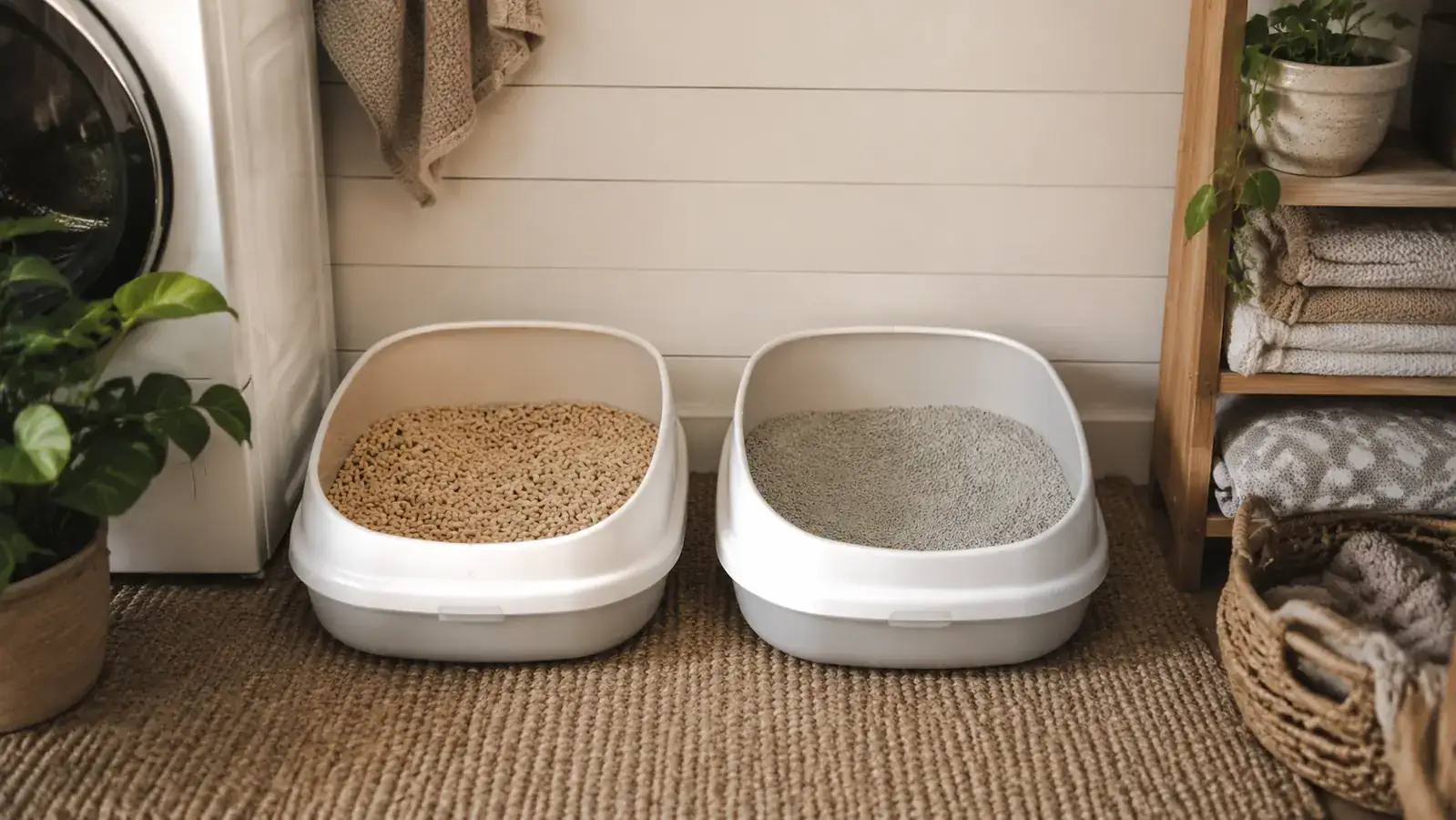
Which litter controls odor better?
Clumping litter usually controls odor better with less daily effort. Pine pellets can control odor well, but only when wet sawdust is removed on time.
Clumping litter traps urine in a scoopable clump. Many products also contain carbon, baking soda, or fragrance. These additives may help some homes, but fragrance can cause avoidance in scent-sensitive cats.
Pine contains natural wood compounds that may reduce odor while the pellets are fresh. Once the pellets turn to damp sawdust, odor can rise. Sifting is the key step.
Try this simple odor check:
- Scoop stool or remove it from the box each day.
- Remove urine clumps, or remove damp sawdust.
- Check the box from a few feet away.
- Replace the litter if odor remains after waste removal.
- Wash the box if odor seems embedded in the plastic.
Do not cover a dirty box with fragrance. Masking odor can make the box less pleasant for your cat and may delay needed cleaning.
Which option costs less?
The cheaper option depends on local prices, litter use, box design, and how often you replace the litter. A lower price per bag does not always mean a lower cost per month.
Use this simple calculation:
Monthly litter cost = price per bag × bags used each month
For a fair comparison, track both products for four weeks. Record:
- Bag price
- Bag weight or volume
- Number of bags used
- Waste removed
- Full-box changes
- Extra costs for sifting boxes or liners
Hypothetical example
Suppose a household uses one $24 bag of clumping litter every four weeks. Its monthly litter cost is about $24.
Another household uses two $12 bags of pine pellets in the same period. Its monthly cost is also about $24.
This example does not show which product is cheaper. It shows why usage matters more than the shelf price.
Pine pellets may create less waste if clean pellets stay in the box. However, a cat that scatters pellets or refuses the box can erase that advantage. Clumping litter may cost more in waste but save time.
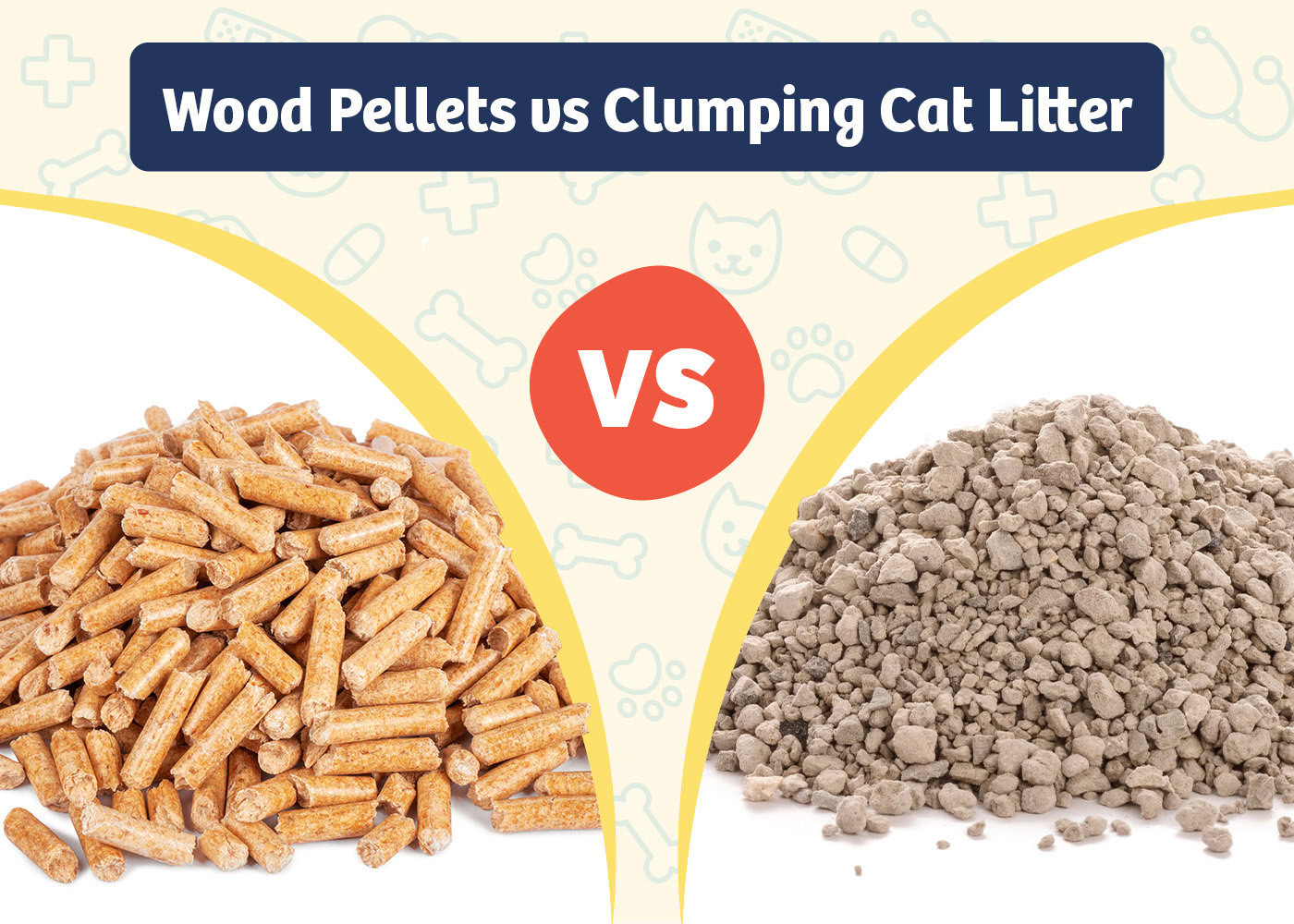
How to switch from clumping litter to pine pellets
Switch slowly if your cat is comfortable using the current box. A sudden change can lead to accidents or box avoidance.
Method 1: Add a second box
This is often the lowest-risk method.
- Keep the old box in its usual place.
- Add a second box with pine pellets.
- Place it nearby but not directly against the old box.
- Watch which box your cat chooses.
- Keep both boxes clean.
- Remove the old litter only after your cat uses the pellets reliably.
This method also shows whether the issue is the litter or the box location.
Method 2: Mix the litter
If your cat accepts the new texture:
- Start with about 10% pine pellets and 90% old litter.
- Keep the box clean.
- Increase the pine portion every few days.
- Stop or move back one step if your cat avoids the box.
- Continue only when your cat uses the box normally.
The timeline may be longer for older cats, nervous cats, or cats with a history of litter-box problems.
Signs the switch is working
Look for:
- Normal box use
- No new accidents
- Normal urine and stool habits
- No repeated trips to the box
- No digging distress
- No signs of paw pain
If your cat stops using the box, do not punish it. Return to the last litter your cat used well, clean accident areas with an enzymatic cleaner, and contact a veterinarian if the behavior continues.

Common mistakes to avoid
Switching all boxes at once
A cat may reject a new litter with no backup option. Change one box first or offer two choices.
Using wood pellets with unknown ingredients
A low price does not prove that a pellet is safe for cats. Read the label. Skip products with unclear additives or strong chemical smells.
Waiting too long to remove pine sawdust
Pine pellets need regular moisture removal. Wet sawdust left in the lower tray can create odor and reduce the appeal of the box.
Filling the box too deeply
More litter is not always better. Too much material can make digging harder and increase waste. Start with the package directions and adjust to your cat.
Using scented litter to solve a dirty box
Scent does not remove urine or stool. Clean the box and choose an unscented product if your cat dislikes strong smells.
Flushing either litter
Do not flush clay clumps, pine pellets, sawdust, or cat feces unless your local wastewater authority and product directions clearly allow it. Even then, local rules may differ. Trash disposal is usually the safer default for solid waste, but follow local requirements.
Ignoring a change in litter-box behavior
Accidents can come from stress, an unclean box, a poor location, pain, kidney disease, diabetes, constipation, or urinary disease. A sudden change deserves attention, not punishment.
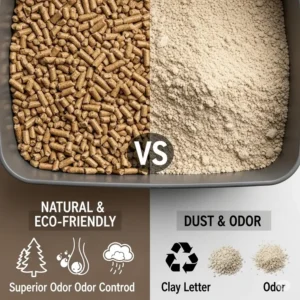
Best choice by household need
| Your main concern | Better starting choice | Why |
|---|---|---|
| Fast, simple scooping | Clumping litter | Urine forms removable clumps |
| Low tracking | Pine pellets | Larger pieces spread less |
| Low dust | Pine pellets | Usually creates less fine dust |
| Strong odor control | Clumping litter | Daily clump removal is efficient |
| Natural wood material | Pine pellets | Made from compressed wood |
| Easy cat acceptance | Unscented clumping litter | Fine texture suits many cats |
| Easy urine monitoring | Clumping litter | Clump size is easy to see |
| Fewer litter changes | Depends on setup | Pine may reduce waste; clumping may save time |
| Older cat with sore paws | Often soft clumping litter | Pellets may feel hard |
| Multi-cat home | Depends on cat preference | Clean boxes and enough box space matter most |
This table is a starting point, not a rule. Your cat’s behavior is the final test.
Key takeaways
- Clumping litter is usually best for easy scooping and strong odor control.
- Pine pellets are often best for low tracking and low dust.
- Use only untreated, clearly labeled pine pellets made for pet use.
- Change litter slowly and offer a second box when possible.
- Clean any litter box often. A dirty box can lead to avoidance.
- Never ignore straining, repeated box visits, or little to no urine.
- Do not flush litter or cat waste unless local guidance clearly permits it.
Frequently asked questions
Are pine pellets better than clumping litter?
Pine pellets are better for some homes, especially those focused on low dust and low tracking. Clumping litter is usually better for quick scooping, odor control, and urine monitoring. The better option is the one your cat uses reliably and your household can maintain.
Can I mix clumping litter and pine pellets?
Yes, you can try mixing them during a slow transition. Start with a small amount of pine and increase it over time. A second box is often better because it lets your cat choose without forcing a texture change.
Do pine pellets stop smelling?
Pine pellets can control odor, but they do not stop all smells. Remove stool daily and remove damp sawdust often. If the box still smells after cleaning, wash it and check whether the pellets are staying wet.
Are pine pellets safe for kittens?
Use caution with kittens. Choose a cat-safe product with clear ingredients, and prevent the kitten from eating the pellets. Ask a veterinarian if the kitten chews litter, has breathing signs, or develops vomiting or constipation.
Can pine pellets replace clumping litter in an automatic litter box?
Usually not without checking the device instructions. Many automatic boxes are designed for a specific litter type and may not handle pellets or sawdust. Using the wrong material can reduce performance or damage the unit.
Conclusion: which litter should you choose?
Choose clumping litter if your top goals are easy scooping, reliable odor control, and simple urine tracking.
Choose pine pellets if your top goals are less tracking, less dust, and a wood-based litter. Be ready to use a sifting system and to transition your cat slowly.
If you are unsure, offer both in separate boxes for one to two weeks. Keep the boxes clean and watch which one your cat chooses. That choice, combined with your cleaning routine and safety needs, is the strongest guide.