How to Potty Train a Puppy in an Apartment (Step-by-Step)
How to Potty Train a Puppy in an Apartment (Without the Stress)
Bringing a new puppy into an apartment presents a unique set of logistical challenges. Unlike house owners who can simply open a back door at the first sign of a squat, apartment dwellers have to navigate hallways, wait for elevators, or descend flights of stairs before reaching a suitable patch of grass.
Learning how to potty train a puppy in an apartment requires a highly structured routine, a clear understanding of your puppy’s physical limits, and a specific plan for managing those critical minutes between your dog needing to go and actually reaching the designated spot.
This guide breaks down exactly how to set up your apartment, establish a reliable schedule, and avoid the most common mistakes pet owners make when housebreaking in a shared living space.
Choosing Your Apartment Potty Setup
Before you bring your puppy home, you must decide where their primary bathroom will be. In an apartment setting, you generally have two realistic options: a strictly outdoor routine or an indoor/balcony hybrid system.
Option 1: Strictly Outdoor Training
This method involves taking your puppy all the way outside to a designated area on the ground floor every time they need to go.
- The Advantage: Your dog learns from day one that the bathroom is strictly outside. You avoid the difficult transition of retraining them to go outdoors later.
- The Challenge: You must be ready to move immediately. A 10-week-old puppy cannot wait for a slow elevator.
Option 2: The Balcony or Indoor Patch
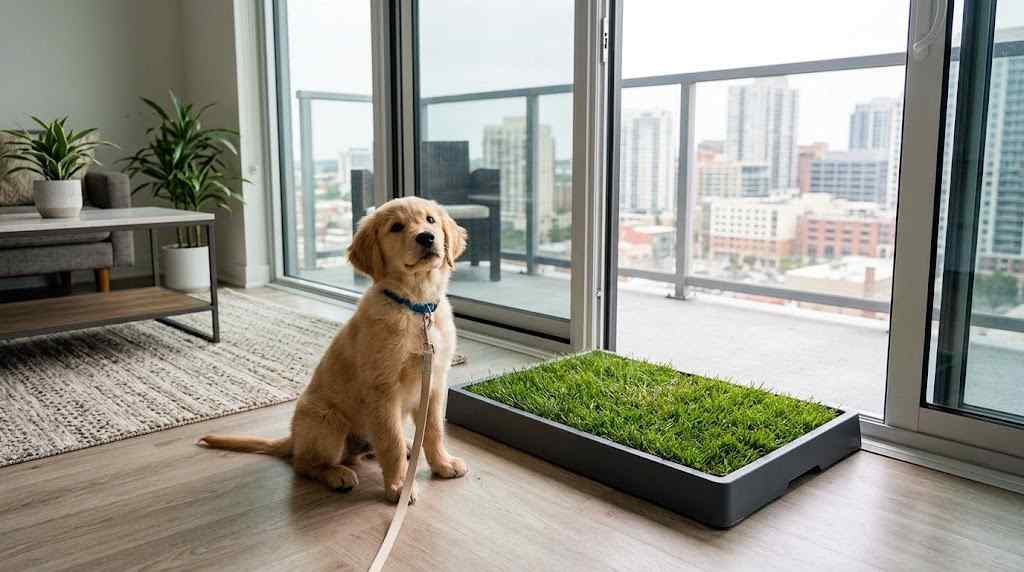
This involves using a real or synthetic grass patch (or pee pads) on a balcony or in a specific corner of your apartment.
- The Advantage: Immediate access. This is highly effective for high-rise apartments or for owners who cannot physically make it outside multiple times a night.
- The Challenge: Dogs develop a surface preference early in life. If they get too used to going on a pad indoors, they may hesitate to use real grass later.
Setup Comparison
| Feature | Strictly Outdoors | Balcony Grass Patch | Indoor Pee Pads |
| Convenience | Low (requires constant trips outside) | High (immediate access) | High (immediate access) |
| Transitioning Later | None required | Moderate (requires moving patch) | Difficult (can confuse textures) |
| Odor Management | Excellent | Good (requires frequent cleaning) | Poor (pads must be thrown out daily) |
Recommendation: If you have a balcony, a real-grass subscription patch is highly effective for young puppies. It provides the correct texture (real grass) while eliminating the urgent race down the elevator.
The Shared Grass Warning: Puppy Safety First
If you decide to train your puppy outside on the ground floor, you must prioritize their health. Apartment complexes have shared outdoor spaces frequented by dozens of other dogs whose health history you do not know.
Puppies are highly susceptible to Parvovirus and Distemper, which are severe and often fatal diseases transmitted through the feces of infected dogs. Parvovirus can live in soil for months or even years.
Until your veterinarian confirms your dog is fully protected—which you can track using a standard [puppy vaccination schedule]—you should not let them walk on high-traffic communal grass.
Safe Outdoor Alternatives for Unvaccinated Puppies:
- Carry your puppy to a quiet, low-traffic area of mulch or concrete away from where other dogs typically relieve themselves.
- Use a fresh indoor or balcony grass patch until they receive their final round of booster shots (typically around 16 weeks of age).
- Consult your local veterinarian about the specific Parvovirus risk level in your immediate neighborhood.
Managing Space: Crate Training and Playpens
An apartment may seem small to you, but to a tiny puppy, a standard one-bedroom unit is a massive territory. Dogs instinctively avoid soiling the area where they sleep, but if they are given free roam of the living room, they will simply designate a corner behind the sofa as their new bathroom.
To prevent this, you must manage their environment.
The Crate Strategy
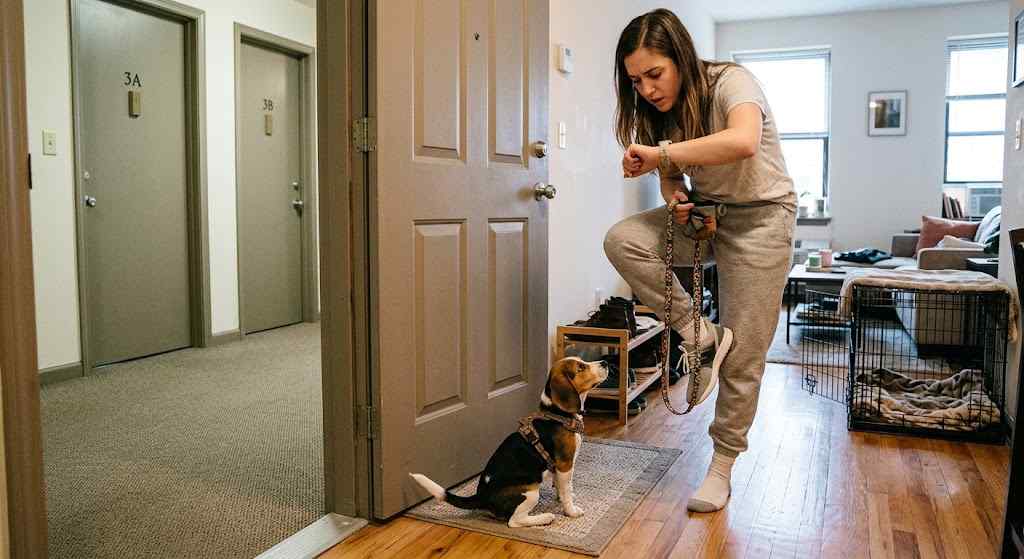
A crate should be just large enough for your puppy to stand up, turn around, and lie down comfortably. If the crate is too large, they will sleep on one side and relieve themselves on the other. Use a divider panel to restrict the space while they are small, expanding it as they grow.
The Playpen Strategy
When you cannot directly supervise your puppy, but they do not need to be crated, use an exercise pen. Place their bed and toys at one end, and if you are using an indoor potty system, place the grass patch at the far opposite end.
Never give a puppy unsupervised free roam of your apartment until they have gone at least a full month without an indoor accident.
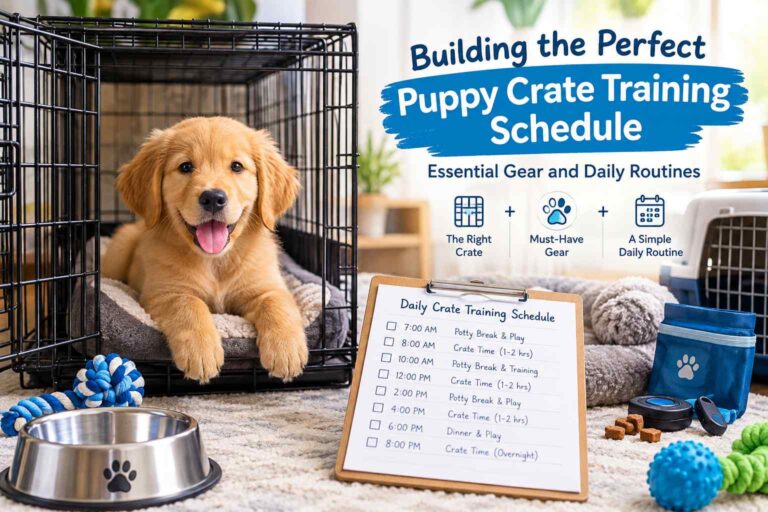
Establishing a Predictable Potty Schedule
Puppies possess very small bladders and rapid metabolisms. The foundation of apartment potty training is preemptively taking the dog out before they even realize they are desperate to go.
A general biological rule of thumb is that a resting puppy can hold their bladder for one hour for every month of age, plus one. Therefore, a two-month-old puppy can hold it for roughly three hours—but only when sleeping. When awake and active, that time drops drastically.
The Essential Apartment Potty Routine:
You should carry your puppy to their potty spot immediately during the following times:
- First thing in the morning (immediately upon waking).
- Right after they finish a meal or drink a large amount of water.
- Immediately after a vigorous play session.
- The moment they wake up from a nap.
- Right before you go to sleep at night.
For an eight-week-old puppy, this often means a trip to the designated potty spot every 45 to 90 minutes while they are awake.
The Apartment Logistics: Beating the Elevator
The most common failure point in apartment potty training occurs in the hallway. You notice the puppy needs to go, you clip on the leash, and you start walking down the corridor. Halfway to the elevator, the puppy squats.
When a puppy’s bladder is full, the physical act of walking stimulates the urge to urinate.
The Solution: Carry the Puppy.
Do not let your puppy walk out of your apartment door, down the hall, or into the elevator. Pick them up the moment you take them out of their crate. Hold them securely in your arms the entire way down to the ground floor or out to the balcony.
Puppies naturally try to avoid peeing on themselves or the person holding them. Carrying them suppresses the urge to squat until you safely place their paws on the grass. Once they are older and have better bladder control (usually around four to five months), you can begin letting them walk down the hallway on a leash.
Recognizing the Warning Signs
Even with a strict schedule, you must learn your individual dog’s body language. In a small apartment, keep your eyes on the dog at all times.
Watch for these immediate pre-potty indicators:
- Sudden, intense sniffing of the floor.
- Circling a specific area.
- Disengaging from play suddenly and wandering away.
- Whining or pacing near the apartment door or balcony slider.
- Walking with a stiff, slightly arched back.
If you see any of these signs, immediately interrupt the behavior with a cheerful “Let’s go outside!” pick them up, and head to the potty spot.
Rewarding Success Correctly
Housebreaking is fundamentally about building a habit where going in the correct spot is highly rewarding, and going indoors is unrewarding.
When you set your puppy down on their outdoor spot or balcony patch, stand still and give them a command, such as “Go potty.” Keep them on a leash, even on a balcony, so they understand this is a business trip, not playtime.
The moment they finish eliminating, deliver immediate praise and a high-value treat.
Timing is critical: The treat must be given within three seconds of them finishing. Do not wait until you are back upstairs in the apartment to give the reward. If you wait until you are inside, you are rewarding them for returning to the apartment, not for going to the bathroom.
Handling Accidents the Right Way
Accidents are inevitable. Your reaction to an indoor mess will dictate how quickly the training process progresses.
Never Punish
If you catch your puppy peeing on your apartment rug, do not yell, swat them, or rub their nose in it.
Punishing a puppy for an accident does not teach them that going inside is wrong. It teaches them that going to the bathroom in front of you is dangerous. This leads to a puppy that hides behind the sofa or under the bed to relieve themselves, making them incredibly difficult to housebreak.
If you catch them in the act, simply interrupt them with a sharp clap or an “Ah-ah!”, scoop them up, and carry them to their correct potty spot to finish.
Use the Right Cleaning Products
Standard household cleaners, bleach, and carpet shampoos do not remove the uric acid crystals found in dog urine. While the area may smell clean to a human, a dog’s sensitive nose can still detect the urine marker, which signals to them that this spot is an acceptable bathroom.
You must use an enzymatic cleaner specifically formulated for pet stains. Enzyme cleaners actively break down the proteins and bacteria in the urine, completely neutralizing the odor. Soak the area thoroughly, let it sit for the time recommended on the bottle, and blot it dry.
Transitioning from Indoors to Outdoors
If you started your puppy on a balcony grass patch due to vaccination risks, you will eventually need to transition them to the ground floor.
Make this transition gradual:
- Change the environment: Start carrying the balcony grass patch down to the ground floor. Place it over the communal grass and have your dog use it there. This connects the familiar texture with the new outdoor environment.
- Phase out the patch: After a few successful days, move the dog slightly off the patch onto the natural grass.
- Use the scent: If they are hesitant, dab a paper towel in their urine and place it on the outdoor grass. Dogs are stimulated to eliminate where they smell previous bathroom activity.
Housebreaking in an apartment requires more physical effort than training in a house with a yard. However, by strictly controlling your puppy’s space, carrying them through communal areas, and adhering to a rigorous schedule, you can build reliable bathroom habits that will last their entire life.
Frequently Asked Questions
How long does it take to potty train a puppy in an apartment?
Consistency dictates the timeline. Most puppies can be reliably house-trained within 4 to 6 months of age, though perfect bladder control takes time. If you follow a strict schedule and manage their environment, you should see a massive reduction in accidents within the first 3 to 4 weeks.
What should I do if I work 8-hour shifts?
An 8-week-old puppy physically cannot hold their bladder for 8 hours. If you work away from the apartment all day, you must arrange for a dog walker, a neighbor, or a friend to take the puppy out every 2 to 3 hours. Alternatively, you must set up a long-term confinement area (like a playpen) with a designated potty patch at the far end away from their bed.
Why does my puppy hold it while outside, but pee as soon as we get back inside?
This usually happens for two reasons: the puppy was distracted by the sights and sounds of the outdoors and forgot they needed to go, or they are not comfortable going in a vulnerable outdoor space yet. If they do not go outside within 10 minutes, carry them back up, put them straight into their crate for 10 to 15 minutes, and then immediately try again.
Should I wake my puppy up at night to go outside?
Yes. For the first few weeks, a young puppy cannot sleep through the night without a bathroom break. Set an alarm to take them out once or twice a night. Keep the trip calm, quiet, and strictly business—no playing or excessive talking.