
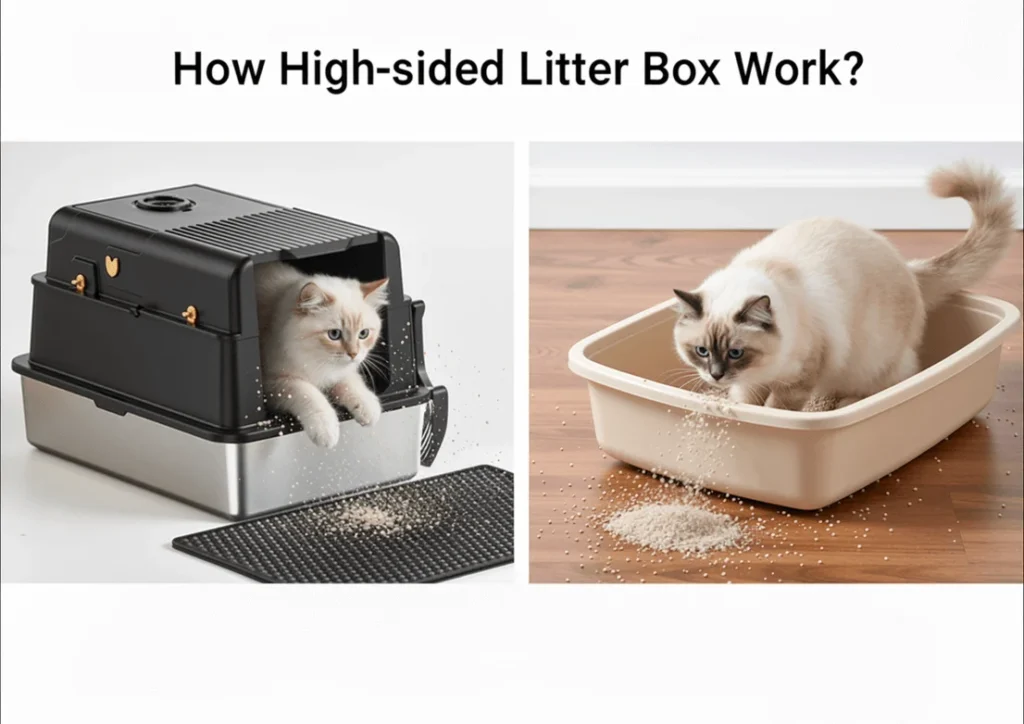
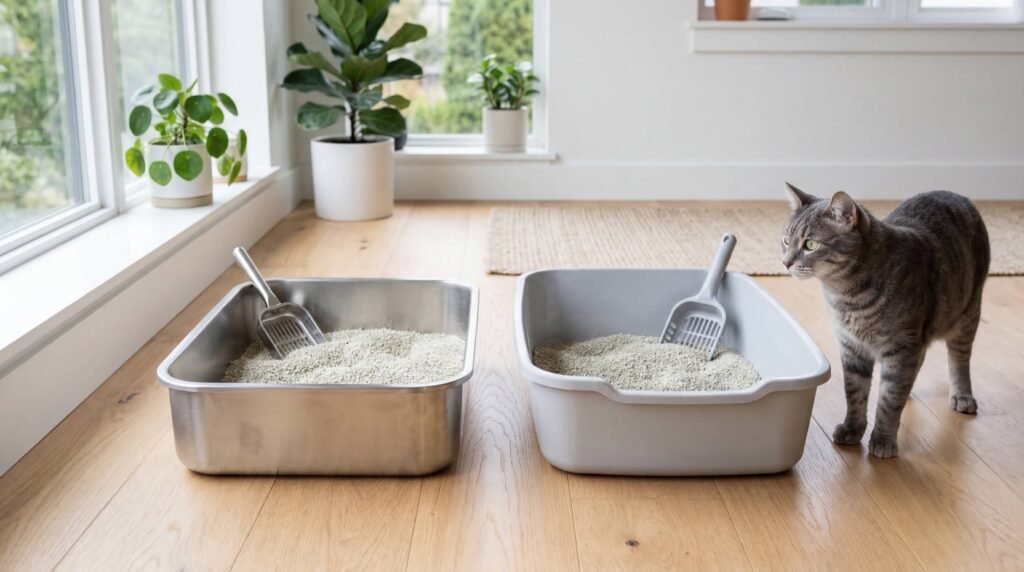
For most cats and U.S. households, a stainless steel litter box is the better long-term choice when easy cleaning, odor control, and durability matter most. Plastic litter boxes still make sense when the budget is tight, a lightweight box is needed, or a cat prefers a softer and quieter surface.
The best choice depends on more than material. Box size, entry height, location, litter type, cleaning habits, and your cat’s comfort can matter just as much. A large, open box that stays clean is usually more useful than a premium box that is too small or hard to access.
This guide compares stainless steel and plastic litter boxes by hygiene, odor, durability, safety, price, comfort, and daily care for cat owners in the United States.
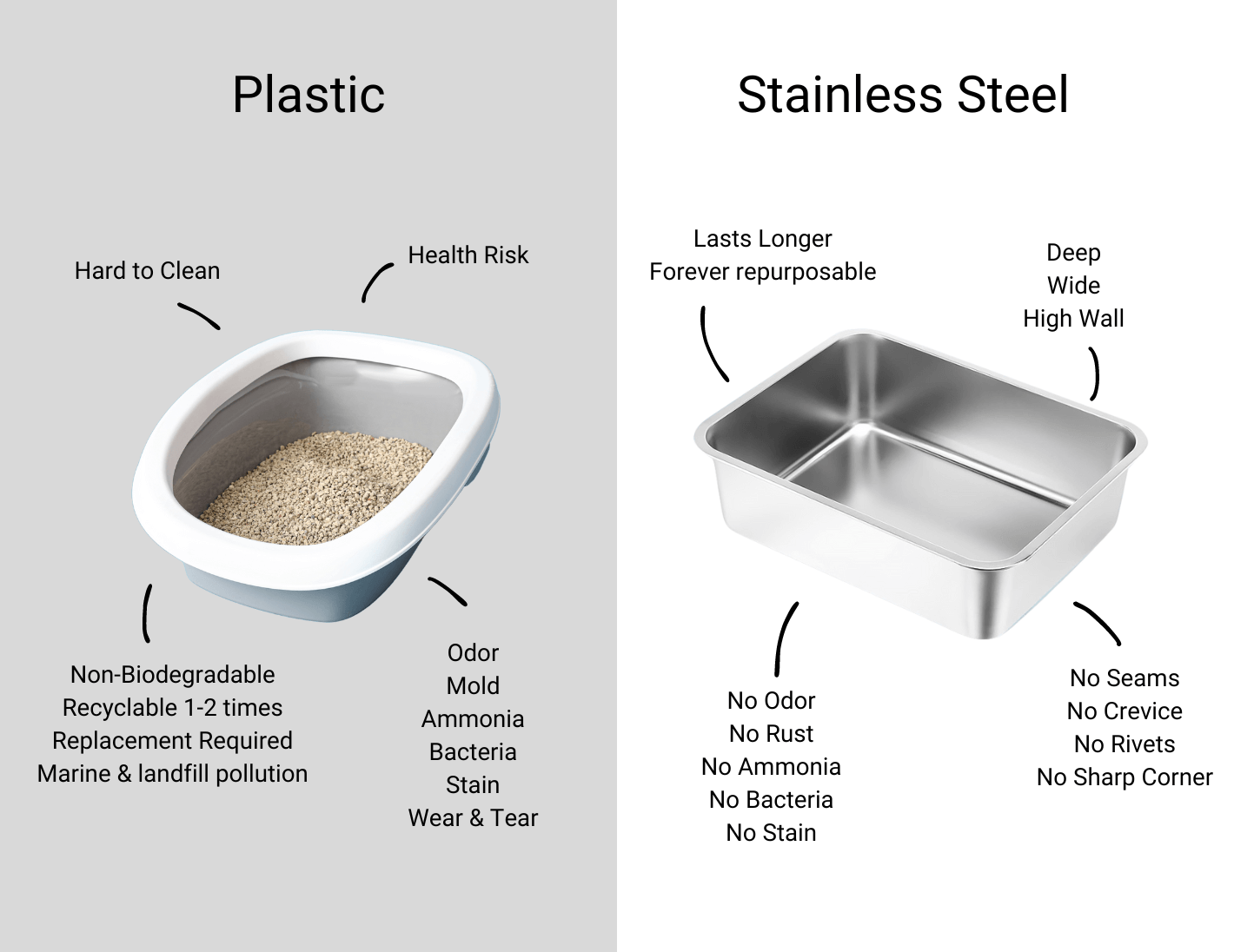
Stainless Steel vs. Plastic Litter Box: Quick Answer
Choose stainless steel if you want a durable, nonporous box that is easier to wash and less likely to hold odors. Choose plastic if you need a low-cost, lightweight box or your cat dislikes the sound and feel of metal.
| Feature | Stainless steel | Plastic |
|---|---|---|
| Odor resistance | Usually better because the surface is nonporous | Can retain odor as scratches develop |
| Cleaning | Easy to wash and rinse | Easy at first; harder after wear |
| Durability | Often lasts longer | May crack, warp, or scratch |
| Weight | Heavier | Lightweight |
| Noise | Can be louder when litter moves | Usually quieter |
| Price | Higher upfront cost in many cases | Usually lower upfront cost |
| Rust risk | Possible with poor steel or damage | Does not rust |
| Cat acceptance | Often accepted, but texture varies | Familiar and widely accepted |
| Best fit | Long-term, odor-sensitive homes | Budget, travel, foster, or temporary use |
This comparison reflects material behavior, not a guarantee for every product. Stainless steel quality, plastic type, box design, and cleaning methods all affect performance.

How the Materials Affect Hygiene and Odor
Stainless steel resists absorption, while plastic can hold odor after repeated scratching. Stainless steel is a smooth, nonporous metal. Urine and moisture sit on the surface instead of soaking into it. This makes residue easier to remove when the box is cleaned often.
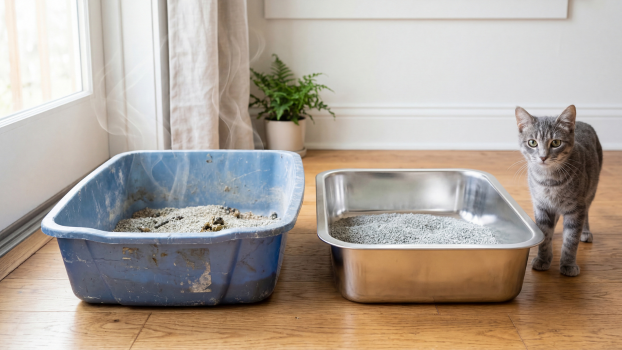
Plastic is also easy to clean when new. The problem develops over time. Scoops, claws, litter grit, and rough scrubbing can leave small scratches. Those scratches can trap urine residue, bacteria, and odor-producing material. The box may look clean but still smell soon after washing.
This does not mean plastic is unsafe by itself. A clean, intact plastic box can work well. It means that a worn plastic box may need more frequent replacement than a smooth stainless steel box.
Does stainless steel stop litter box odor?
No. Stainless steel can reduce one source of odor, but it cannot prevent odor caused by:
- Infrequent scooping
- A dirty litter mat or floor
- Urine under the box
- Poor ventilation
- Too little litter
- A box that is too small
- Multiple cats sharing too few boxes
- Strongly scented products that mix with waste odors
scoop waste at least once daily. Many households need to scoop more often, especially with multiple cats. Wash the box when residue builds up or when the litter is fully changed.
Avoid using bleach, ammonia, or strong scented cleaners unless the product label gives clear instructions for safe use and thorough rinsing. Ammonia-like odors can be especially unpleasant because urine already produces an ammonia smell as it breaks down.
Cleaning and Maintenance: Which Box Is Easier?
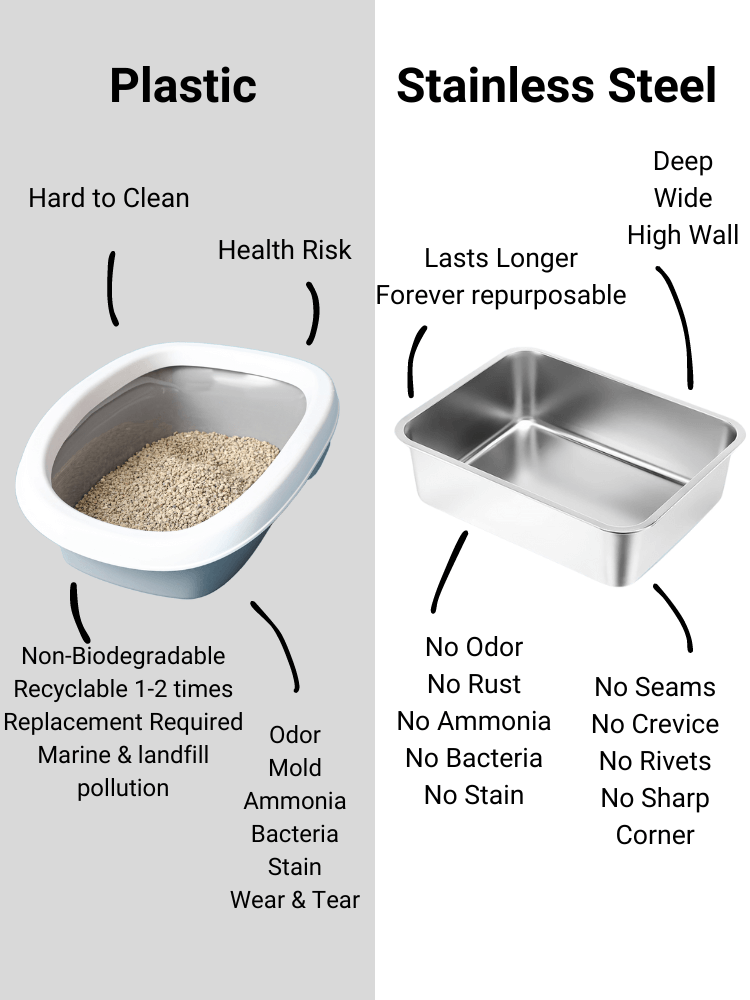
Stainless steel usually requires less effort to restore after heavy use, but both materials need regular cleaning.
For either type of litter box:
- Move the box to a well-ventilated area.
- Empty all litter into a trash bag.
- Remove stuck waste with a soft tool.
- Wash with warm water and mild, unscented dish soap.
- Rinse well.
- Dry the box fully before adding fresh litter.
- Clean the surrounding floor and litter mat.
Use a soft sponge or cloth. Avoid steel wool, abrasive powders, and harsh scouring pads on stainless steel. They can damage the finish and create rough areas that collect residue.
For plastic, avoid scraping with sharp tools. Deep scratches make future cleaning harder. If the plastic remains smelly after washing and drying, replacement may be more practical than repeated treatment.
A simple cleaning schedule
| Task | Suggested timing |
|---|---|
| Scoop urine clumps and feces | At least daily; more often for busy boxes |
| Remove tracked litter | Daily or as needed |
| Wash the litter mat and nearby floor | Weekly or when soiled |
| Wash the box | When residue or odor remains |
| Inspect for cracks, rust, or deep scratches | Monthly |
| Replace a worn plastic box | When odor remains after cleaning |
These are practical starting points, not medical rules. A cat with diarrhea, urinary disease, or another condition may need faster cleaning and closer monitoring.
Durability and Long-Term Value
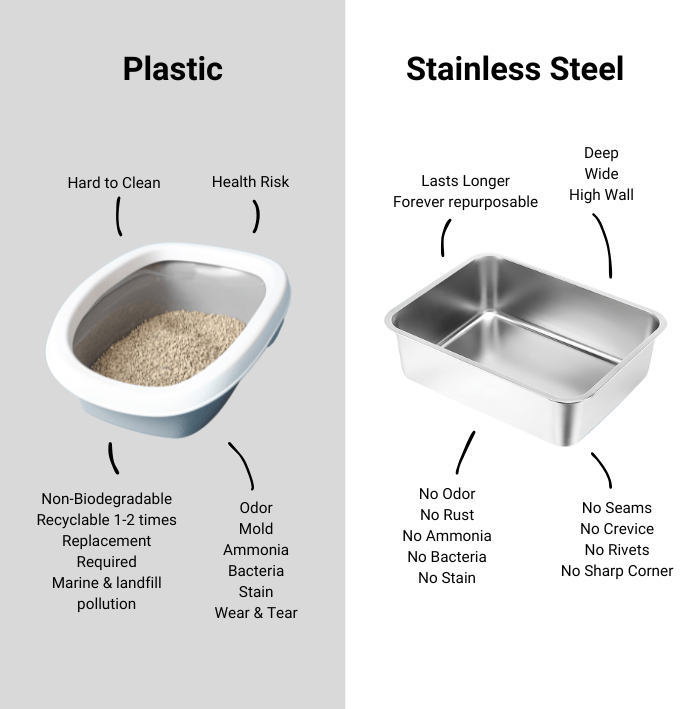
Stainless steel often offers better long-term value if it stays smooth and rust-free. Plastic usually costs less but may need replacement sooner.
A stainless steel box can resist cracking and bending. It is less likely to absorb odor, and its surface usually remains easy to rinse. However, stainless steel is not indestructible. Thin metal can dent, sharp edges can be unsafe, and poor-quality steel can develop rust if its finish is damaged or it stays wet.
Plastic is easier to lift, carry, and replace. This helps in small apartments, foster homes, travel setups, and homes where boxes must be moved often. Its lower price also makes it useful when you need several boxes.
The real value depends on the number of cats. A home with one cat may manage well with an inexpensive plastic box for years. A home with several cats may save time and reduce odor frustration with durable, easy-to-clean boxes.
When should you replace a plastic litter box?
Replace it when you see:
- Deep scratches across the bottom or sides
- Cracks or sharp edges
- Warping that prevents stable placement
- A strong smell that remains after washing
- Sticky or rough areas that collect litter
- A broken rim or damaged entry
Do not keep using a box with a sharp crack or unstable base. A damaged box can hurt a cat’s paws or spill waste onto the floor.

Cat Comfort and Acceptance
Your cat’s willingness to use the box matters more than the material label. Cats may avoid a box because it is dirty, cramped, covered, unstable, strongly scented, or placed in a stressful area.
Stainless steel can feel cool and may make more noise when a cat digs. Some boxes also have a slick base. A layer of litter can help, but it should not be so deep that the cat struggles to walk or balance.
Plastic often feels familiar and may produce less noise. Yet an old plastic box with trapped odor can discourage use even when the cat has used it before.
To improve acceptance:
- Choose an open box unless a covered design clearly works for your cat.
- Use a stable box that does not slide.
- Keep the box away from loud appliances and busy doorways.
- Provide easy access for kittens, older cats, and cats with limited mobility.
- Avoid sudden changes in litter type or box location.
- Keep food and water away from the litter area.
- Offer more than one box during a change.
If your cat stops using the box suddenly, do not assume the box material is the cause. Urinary pain, constipation, diarrhea, arthritis, stress, and other health problems can cause house-soiling. A sudden change should be discussed with a veterinarian, especially if the cat strains, cries, passes blood, vomits, or produces little urine.

Size, Shape, and Entry Height Matter More Than Material
A large, easy-to-enter box is usually a better choice than a small box made from a better material.
Many veterinary behavior resources use a box length of about 1.5 times the cat’s body length, measured from the nose to the base of the tail, as a practical target. This is a guideline, not a strict law. Large cats may need an extra-large or storage-style box.
Look for:
- Enough room to turn around without touching the sides
- A bottom that stays level under the cat’s weight
- An entry that is low enough for senior or disabled cats
- Sides high enough to reduce litter scatter
- A shape that allows normal digging
- No sharp seams, exposed metal edges, or unstable feet
A stainless steel tray with tall sides may control scatter but be difficult for a kitten or arthritic cat. A low plastic pan may be easy to enter but allow more litter and urine to spill. Match the design to the individual cat.
For homes with multiple cats, the American Association of Feline Practitioners and other feline behavior guidance commonly supports providing multiple litter boxes. A frequently used rule is one box per cat, plus one extra, placed in separate, easy-to-reach areas. Space, household layout, and individual cat behavior can change what works.
Safety and Cleaning Concerns for U.S. Cat Owners
Use gentle cleaning products, wash your hands after handling litter, and take extra care during pregnancy or when someone has a weakened immune system.
The Centers for Disease Control and Prevention provides guidance about toxoplasmosis and cat litter. Cat feces can carry Toxoplasma gondii, a parasite that can cause serious problems during pregnancy or for people with weakened immune systems.
Practical precautions include:
- Wash hands with soap and water after handling litter.
- Keep litter areas away from food preparation surfaces.
- Change litter regularly.
- Ask another person to clean the box during pregnancy when possible.
- If that is not possible, use disposable gloves and wash hands carefully.
- Follow medical advice for individual health conditions.
The material of the box does not eliminate these hygiene risks. Stainless steel may be easier to clean, but it does not disinfect waste on its own.
Also inspect the box after every deep clean. Stop using it if you find rust flakes, sharp edges, broken plastic, or a loose coating. Do not mix cleaning chemicals. In particular, mixing bleach with ammonia-based products can create dangerous fumes.

Cost, Weight, and Daily Convenience
Plastic wins on purchase price and portability; stainless steel can win on cleaning time and replacement value.
Plastic boxes are useful when you need several boxes at once. They are also easier to carry up stairs, move during cleaning, or pack for travel. A lightweight box may be the most practical choice for a temporary foster setup.
Stainless steel weighs more, which can help prevent sliding. The same weight can make it less convenient to empty or move. Metal may also create more sound when a scoop or litter hits the bottom.
When comparing price, consider total use rather than only the shelf price:
Estimated ownership cost = purchase price + replacement cost + cleaning supplies + time spent managing odor
This is a planning formula, not a measured industry average. A lower-priced plastic box may be economical if it stays intact and odor-free. A higher-priced stainless steel box may be economical if it lasts longer and takes less effort to clean.
Best material by household need
| Household need | More suitable option | Why |
|---|---|---|
| Lowest upfront cost | Plastic | Usually less expensive |
| Several litter boxes | Plastic or a mix | Easier to buy many at once |
| Persistent odor from an old box | Stainless steel | Smooth, nonporous surface |
| Senior cat or kitten | Either, with low entry | Access matters more than material |
| Frequent moving or travel | Plastic | Lighter and easier to carry |
| Long-term use | Stainless steel | Less likely to crack or absorb odor |
| Quiet digging | Plastic | Often produces less noise |
| Heavy litter scatter | Either, with high sides | Shape matters more than material |

Common Buying Mistakes
The most common mistake is choosing a material before checking the box’s size, entry, and cleaning design.
Avoid these errors:
Buying a box that is too small
A cat may avoid a cramped box or eliminate over the edge. Measure the cat and compare the interior dimensions, not only the outside dimensions.
Choosing a covered box to hide odor
A lid may reduce visible litter and contain some scatter, but it can also trap odor inside. Some cats dislike enclosed boxes. Better cleaning and ventilation usually address odor more reliably.
Using scented litter or sprays to cover smells
Strong fragrance can bother cats and may make the box less inviting. Unscented litter and frequent waste removal are often simpler choices.
Scrubbing plastic with abrasive tools
This can create more scratches and make odor worse over time. Use mild soap, water, and a soft cloth.
Assuming stainless steel cannot rust
Steel quality, moisture, salt, scratches, and cleaning products affect corrosion. Dry the box after washing and replace it if rust creates a rough or sharp surface.
Changing everything at once
Do not switch the box, litter, location, and cleaning routine on the same day unless necessary. A gradual change makes it easier to identify what your cat dislikes.
How to Choose Between Stainless Steel and Plastic
Use this decision process:
- Check your cat’s needs. Consider size, age, mobility, digging habits, and past litter box preferences.
- Measure the available space. The box must fit in a quiet area with easy access.
- Prioritize interior size. A large plastic box is often better than a small stainless steel box.
- Consider odor and cleaning history. Choose stainless steel if old plastic boxes repeatedly retain odor.
- Consider noise and weight. Choose plastic if your cat is sensitive to sound or you move the box often.
- Inspect construction. Reject sharp edges, unstable bases, thin cracked plastic, and damaged metal.
- Make changes gradually. Put the new box beside the old one before removing the old box.
- Watch use for several days. Look for normal entry, digging, urination, and stool patterns.
If your cat rejects the new box, return the old box if it is safe, place both boxes side by side, and use the previous litter. If the cat continues to avoid the box or has signs of illness, contact a veterinarian.
Frequently Asked Questions
Is stainless steel more hygienic than plastic for a litter box?
It can be easier to keep hygienic because stainless steel is nonporous and resists deep scratching. However, hygiene still depends on daily scooping, regular washing, proper rinsing, and hand hygiene. A neglected stainless steel box is not cleaner simply because it is metal.
Do cats prefer stainless steel or plastic litter boxes?
There is no strong general rule that all cats prefer one material. Cats often respond more to cleanliness, size, access, stability, litter texture, smell, and location. Offer the new box beside the old one when possible and observe your cat’s behavior.
Can I use bleach on a stainless steel or plastic litter box?
Follow the cleaner’s label and never mix chemicals. Mild soap and water are usually suitable for routine cleaning. If a disinfectant is needed, use one labeled for the intended surface, rinse thoroughly, and allow the box to dry before adding litter. Ask a veterinarian about disinfecting after infectious illness.
How often should I replace a plastic litter box?
Replace it when it has deep scratches, cracks, warping, sharp edges, or odor that remains after washing. There is no single replacement interval that fits every household because litter type, cleaning tools, and cat use vary.
Is a metal litter box safe for kittens and senior cats?
It can be safe if it has a stable base, smooth edges, and an entry low enough for the cat to use easily. A tall stainless steel box may not suit a kitten or a cat with arthritis. Choose access and stability before material.

Final Recommendation
For most long-term home setups, stainless steel is the stronger choice when the box is large, stable, smooth, and easy to enter. It can reduce odor retention and make deep cleaning easier.
Plastic remains a practical choice when cost, low weight, quiet use, or portability matters. Replace it once scratches, cracks, or lasting odor make cleaning difficult.
Whichever material you choose, start with the basics: enough space, unscented litter, daily scooping, a quiet location, and prompt attention to sudden changes in litter box use. If a cat stops using the box or shows signs of pain, treat it as a possible health issue rather than only a product problem.
Research basis
This guide follows general feline-care and hygiene guidance from: