
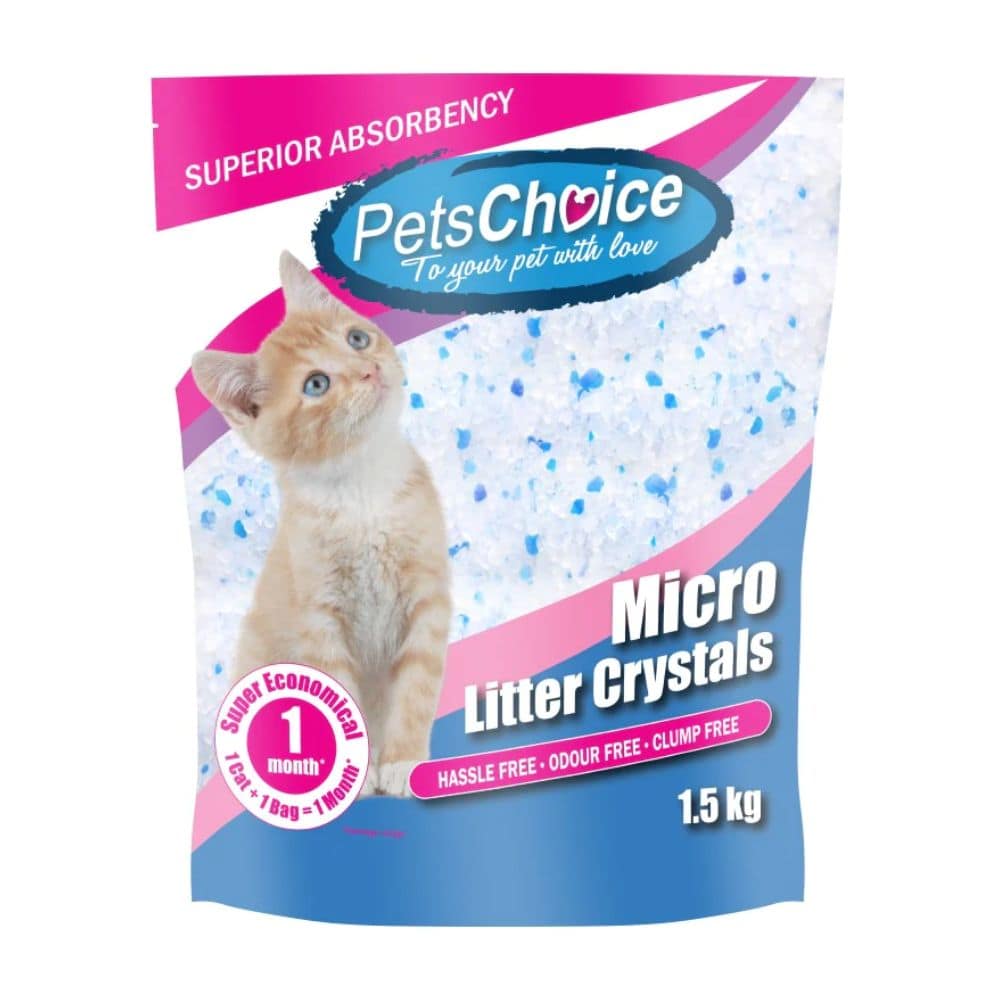
For most healthy kittens in the United States, crystal cat litter made from silica gel is usually safe when used correctly. It is low in dust, absorbs urine well, and does not contain the same material as loose crystalline silica dust found in some industrial settings.
However, crystal litter is not right for every kitten. Young kittens may chew or eat litter, and swallowed litter can cause stomach upset or, in large amounts, an intestinal blockage. The safest choice depends on your kitten’s age, habits, health, and ability to use the box without tasting the litter.
If your kitten eats a large amount of litter, vomits, seems weak, has a swollen belly, or cannot pass stool, contact a veterinarian or an animal poison service in the U.S. promptly.
What Is Crystal Cat Litter?
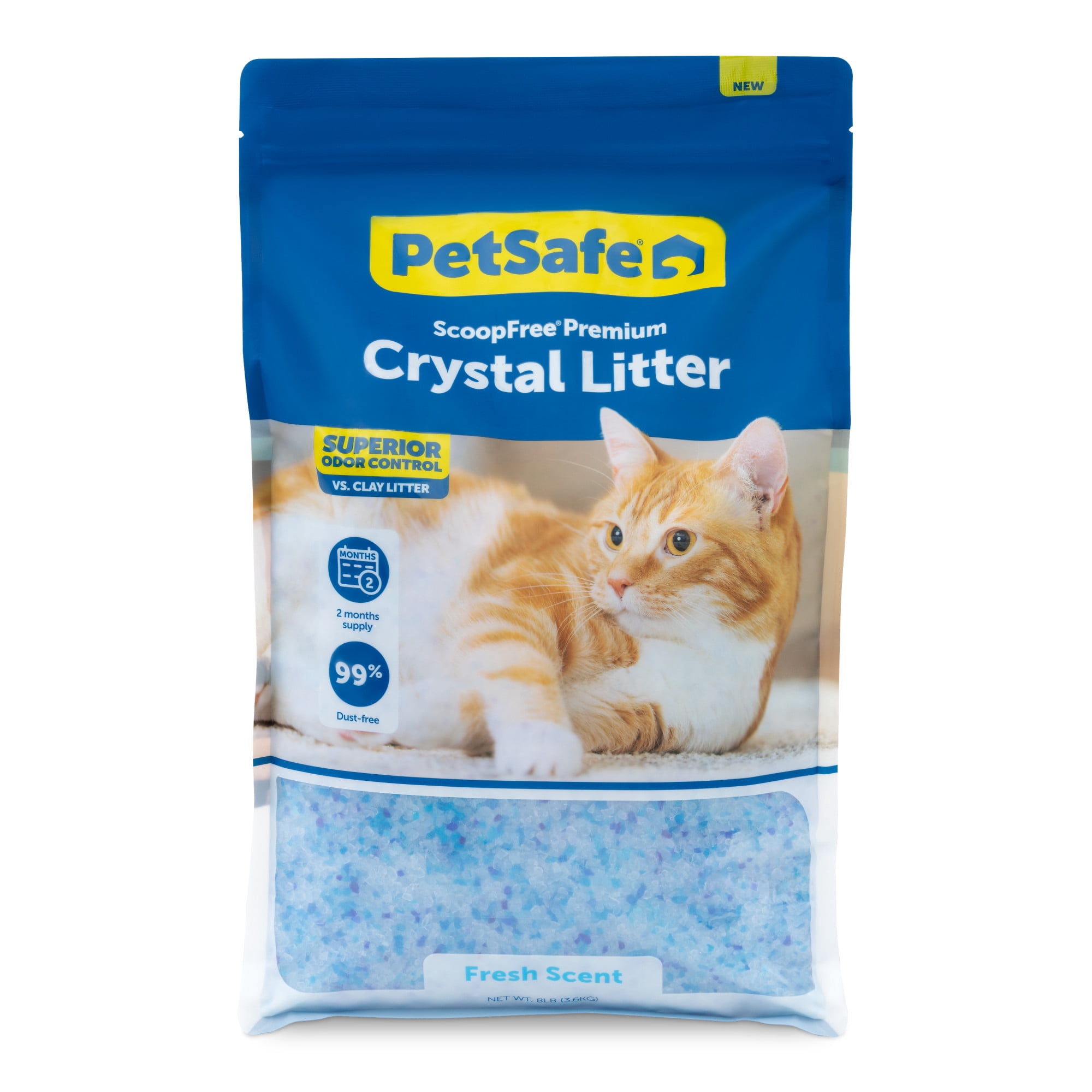
Crystal cat litter is usually made from silica gel, a porous form of silicon dioxide. The crystals absorb urine and moisture. Many products also reduce odor by trapping liquid inside the crystals.
Silica gel is different from:
- Clumping clay litter, which often contains bentonite clay
- Non-clumping clay litter, which absorbs liquid but does not form clumps
- Crystalline silica dust, which can occur in some mineral and industrial materials
- Silica dust from cutting or sanding, which is a respiratory hazard when inhaled in high workplace exposures
Some crystal litters are clear or white. Others use colored crystals or added fragrance. The material, dust level, additives, and particle size vary by product, so read the package label before using it for a kitten.
The safety question is not simply whether silica gel is “toxic.” The practical questions are:
- Could the kitten swallow it?
- Does the product create dust?
- Does it contain fragrance or other additives?
- Will the kitten use the box reliably?
- Could a health problem make dehydration or urinary changes harder to notice?
The ASPCA and Pet Poison Helpline describe silica gel as generally low in toxicity when a small amount is swallowed. That does not mean large amounts are harmless, and it does not remove the risk of choking, vomiting, or intestinal obstruction.

Is Silica Crystal Litter Toxic to Kittens?
A small accidental taste of plain silica gel litter is usually not considered poisonous, but repeated eating or a large swallowed amount can be dangerous.
The main risks are mechanical and digestive rather than chemical poisoning. A kitten that eats litter may develop:
- Drooling or nausea
- Vomiting
- Diarrhea or constipation
- Reduced appetite
- Abdominal pain
- Dehydration
- A blockage in the digestive tract
Kittens are small. A quantity that seems minor to an adult cat may represent a larger dose relative to the kitten’s body weight. Young cats also explore with their mouths, especially during weaning and teething.
The risk rises if the litter:
- Clumps after contact with moisture
- Contains added fragrance, essential oils, or deodorizing chemicals
- Has sharp or large pieces
- Is heavily contaminated with urine or feces
- Is eaten repeatedly
- Is swallowed by a very small or sick kitten
Do not make your kitten vomit unless a veterinarian or animal poison professional specifically tells you to do so. Remove access to the litter if the kitten is actively eating it, and keep the product package available. The label helps a veterinarian identify the ingredients and product type.
In the United States, you can contact your veterinarian, a local emergency animal hospital, or an animal poison service such as the ASPCA Animal Poison Control Center at 888-426-4435 or Pet Poison Helpline at 855-764-7661. Fees may apply.

Are Crystal Cat Litter Crystals Safe for a Kitten’s Paws and Lungs?
Most crystal litter is designed for normal contact with a cat’s paws, but dust and rough crystals can irritate sensitive kittens.
A good crystal litter should produce little visible dust when poured or stirred. Still, even low-dust products may release fine particles during handling. A kitten with asthma, chronic coughing, or another breathing problem may react to any dusty litter.
Watch for:
- Sneezing soon after box use
- Coughing or wheezing
- Watery eyes
- Red or irritated eyes
- Excessive paw licking
- Limping or avoiding the box
- Redness between the toes
Choose a product labeled low dust and avoid scented litter if your kitten has respiratory or skin sensitivity. Pour it slowly, keep the bag close to the floor, and do not shake it near the kitten.
Crystal texture also matters. Very large, jagged, or coarse pieces may feel uncomfortable under small paws. A kitten that avoids the box may urinate elsewhere, hold urine, or develop poor litter habits. If your kitten repeatedly refuses the box, do not assume the issue is behavioral. Pain, constipation, urinary disease, and stress can all change litter-box use.
Clean spills with a damp cloth rather than sweeping dry dust into the air. Wash your hands after handling used litter, and keep the litter bag sealed where children and pets cannot reach it.
Can Kittens Use Crystal Litter Safely?
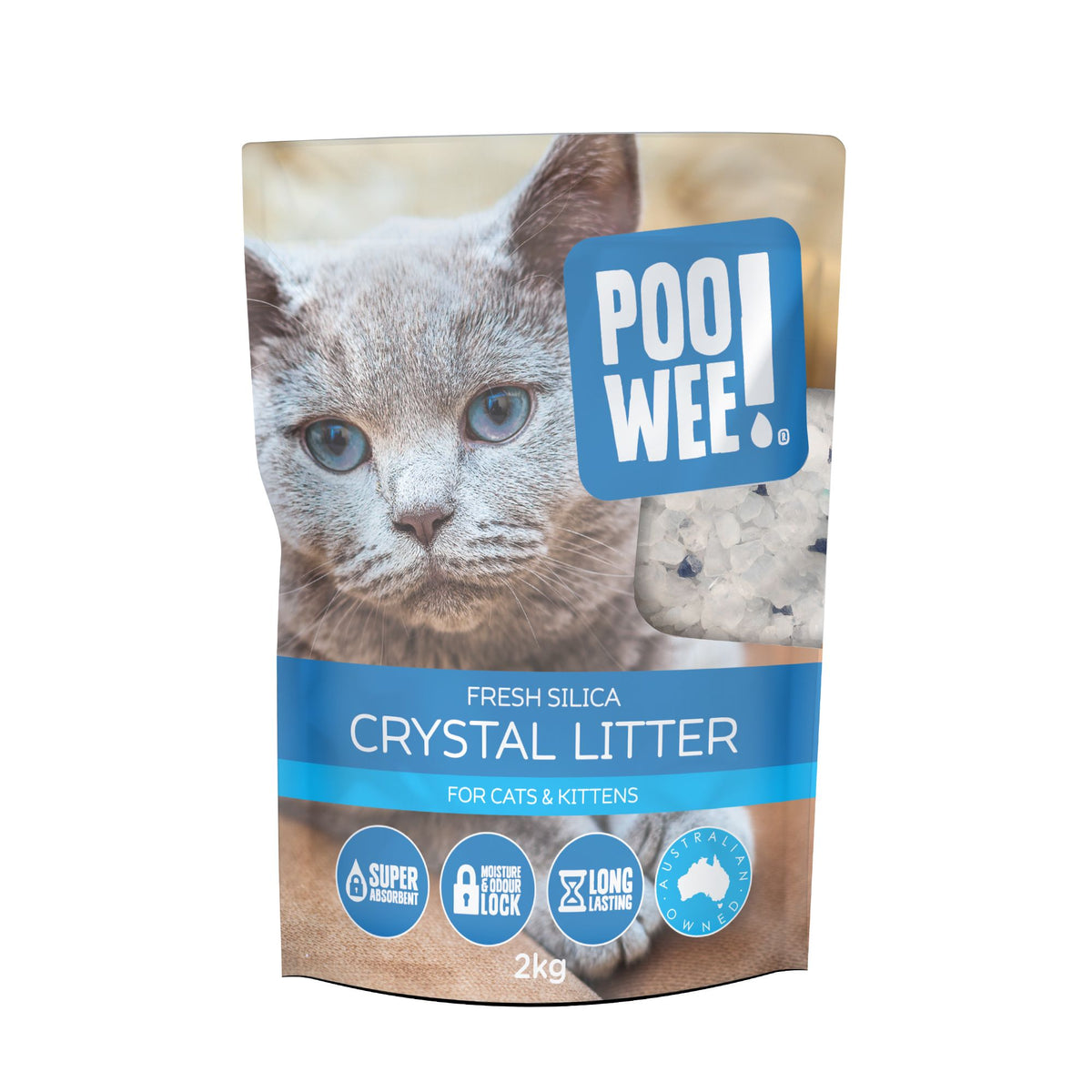
Many kittens can use crystal litter safely, but age and behavior should guide the choice.
Very young kittens may need special care. Kittens under about 3 to 4 weeks of age normally need help from their mother to urinate and defecate. Orphaned kittens often require a feeding and elimination plan from a veterinarian or experienced neonatal foster group. A litter box is not the first safety concern at that stage.
Once a kitten begins using a box independently, use a low-sided box that is easy to enter. Place it in a quiet area away from food and water. Provide enough boxes so the kitten does not need to search far. A common household guideline is one box per cat, plus one extra.
For a kitten new to crystal litter:
- Offer a clean, shallow box.
- Use an unscented, low-dust product.
- Watch the first several visits.
- Check whether the kitten digs, plays, or eats the crystals.
- Remove the litter if the kitten repeatedly tastes it.
- Keep the box clean so the kitten can identify a dry toileting area.
- Weigh or observe the kitten regularly during the transition.
Do not force a kitten into the box or hold its paws in the litter. That can create fear and may make the kitten avoid the box.
Some shelters and breeders use non-clumping litter for young kittens because it reduces concern about swallowing clumping material. That is a precaution, not proof that every crystal product is unsafe. For a kitten that eats litter, a veterinarian can help select a safer temporary option and investigate the cause.

Crystal Litter vs. Other Litter Types for Kittens
No litter type is safest for every kitten. The best option balances ingestion risk, dust, comfort, odor control, and your ability to monitor urine and stool.
| Litter type | Potential benefit | Main concern for kittens |
|---|---|---|
| Silica crystal | Low dust in many products; strong moisture control | Some kittens chew or swallow crystals; may be uncomfortable to sensitive paws |
| Clumping clay | Easy removal of urine clumps | Ingestion may cause stomach or blockage concerns, especially if repeated |
| Non-clumping clay | Simple material and easy for some kittens to accept | Can become damp; may be dusty and harder to monitor |
| Paper pellets | Usually soft and low in dust | Some kittens dislike the texture; odor control may be weaker |
| Wood pellets | Often low in dust and absorbent | Pellets may be too large or unfamiliar for some kittens |
| Corn, wheat, or other plant litter | Lightweight and sometimes soft | A kitten may eat it; mold, allergy, or digestive concerns can occur depending on storage and ingredients |
The table shows general trade-offs, not a universal safety ranking. Product formulas differ. A low-dust, unscented litter that your kitten does not eat may be safer in practice than a theoretically suitable litter that causes avoidance or repeated ingestion.
Crystal litter can also make urine monitoring less direct. Many products absorb urine without forming a removable clump. If your kitten urinates more often, strains, cries, or produces very little urine, the crystals may not make the change obvious.
For male kittens and any cat with urinary concerns, treat straining or inability to urinate as urgent. A urinary blockage can become life-threatening and requires immediate veterinary care.

How to Introduce Crystal Litter to a Kitten
Introduce the litter slowly and observe the kitten’s behavior rather than changing everything at once.
If the kitten already uses another litter, place a second box with crystal litter beside the familiar box. Keep the boxes clean and compare which one the kitten chooses. Once the kitten uses the new litter consistently, you can decide whether to remove the old box.
If you must change litter in one box, mix a small amount of the new litter with the old type. Increase the new litter over several days if the kitten accepts it. Slow changes are especially useful for shy kittens or kittens that have already had accidents.
Set up the box correctly:
- Use a low entry for a small kitten.
- Choose a box large enough for the kitten to turn around.
- Keep it away from loud appliances.
- Avoid placing it beside food and water.
- Scoop feces promptly.
- Follow the product’s directions for replacing saturated crystals.
- Wash the box with mild soap and water, then rinse it well.
- Avoid strong bleach fumes, ammonia, and heavily scented cleaners.
Signs that the setup is working include regular box use, normal appetite, normal play, and no coughing or digestive upset. A kitten that scratches, jumps out, avoids the box, or has accidents may dislike the texture, smell, location, cleanliness, or depth.
Never punish accidents. Clean them with an enzymatic pet-odor cleaner and review the box setup.

When Should You Stop Using Crystal Litter?
Stop using crystal litter and call your veterinarian if your kitten repeatedly eats it or develops symptoms after using the box.
Seek prompt veterinary advice for:
- Vomiting more than once
- A swollen, painful, or tense abdomen
- No stool or repeated straining
- Severe diarrhea
- Not eating
- Marked sleepiness or weakness
- Coughing or breathing difficulty
- Persistent sneezing
- Blood in urine
- Crying while urinating
- Frequent box trips with little or no urine
Inability to urinate is an emergency, especially in a male kitten. Do not wait to see whether the crystals absorb the problem.
A kitten that eats non-food items may have a condition called pica, a nutritional issue, parasites, anemia, gastrointestinal disease, stress, or simple exploratory behavior. Only a veterinarian can identify the cause. Replacing the litter may reduce access, but it may not address the reason for the behavior.
If the kitten has a known digestive disorder, breathing disorder, urinary disease, or history of foreign-body ingestion, ask the veterinarian about litter before making a change.

How to Choose a Safer Crystal Litter for a Kitten
When considering crystal litter, look for:
- Unscented formula
- Low-dust or dust-controlled design
- Plain silica gel listed as the main ingredient
- Small, smooth crystals
- No added essential oils
- Clear directions for use and disposal
- Packaging that lists a U.S. manufacturer or contact number
Avoid products that create a visible cloud of dust, have a strong perfume smell, or contain additives that are unclear on the label.
“Natural” does not automatically mean safe to eat. Plant-based and mineral-based litters can both cause problems if swallowed in quantity. Likewise, “non-toxic” usually addresses poisoning risk; it does not guarantee that a product cannot cause a blockage, irritation, or allergy.
Keep unused litter in a closed container. Store it in a dry place, since moisture can change the product’s texture and performance. Do not allow kittens to play in an open bag.

Key Takeaways
- Crystal litter made from silica gel is generally safe for many kittens when used properly.
- A small taste is usually a low-toxicity exposure, but repeated eating or a large amount can cause digestive problems or blockage.
- Use an unscented, low-dust product and watch the kitten during the first several uses.
- Stop use if the kitten eats the litter, develops breathing or stomach symptoms, or avoids the box.
- Straining to urinate or producing no urine requires immediate veterinary care.
- Ask a veterinarian before using crystal litter for a kitten with pica, breathing disease, digestive disease, or urinary problems.
Frequently Asked Questions
Is crystal litter safer than clumping litter for kittens?
Not in every situation. Crystal litter may create less dust and does not form clay clumps, but a kitten can still swallow it. The safest choice is the litter the kitten will use reliably without eating and that does not cause irritation.
What happens if a kitten eats silica gel litter?
A small amount may cause no serious effect, but vomiting, diarrhea, constipation, or abdominal discomfort can occur. A large or repeated amount may contribute to an intestinal blockage. Contact a veterinarian or animal poison service for product-specific advice.
Can crystal litter cause respiratory problems in kittens?
Dust or fragrance may irritate a kitten’s nose and airways. Choose low-dust, unscented litter, and stop using it if coughing, wheezing, or persistent sneezing begins.
Should kittens use non-clumping litter?
Some caretakers choose non-clumping litter for very young kittens because it reduces concern about clumps being swallowed. It is not the only possible option. The kitten’s age, behavior, health, and ability to avoid eating litter matter more than the label alone.
How often should crystal cat litter be changed?
Follow the product instructions. Remove feces daily and stir or distribute the crystals as directed. Replace the full litter when the crystals remain wet, odor persists, or the package says the absorbency has been used. A kitten’s box should not be allowed to become so dirty that the kitten avoids it.
Conclusion
For a healthy kitten that does not eat litter, plain, unscented, low-dust silica crystal litter can be a reasonable option. It is not risk-free, and kittens need closer supervision than adult cats because they may chew the crystals or develop litter-box problems quickly.
Start with a shallow, clean box. Watch how the kitten walks, digs, breathes, and behaves after use. If the kitten eats the litter or shows digestive, respiratory, or urinary symptoms, remove the product and contact a U.S. veterinarian for advice.